Newly Born Queen Bee: Birth and Life Cycle
In the fascinating world of bees, the birth of a queen bee is one of the most delicate and captivating events observed within the hive. Every newborn bee has a specific role in the colony, but when it comes to a newly born queen bee, we enter an even more extraordinary realm—one that ensures the continuity and survival of the entire bee family.
At Apicoltura Laterza, we study and care for every phase of a bee's life, and today we want to tell you how a queen bee is born, what a queen bee does, and how many days it takes for her to be fertilized, to fully understand her life cycle and vital role in maintaining the hive’s balance.
How the Queen Bee is Born
It all begins with a simple bee egg. When the other bees—specifically the worker bees—decide it’s time to replace an old queen or form a new colony, they choose a newly hatched larva and feed it royal jelly from the very first moments. This special nourishment, produced by the workers themselves, is rich in vitamins, proteins, and substances that stimulate the development of the future queen’s reproductive system.
It is precisely thanks to royal jelly that an ordinary larva can become a queen, while the others become workers. In this way, nature selects a single bee destined to lay eggs, ensuring the survival of the entire colony.
The Birth of the Queen Bee: An Extraordinary Event
The birth of a queen bee occurs about 16 days after the egg is laid. This period is shorter than that of worker bees (21 days) and drones (24 days). Once the newly born queen emerges from her royal cell, her first mission is clear: to assert her dominance.
If there are other virgin queens in the hive, the new sovereign will search for them and eliminate them, as only one queen can reign in a hive. This is a natural law that ensures unity and strength within the group.
What the Newly Born Queen Bee Does
In the first few days of life, the queen bee moves among the other bees to be recognized. Her body releases pheromones—chemical substances that signal to the workers the presence of the new queen. These signals are essential for maintaining order and cohesion within the hive.
But the most important moment comes during the nuptial flight. A few days after birth—usually around 5 to 7 days—the virgin queen leaves the hive for the first time. In flight, she mates with several drones. This is a crucial moment: the queen only mates once in her life, but that single event provides her with enough sperm to lay eggs daily for many years.
How Many Days Until the Queen Bee is Fertilized?
One of the most frequently asked questions is: how many days until the queen bee is fertilized?
As mentioned, this occurs about 5–7 days after birth, when the virgin queen is ready for the nuptial flight. During this stage, she flies several meters high and mates with multiple drones, storing the sperm in her reproductive system.
After this unique event, the queen returns to the hive, where she begins her long egg-laying career. From that point on, she will hardly ever leave the nest again.
The Queen Bee Life Cycle
The life cycle of a queen bee is truly fascinating. From birth until death, her sole purpose is to ensure the survival of the colony. After fertilization, the most important phase of her life begins: egg laying.
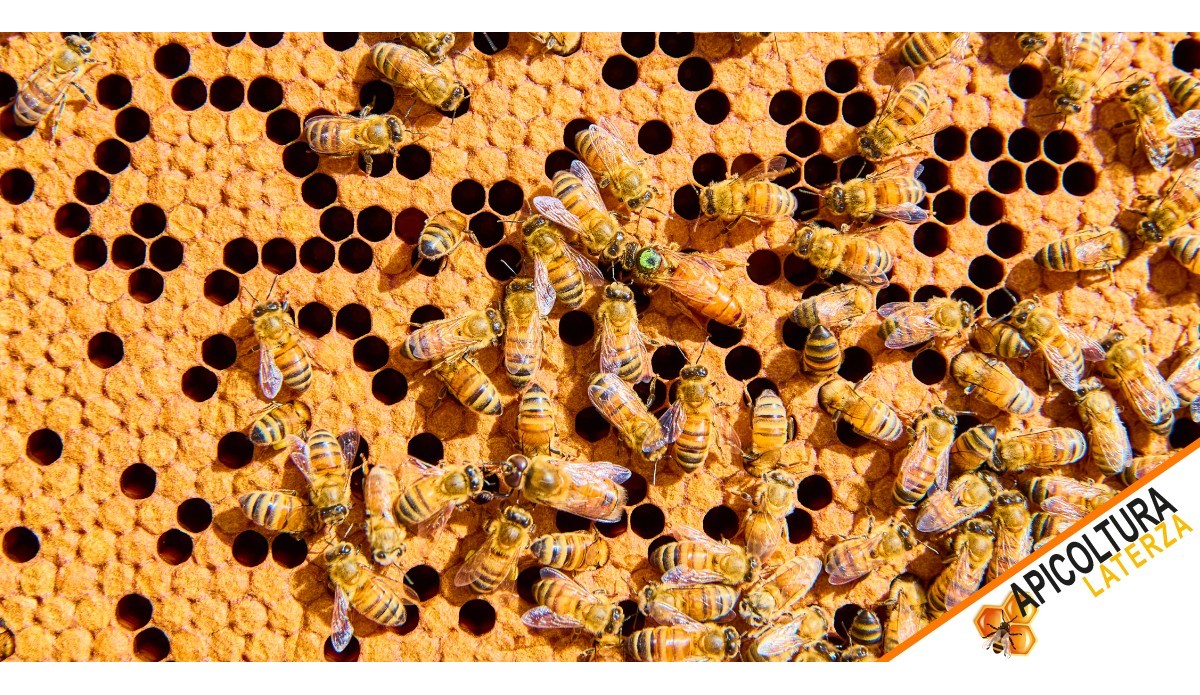
A newly born queen bee, once mature, can lay up to 2,000 eggs per day, depending on the season and the condition of the hive. Each egg is carefully laid in a hive cell, from which a new worker, drone, or—in special cases—another queen will be born.
➡️ Queen bee eggs are easily recognizable by their orderly and precise arrangement: the queen lays them one by one in perfectly clean cells, ensuring the healthy development of each new generation.
The queen’s life cycle can last up to 4–5 years, although her reproductive capacity peaks during the first two years. Over time, the production of pheromones and fertility decreases, and the workers may decide to replace her with a new queen, selecting a larva and feeding it royal jelly, just as before.
What Happens Inside the Hive
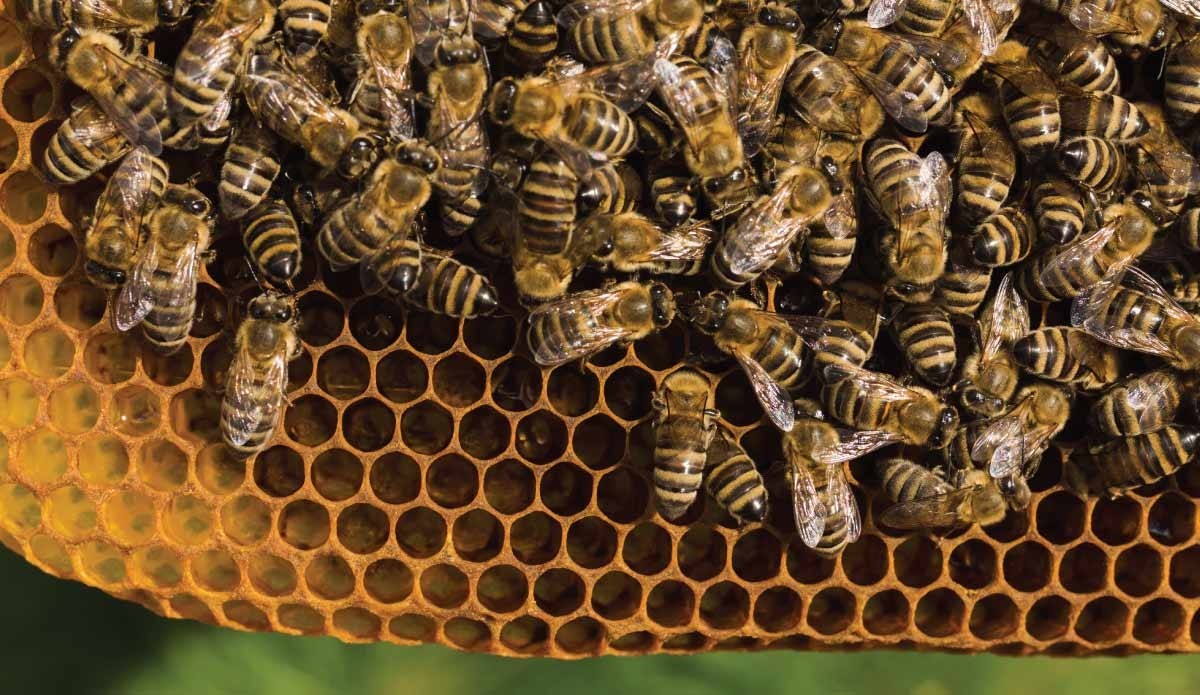
The inside of a hive is an organized and perfect world. While the queen lays eggs, the worker bees work tirelessly to maintain the ideal temperature, clean the cells, and feed the larvae. Everything is interconnected, and the queen is the beating heart of the system.
If the queen dies or stops laying eggs, the other bees act immediately. They begin raising new royal cells to give life to a new, newly born queen bee. It’s a continuous cycle, a perfect balance that nature has built over centuries.
The Importance of the Queen Bee in Beekeeping
At Apicoltura Laterza, the quality and health of queen bees are fundamental. Each queen bee sale is handled with great care, selecting healthy and strong specimens. Those who wish to buy queen bees can count on a controlled and certified process, designed to provide vigorous and productive colonies.
A carefully raised, newly born queen bee is the key to stable and abundant honey production. The queen, with her consistent and regular egg laying, ensures new generations of forager bees ready to collect nectar and pollen—elements that will be transformed into high-quality honey.
A True Queen of Nature
In conclusion, the newly born queen bee is a true wonder of nature. From the birth of the bee to her maturation, every stage of the queen bee’s cycle is essential for the colony’s survival.
Thanks to royal jelly, the nuptial flight, and her tireless egg-laying, the queen becomes a symbol of continuity, energy, and life.
She is the one who, day after day, ensures the survival of the other bees, keeping the hive balanced—and, indirectly, our planet as well.
Apicoltura Laterza is proud to share this information about the queen bee with you, the result of experience, passion, and deep respect for these marvelous insects. If you want to learn more or purchase queen bees, contact us: our commitment is to carry on the tradition and knowledge that make beekeeping an ancient and sustainable art.
In Same Category
- Water in the Apiary: Real Needs and Waterers That Actually Work
- Flowering Calendar: Planning the Year on Your Own Flight Radius
- Contract Pollination: How the Service Works for Growers
- Pollen and Propolis: What You Need to Harvest Them and When It Pays
- Urban Beekeeping: Rules, Siting and Good Neighbours for Keeping Bees in the City
Related by Tags
- Urban Beekeeping: Rules, Siting and Good Neighbours for Keeping Bees in the City
- Swarming: Recognising the Signs and Managing It in Spring
- Planning Your Apiary for 2027: How Many Colonies and Which Bees
- How a Bee Colony Is Organised: Queen, Workers and Drones
- Newly Born Queen Bee: Birth and Life Cycle