What Do Bees Eat?
When people talk about bees, they often focus on their incredible ability to produce honey or their crucial role in biodiversity. But a question many ask is: what do bees eat? Understanding what bees eat allows us to approach their world with greater awareness and respect. In this article, written by Apicoltura Laterza, we will explore information about the bee, its life cycle, diet, and the organization of a complex society that has much to teach us humans.
Bee Nutrition: What Do Bees Eat?
To understand what bees eat, we need to distinguish between the different castes within a hive: the queen bee, worker bees, and drones. Each has different roles and, therefore, a specific diet.
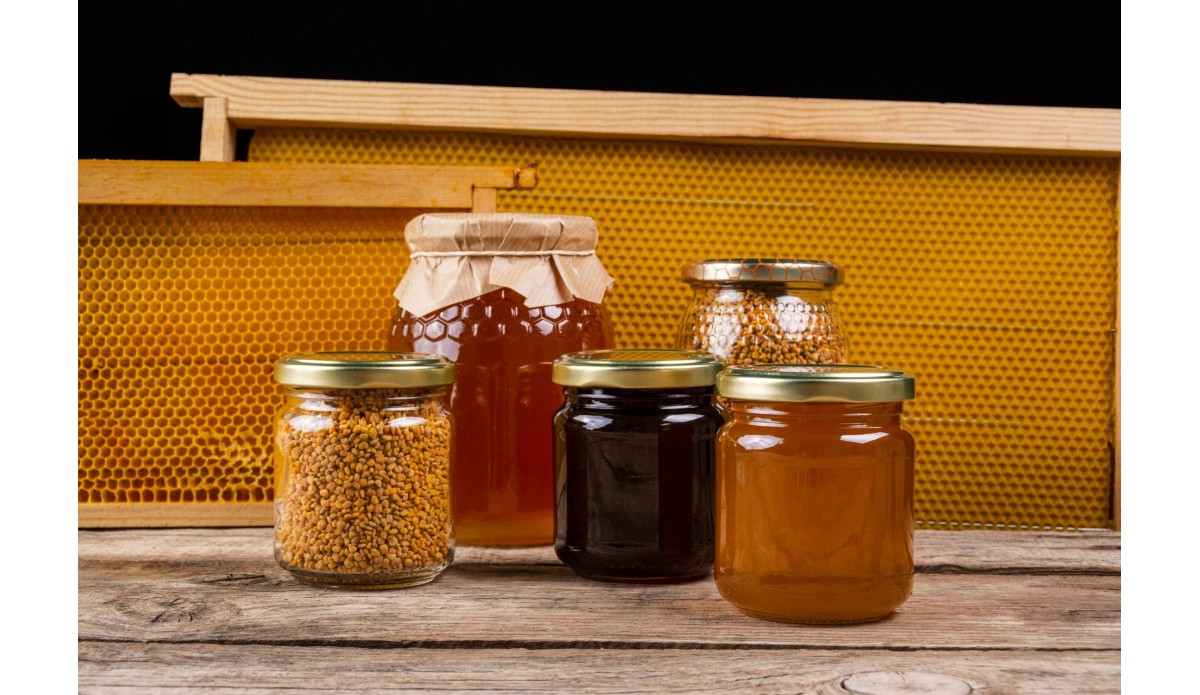
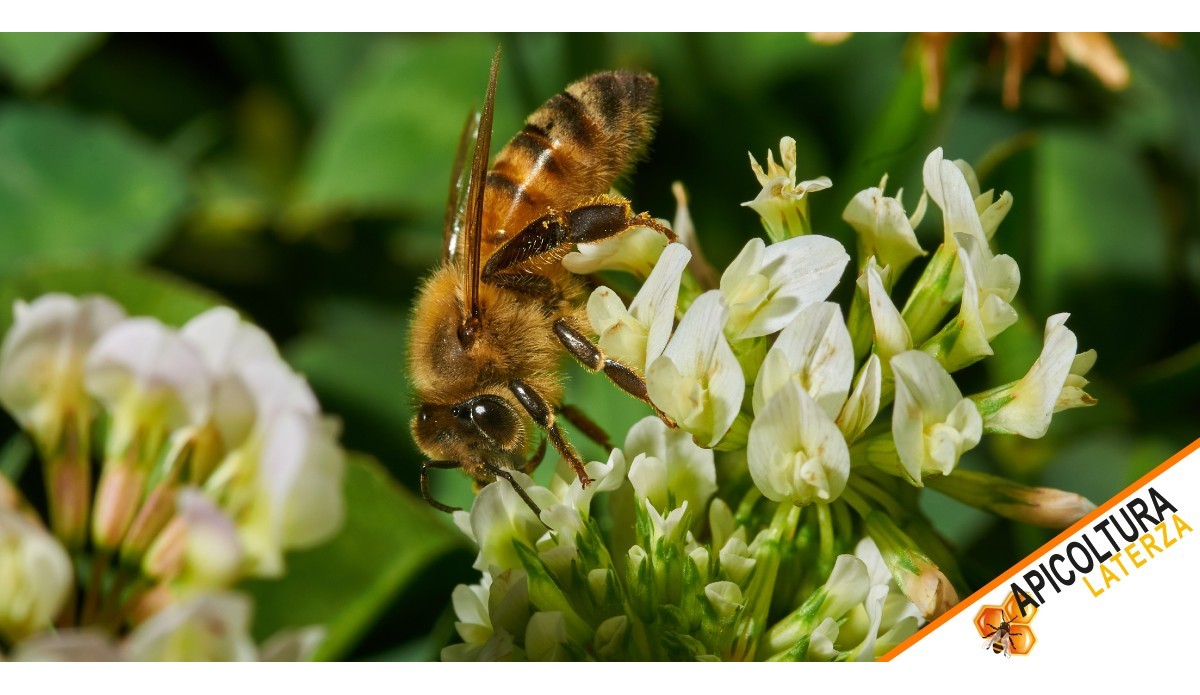
Bees primarily feed on two things: nectar from flowers and pollen. Nectar is a sugary substance collected by forager bees as they fly from flower to flower. It is then brought back to the hive and, through a complex process, turned into honey.
Pollen, on the other hand, is rich in protein and essential for the growth of young bees. During collection, bees store pollen on their hind legs using structures called corbiculae. Once back at the hive, they deposit the pollen in the cells.
The Queen Bee and Her Special Diet
The queen bee’s diet is a story of its own. In the first days of life, all larvae receive the same food: a whitish, dense, and rich substance called royal jelly. However, only the larva destined to become the queen continues to receive royal jelly throughout her life. This nutrient-rich food allows her to lay eggs at an astonishing rate—up to 2,000 eggs a day!
Laying eggs is her primary function. Thanks to this rich and continuous diet, the queen lives much longer than other bees—up to 5 years, while worker bees live only a few weeks in summer.
How Many Legs and Eyes Do Bees Have?
Another common question is: how many legs do bees have? Like all insects, bees have six legs, arranged in three pairs. The hind legs of worker bees are specialized for collecting pollen, while the front legs are used for cleaning their eyes and antennae.
And speaking of eyes, have you ever wondered how many eyes a bee has? The answer is surprising: five. Two large compound eyes are located on the sides of the head, and three simple eyes (called ocelli) are arranged in a triangle on the top of the head. These simple eyes help bees detect light and movement, making them extremely responsive.
The Role of Forager Bees
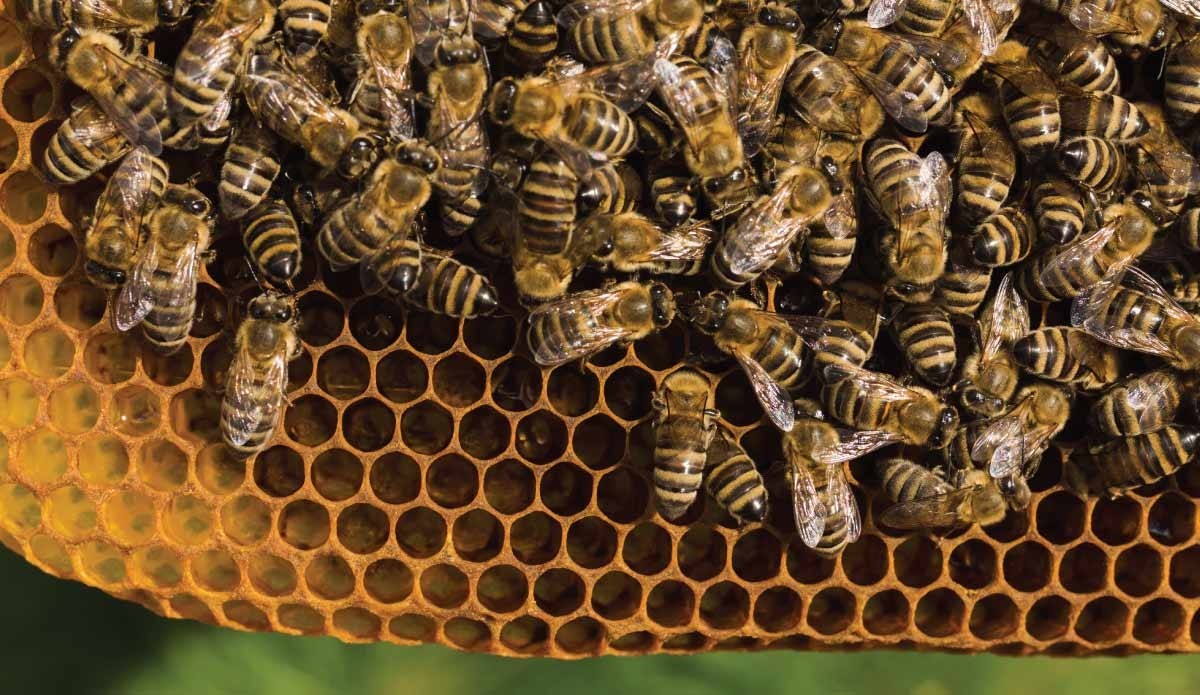
Forager bees are the oldest worker bees, responsible for leaving the hive to collect resources. They can fly up to 5 km away in search of nectar, pollen, water, and propolis. Their work is essential, providing food and materials for maintaining the hive’s environment.
While flying, a forager bee identifies flowers rich in nectar, visits them, gathers the sugary substance, and stores it in its "honey stomach". Once back at the hive, it regurgitates the nectar and passes it to other bees, which begin the process of transforming it into honey.
Honey Production: A True Wonder
The production of honey is an incredibly fascinating process. After depositing the nectar into the hive’s cells, the bees fan it with their wings to evaporate excess water. Once it reaches the right consistency, the cells are sealed with wax.
The honey produced by bees is not only food for them. It is also a precious gift for us humans, appreciated for its taste, nutritional value, and even healing properties. For bees, honey is their main source of energy, especially in winter, when they cannot fly or gather food.
Honey and Pollen: Two Essential Foods
Honey and pollen make up the basic diet for most bees. Pollen provides proteins, vitamins, and minerals, essential for larval development and hive health. Honey, rich in simple sugars like glucose and fructose, serves as an energy reserve during times of scarcity.
Though small, bees demonstrate an incredible efficiency in turning nature’s resources into nourishment and support for the entire hive. Their social organization and the way they care for one another are a true lesson in cooperation.
The Importance of Bees for Humans
Bees don’t just produce honey. Through pollen collection and pollination, they are essential for the reproduction of many plants and crops. Bees are capable of pollinating up to 70% of food crops that humans rely on. Without them, our diet would lack many important fruits, vegetables, and seeds.
Apicoltura Laterza has been committed for years to the protection and appreciation of bees, recognizing their irreplaceable role in our ecosystem. Protecting bees means protecting ourselves, our health, and our future.
Conclusion
Now that you know what bees eat, you will surely have a new admiration for these small but mighty insects. From honey production to egg laying, from pollen collection to hive cooperation, bees live a fascinating existence full of exchange, teamwork, and impressive efficiency.
Let’s never forget how important they are to our survival. Valuing their work is a responsibility we all share. As for us at Apicoltura Laterza, we will continue to share the world of bees with respect, passion, and professionalism.
In Same Category
- Water in the Apiary: Real Needs and Waterers That Actually Work
- Flowering Calendar: Planning the Year on Your Own Flight Radius
- Contract Pollination: How the Service Works for Growers
- Pollen and Propolis: What You Need to Harvest Them and When It Pays
- Urban Beekeeping: Rules, Siting and Good Neighbours for Keeping Bees in the City