Pollen as an Indicator of Hive Health: Colour, Volume and Bee Bread
The colour, volume and variety of incoming pollen reveal a great deal about colony health, before you even open the hive. This article explains how to read these signals and what to do when pollen flow stops.
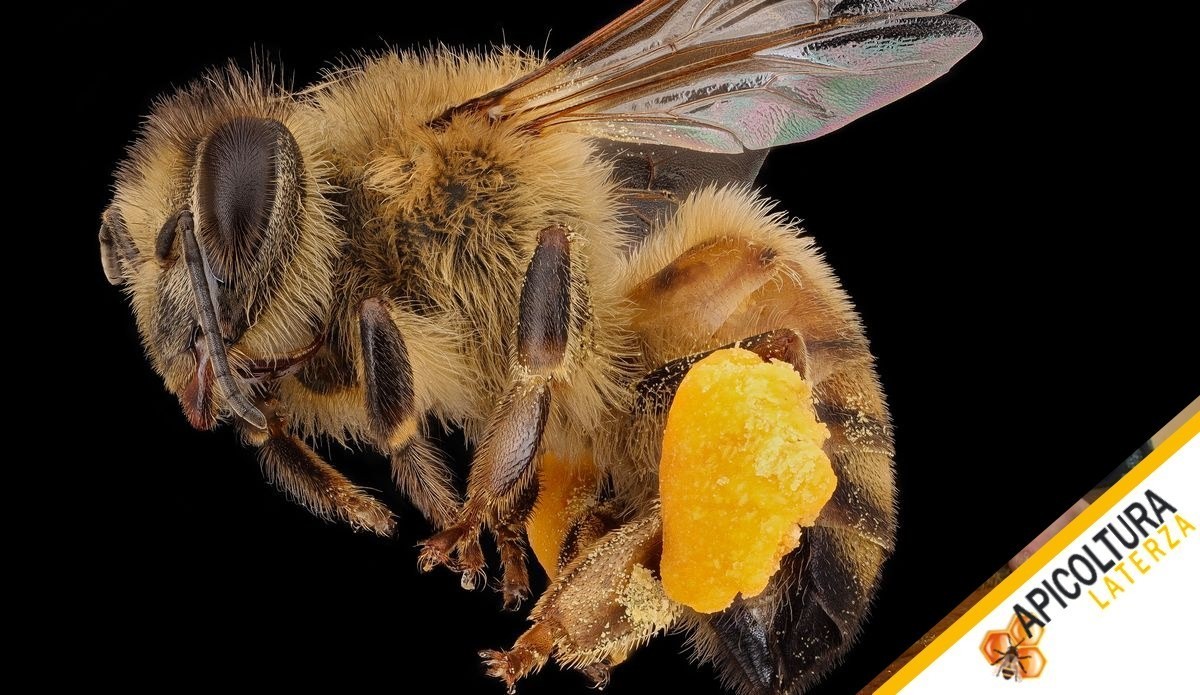
Stand in front of the entrance on a warm afternoon and watch the foragers come home. Some carry nectar, invisible from the outside. Others carry two coloured pellets on their hind legs, yellow, orange, sometimes almost black: that is pollen. In our article on how to harvest pollen and propolis we covered pollen traps and selling the product. Here the angle is different: pollen not as a product, but as a window into colony health, read before you ever open the hive.
Why the pollen basket is a signal from the colony
Bees do not collect pollen out of habit. They collect it because the brood demands it. When a queen is active and laying steadily, nurse bees need a constant protein supply to produce the food that feeds the larvae, and that shows up as visible traffic of loaded foragers at the entrance. A hive that shows almost no full pollen baskets for days, in the middle of the season, is telling you something: it could be bad weather, it could be a local shortage of bloom, but it can also mean the brood that needs feeding has shrunk or disappeared. Pollen, in this sense, arrives before the diagnosis: you read it from outside, without disturbing the colony.
From flower to pollen basket: what actually happens
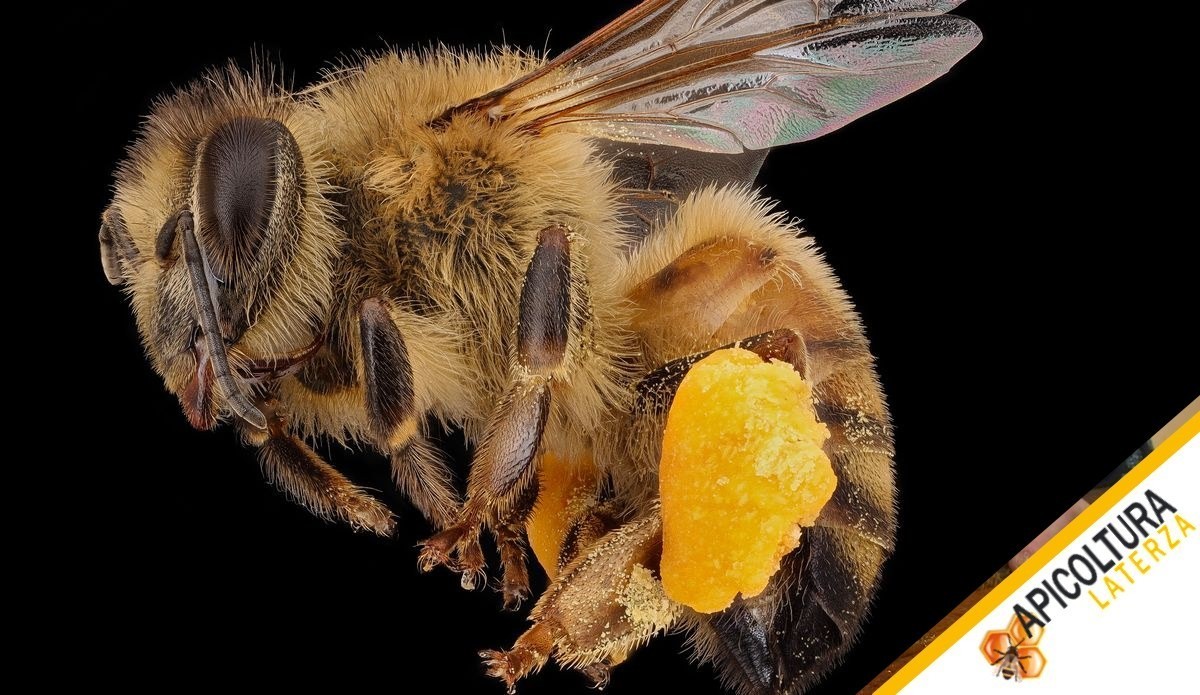
A forager visiting a flower gathers grains on her hairy body, moistens them with a little nectar and saliva, and packs them into the two baskets on her hind legs, the corbiculae. The result is the compact, coloured pellet we see arriving at the entrance. Each pellet almost always comes from a single flower type, because foragers tend to stay loyal to one species for the whole trip. That is why watching the colours coming in over an afternoon gives you something close to a small survey of the blooms the colony is actually using at that moment.
Pollen colour: a map of what is flowering nearby
Pollen colour spans a wide range, from near-white yellow to dark brown, through orange and red, more rarely greens and purples: each plant species produces a fairly consistent colour, recognisable over time. You do not need precise botanical identification to benefit from this: it is enough to notice whether two or three different colours come in on a given day, or just one, always the same. More colours together mean more sources available within foraging range, and therefore a more varied diet for the colony. A single colour, repeated for weeks, instead points to an area poor in alternative bloom, or to one dominant flow absorbing nearly all the foraging effort.
From pollen to bee bread: the transformation nobody sees
Pollen delivered at the entrance is not eaten straight away. House bees pack it into cells near the brood, press it down and seal it with a film of honey: this is how bee bread forms. From that point a natural fermentation runs in stages over roughly twenty days: first bacteria use up the residual oxygen in the cell, then an oxygen-poor environment favours lactic acid bacteria that lower the pH and discourage pathogens, and finally yeasts complete the process. The result is a food that is more digestible and richer in available nutrients than raw pollen, with a remarkable shelf life when kept under the right conditions. It is bee bread, not raw pollen, that is the colony's real protein food.
Why brood cannot do without bee bread
Nurse bees eat large quantities of bee bread in their first days as adults, and use it to develop their hypopharyngeal glands, the ones that produce the food fed to the youngest larvae and to the queen. When bee bread is scarce, those glands develop poorly or regress, and larval nutrition suffers: it is not an effect you see immediately, like a disease, but a slow weakening that shows up in the strength of the bees born in the following weeks. This is one reason a colony short on pollen for an extended period can look fine today and appear weak a month later, once the bees raised on a poor protein diet emerge.
When pollen traffic drops: signals worth reading
A drop in incoming pollen never has a single cause, and it should always be read in context. A few days of rain or strong wind reduce foraging for everyone, pollen included, and recover on their own as soon as the weather improves. A drop that lasts longer, in the middle of a flowering season, deserves attention: it can point to a genuine local shortage of forage, or, if the colony all but stops bringing in pollen while flowers are clearly available nearby, it can be a sign the colony has gone queenless, because without brood to feed, protein collection loses its biological urgency. In these cases it is worth opening the hive and checking for fresh brood, rather than relying on entrance observation alone.
More colours, less risk: why variety matters as much as volume
A colony storing plenty of pollen but always the same colour is not automatically safer than one collecting less from varied sources. Each plant species offers a different nutritional profile in terms of protein, fat and micronutrients, and no single source matches a mixed diet. Farmland dominated by one flowering crop, however generous during its few peak days, leaves colonies more exposed during the gaps that follow. An apiary close to hedgerows, woodland edges or unmanaged meadows, where different species bloom in sequence through the season, tends to give bees a more stable nutritional base over time.
Looking inside the hive: bee bread during inspection
During a routine inspection, it is worth spending a few seconds on the frames nearest the brood, where bee bread is normally stored in an arc around the brood cells. Full cells, showing several colours side by side, are a good sign of adequate protein reserves and varied foraging. Frames with few bee bread cells, or with a single colour repeated everywhere, are worth noting in the inspection log and rechecking at the next visit. It costs no extra time: it is the same frame you already lift to check the brood.
The pollen trap as a diagnostic tool, not only a commercial one
In our article on harvesting we already explained how a pollen trap works for beekeepers selling the product. The same trap, fitted for just a few days and not left in place long-term, is also a way to measure how much pollen is actually coming into a hive, instead of estimating it by eye at the entrance. It is more precise than visual observation alone, and over time, comparing samples from one check to the next, it helps you see whether collection is rising, falling or changing composition, well before the change becomes obvious in other ways.
An indicator, not a verdict
Incoming pollen tells you a lot, but on its own it is never enough for a diagnosis. It should be read together with the presence of brood, the bees' behaviour at the entrance, and, in the right season, hive weight and varroa pressure: different signals, read together, give a far more reliable picture than any single clue on its own. A colony collecting little pollen but with regular brood and adequate stores is probably just going through a local shortage. A colony collecting no pollen and showing no brood, on the other hand, deserves attention before the problem grows.
The pollen basket coming home every afternoon is one of the simplest signals in the whole apiary, because it needs no opening at all: just watching. Varied colour, steady flow, well-filled bee bread cells are the colony's way of saying things are going well. When that flow stops, or flattens into a single colour for too long, it is time to look closer, before the signal turns into a problem.
A colony struggling to collect pollen needs help, not just watching
If pollen flow stays low season after season, the colony may need a hand: a healthy nuc to reinforce it, or a young queen to give it fresh momentum. Tell us about your apiary: we will help you work out what it actually needs.
In Same Category
- Water in the Apiary: Real Needs and Waterers That Actually Work
- Flowering Calendar: Planning the Year on Your Own Flight Radius
- Contract Pollination: How the Service Works for Growers
- Pollen and Propolis: What You Need to Harvest Them and When It Pays
- Urban Beekeeping: Rules, Siting and Good Neighbours for Keeping Bees in the City