Why Bees Swarm: Timing, Causes, and Meaning
At Apicoltura Laterza, we work closely with bees every day and we know how misunderstood these extraordinary creatures still are. One of the most fascinating—and sometimes frightening—behaviors for people is undoubtedly bee swarming. In this article, we aim to clearly, simply, and thoroughly explain why bees swarm, when it happens, and what it means. Most importantly, we want to show that this event is not something negative, but a true natural phenomenon.
We’ll also talk about swarming from our perspective as professional beekeepers, with a focus on Italian bees and honeybees.
What is Bee Swarming and Why Does It Happen?
Swarming is a natural process that allows bees to survive and reproduce. Simply put, bees swarm when a colony becomes too large and decides to split in order to create a new one. Though it may seem chaotic, this behavior is highly organized.
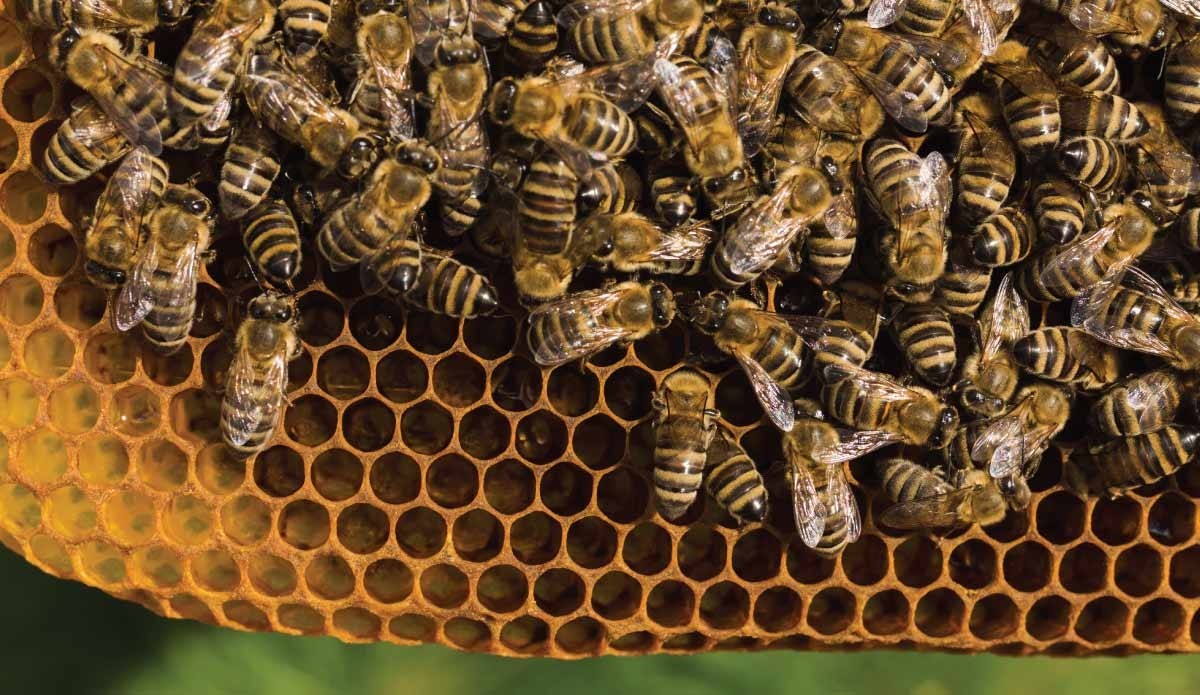
Inside the hive, everything starts from a specific condition: the number of bees increases rapidly, the worker bees become too many, and space starts to run out. When this happens, the colony prepares for a major change.
Swarming can be seen as an act of natural balance. A hive may house millions of bees, but when the conditions are no longer ideal, the “superorganism” splits to seek a new home.
When Do Bees Swarm?
We’re often asked when bees swarm and what is the correct swarming season. Generally, swarming occurs in spring or early summer, when the weather is favorable and flowers are blooming abundantly.
This is when bees have the most resources, more honey reserves, and a stronger workforce. It’s no coincidence that bees swarm at a strategic moment to ensure the survival of the new swarm.
The Key Role of the New Queen
One of the most fascinating aspects of swarming is the birth of a new queen. When the colony decides to swarm, bees begin building queen cells—special structures meant to house future queens.
The old queen, along with a portion of the worker bees, will leave the original hive to start a new colony. Meanwhile, inside the old hive, a new queen is born to lead the remaining bees.
This process is governed by the queen pheromone—a chemical substance that communicates the queen’s status and coordinates the colony. When the pheromone decreases or changes, the bees understand it's time to act.
What a Bee Swarm Means: It’s Not Dangerous
For those unfamiliar with bees, seeing a swarm can be alarming. However, it's important to understand the true meaning of a bee swarm: it is not aggressive.
During swarming, bees are not defending territory or honey stores. They are solely focused on finding a new home. For this reason, swarms can be safely observed from a proper distance.
At Apicoltura Laterza, we emphasize that a swarm is a natural event to be respected, not feared.
Italian Bees and Swarming
Italian bees are known for their industrious nature and high honey production. These bees also follow the natural behavior of swarming, which is an essential part of their life cycle.
The Italian honeybee is particularly balanced: its swarming may be less aggressive than other subspecies, but it remains a vital process for species continuity.
In our daily work, we observe how worker bees actively participate in each phase of the process—from preparing the hive to protecting the queen during the swarm flight.
What Happens Inside the Hive Before Swarming?
Inside the hive, a true revolution occurs before swarming. The bees temporarily reduce honey production, consume part of their reserves, and prepare for the journey.
The queen is “lightened” by the bees, which feed her less to help her fly. Meanwhile, worker bees scout for the most suitable place to establish the new swarm.
This proves how highly organized and deliberate the swarming process is.
A New Swarm, A New Colony: A Fresh Start
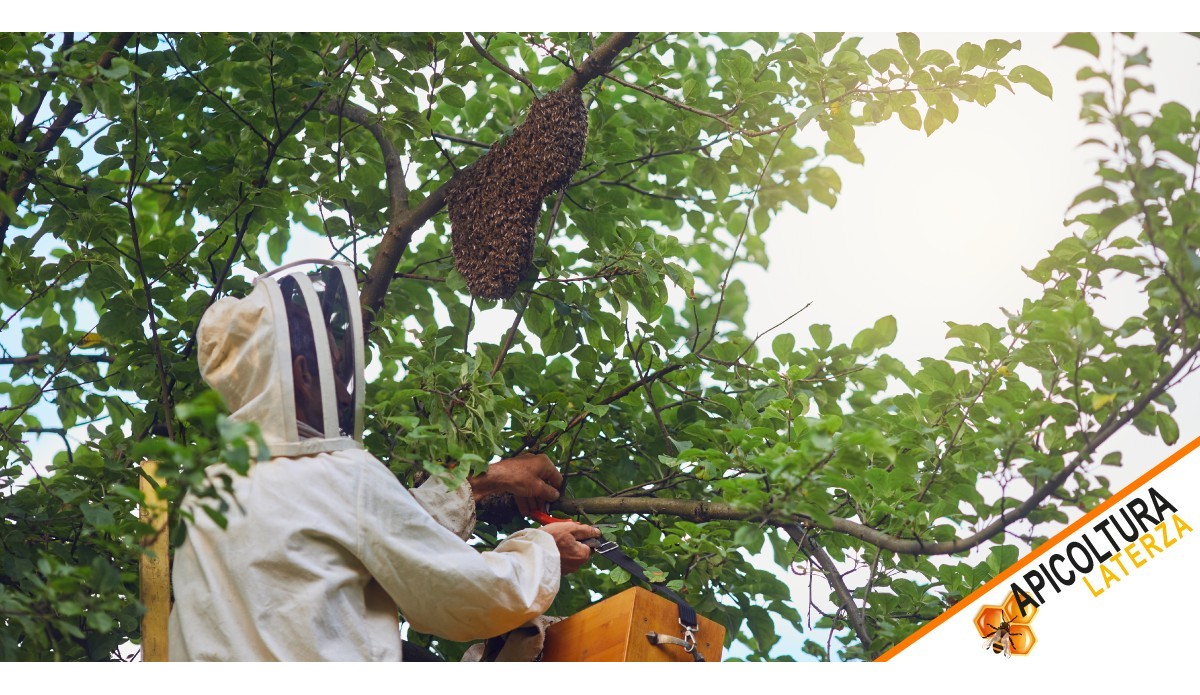
When the swarm leaves the hive, it temporarily rests on a tree or another surface. Here, the bees cluster to protect the queen while scouts search for a permanent new home.
Once the ideal place is found, the swarm moves and establishes a new colony. From that point on, the cycle begins again: comb building, nectar and pollen gathering, and new honey production.
For us at Apicoltura Laterza, witnessing this moment is always exciting—it represents nature’s power and the bees’ adaptability.
Why Swarming Matters for the Ecosystem
Swarming benefits not only bees but the environment too. The birth of new colonies boosts pollination and supports ecosystem balance.
Bees, as vital living beings for our planet, play a crucial role in the life of plants, animals, and humans. Without swarming, colonies could become too large and less efficient.
That’s why swarming is a phenomenon to respect and understand—not fight against.
Apicoltura Laterza’s Perspective
From our point of view, swarming is not a problem—it’s a sign of a healthy colony. A hive that swarms is often strong, vital, and well-developed.
As beekeepers, our job is to manage this event in the best way possible, protecting both bees and people. We intervene only when necessary, always with respect and expertise.
Swarms can be recovered and turned into productive new families, helping preserve Italian bees and continue our work.
Conclusion
Now that you understand why bees swarm, you can view this event differently. The timing, the role of the worker bees, the birth of a new queen, and the creation of a new colony are all part of a perfect balance.
The meaning of a bee swarm is life, continuity, and adaptation. It shows how organized and intelligent nature truly is.
At Apicoltura Laterza, we believe that knowing bees is the first step to respecting and protecting them. Swarming is not chaos—it’s harmony. And that harmony is what makes bees one of the most fascinating living beings on our planet.