Carpenter Bee: Everything You Need to Know
When people think of bees, most imagine the classic honey bees flying from flower to flower collecting pollen and contributing to honey production. However, there are other, lesser-known bees that are just as important for the environment. One of these is the carpenter bee, also known as the wood bee or Xylocopa violacea. In this article, created by Apicoltura Laterza, we’ll provide all the key information about this bee, answering questions like how many eyes a bee has, what bees eat, how many legs bees have, and much more.
What is a Carpenter Bee?
The carpenter bee is an insect belonging to the Xylocopa genus, with Xylocopa violacea being the most common species in Europe. This large, violet-colored bee is often mistaken for a black hornet due to its bulky body and deep buzzing sound. However, unlike hornets, the carpenter bee is generally solitary and not aggressive.
Sometimes called a wood bee due to its habit of burrowing into dead wood to build its nest, carpenter bees can be found in logs, wooden poles, or even untreated wooden structures.
The Wood Bee and Its Sting
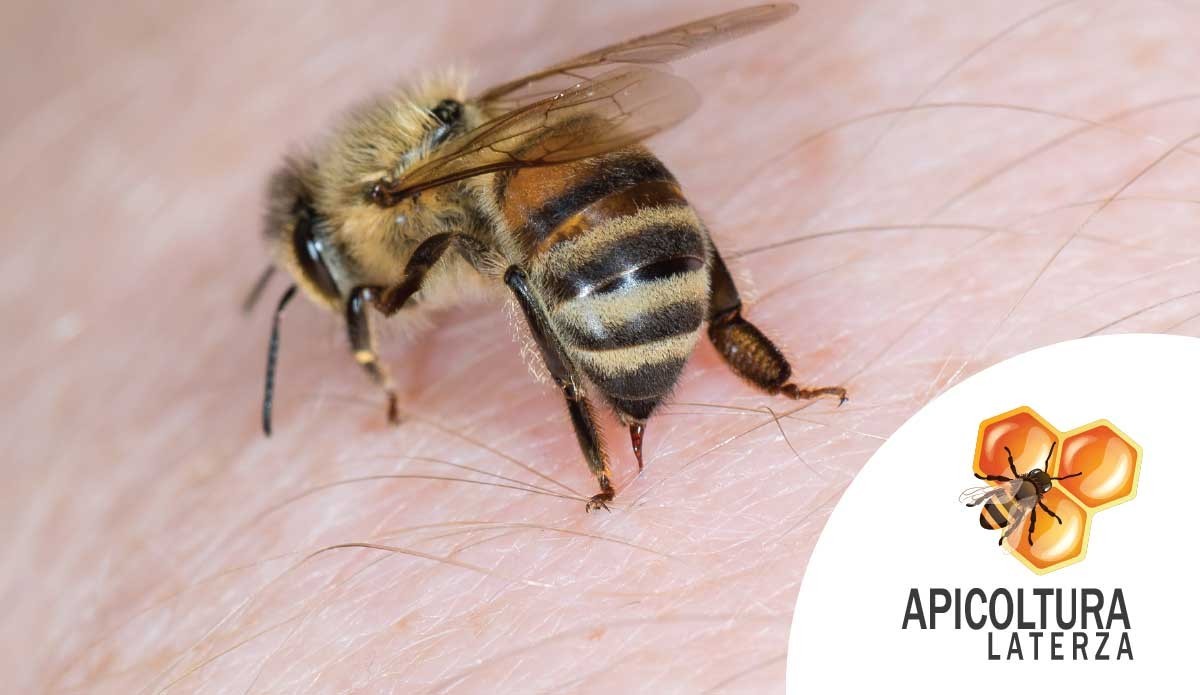
A common question is whether the carpenter bee stings. It’s important to know that while this insect can sting, it rarely does. Only females have a stinger, which they use only if they feel seriously threatened. Unlike honey bees, carpenter bees can sting multiple times because they do not lose their stinger after stinging.
Still, there’s no need to fear them: they are not aggressive toward humans and prefer to flee rather than attack.
Where It Lives and How It Builds Its Nest
One of the most fascinating aspects of the wood bee is its nesting behavior. The female burrows tunnels into dead wood using her powerful mandibles. She doesn’t eat the wood but removes it to create long tunnels that serve as brood chambers. In each chamber, the bee lays an egg and provides a mixture of nectar and pollen for nourishment.
This nesting and egg-laying activity is solitary—wood bees don’t live in organized colonies like honey bees. However, multiple nests may be found in the same area.
Life Cycle: From Birth to Foraging
The carpenter bee’s life begins when the egg is laid inside the nest. After a few days, the larvae feed on the food left by the mother, then transform into pupae and eventually into adults.
There is no “queen bee” in the traditional sense, as carpenter bees do not form structured colonies. Each adult female is independent and responsible for laying eggs and caring for the offspring.
What Do Carpenter Bees Eat?
Many people wonder: what do bees eat? Or more specifically, what does the carpenter bee eat?
Bees find food sources in gardens, meadows, and forests. Like foraging honey bees, the carpenter bee feeds on nectar from flowers, using its proboscis. During nectar collection, it also aids in pollination, proving itself to be a valuable pollinating insect.
In addition to nectar, it collects pollen, a protein-rich substance used to feed the larvae. In some cases, it may contribute to honey formation, but it is not known for producing large amounts of honey. Therefore, carpenter bees are not a significant source of honey and pollen like worker honey bees.
What Does a Carpenter Bee Look Like?
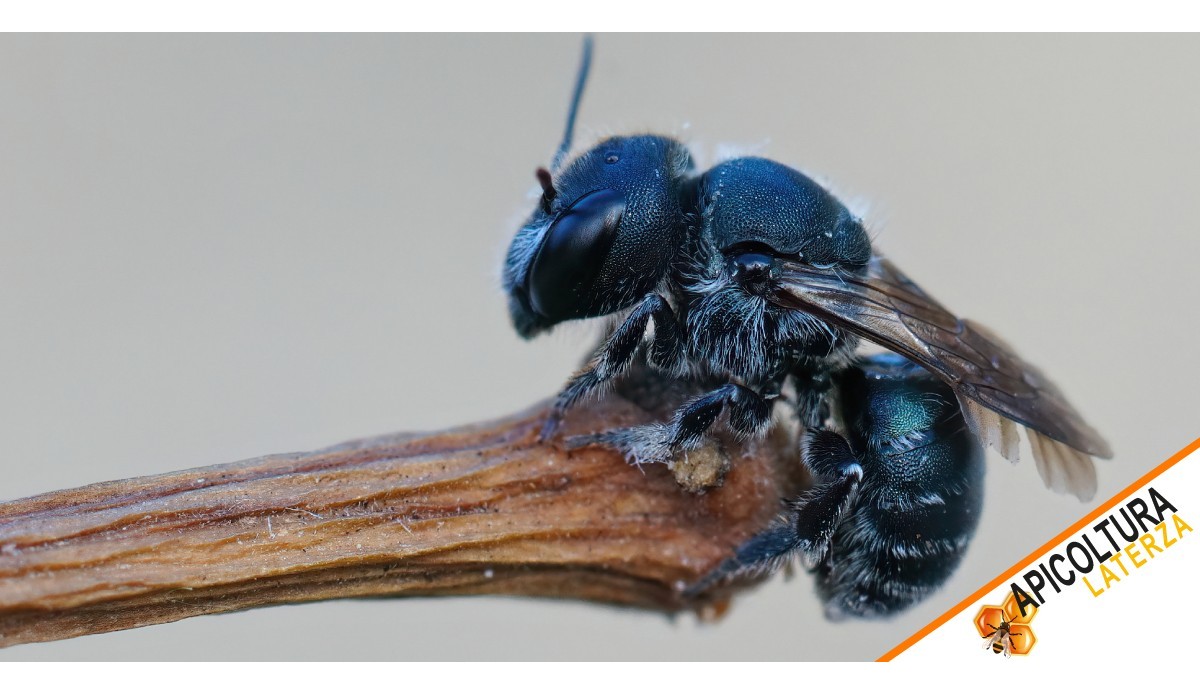
Morphologically, the carpenter bee is easy to recognize. It has a shiny black-violet body, dark wings with metallic reflections, and a robust structure.
But how many eyes does a carpenter bee have? Like other bees, it has five eyes: two large compound eyes on the sides of its head, useful for panoramic vision, and three simple eyes (ocelli) arranged in a triangle on the top of the head, which detect light and movement.
And how many legs do bees have? Like all insects, the carpenter bee has six legs, arranged in three pairs. The hind legs are particularly strong and adapted for collecting and carrying pollen.
Differences from Honey Bees
Foraging bees are part of honey bee colonies and have a complex social structure with a queen bee, worker bees, and drones. In a hive, the queen mates once in her lifetime and can lay several eggs a day.
Carpenter bees, on the other hand, have no such social structure. Each female is her own “queen.” There are no distinct castes. Reproduction and care of the offspring are individual tasks.
The Ecological Role of the Wood Bee
Although it doesn't produce much honey, the carpenter bee plays a vital role as a pollinator. Its nectar and pollen collection supports the fertilization of many wild and cultivated plants, thereby allowing humans to enjoy the fruits of nature.
Its presence is also a sign of biodiversity: seeing a carpenter bee in your garden indicates a healthy environment.
Conclusion
The carpenter bee, also known as the wood bee, is a fascinating creature—often misunderstood but essential to our ecosystem. Despite its size and deep buzzing sound, it’s a peaceful, solitary, and hardworking bee. From pollen collection to egg care and nest building in wood, it perfectly exemplifies ecological adaptation and usefulness.
If you'd like to get to know this intriguing insect better, take a look around your garden during the warmer months. You might spot a large violet bee flying among flowers or burrowing into wood. And remember: every bee that pollinates a flower contributes to the survival of our environment.
In Same Category
- Water in the Apiary: Real Needs and Waterers That Actually Work
- Flowering Calendar: Planning the Year on Your Own Flight Radius
- Contract Pollination: How the Service Works for Growers
- Pollen and Propolis: What You Need to Harvest Them and When It Pays
- Urban Beekeeping: Rules, Siting and Good Neighbours for Keeping Bees in the City