Bee Life Cycle: Complete Guide to the Life Cycle
The life cycle of bees is one of the most fascinating aspects of the world of beekeeping. At Apicoltura Laterza, we live in close contact with our colonies every day, and we can say that observing the life cycle of bees is an extraordinary experience. Understanding the bee life cycle does not simply mean knowing the growth stages of an insect, but entering an organized, precise, and surprising universe.
Bees are social insects. This means they live in organized groups inside the hive, where each individual has a specific role. Their lives are regulated by precise timing and tasks assigned according to age and function. Understanding the bee life cycle also helps those who want to approach the world of beekeeping, as it allows them to understand the basics of hive management.
The Three Main Roles in the Hive
Inside the hive, we find three types of bees:
-
Queen bee
-
Worker bees
-
Drones
Each has a different life cycle and lifespan. The life of bees is closely linked to the role they perform within the colony.
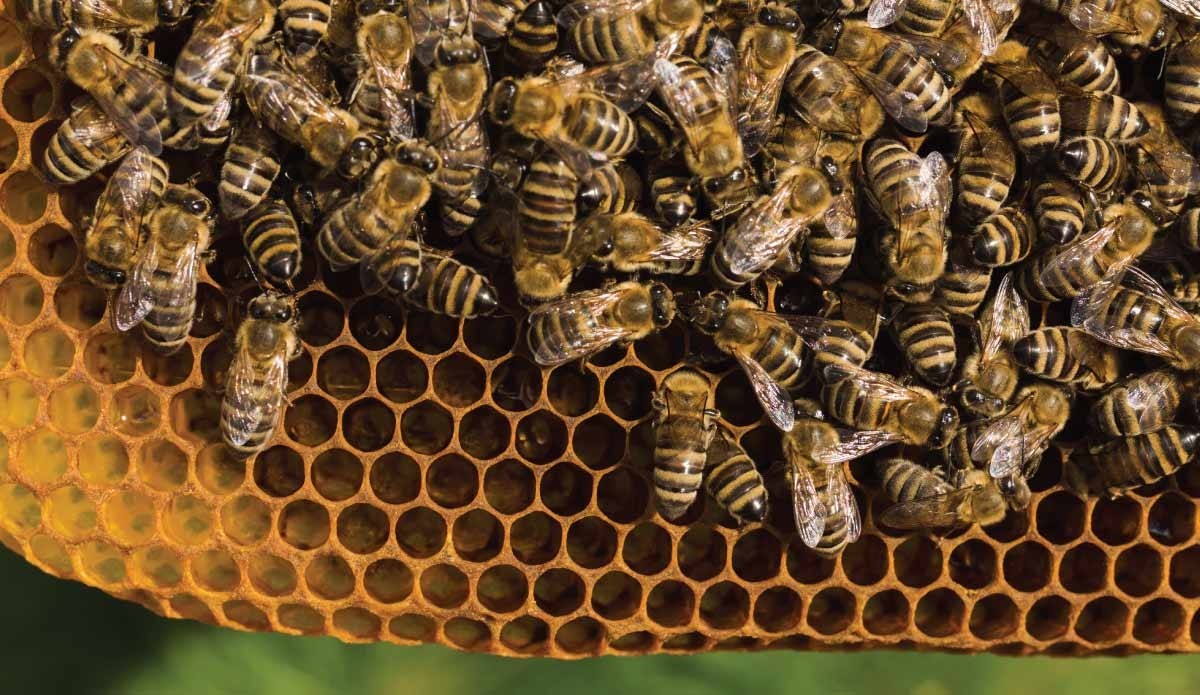
The queen bee is the central figure. She is the only fertile female in the hive and her main task is laying eggs. Worker bees, on the other hand, are sterile females that perform a series of essential tasks for the survival of the colony. Drones are the males and their role is to fertilize new queens.
Egg Laying: The Beginning of the Life Cycle
The bee life cycle begins with egg laying. Every day, the queen can lay up to thousands of eggs. She begins laying eggs after reaching sexual maturity, and this moment is crucial for the future of the colony.
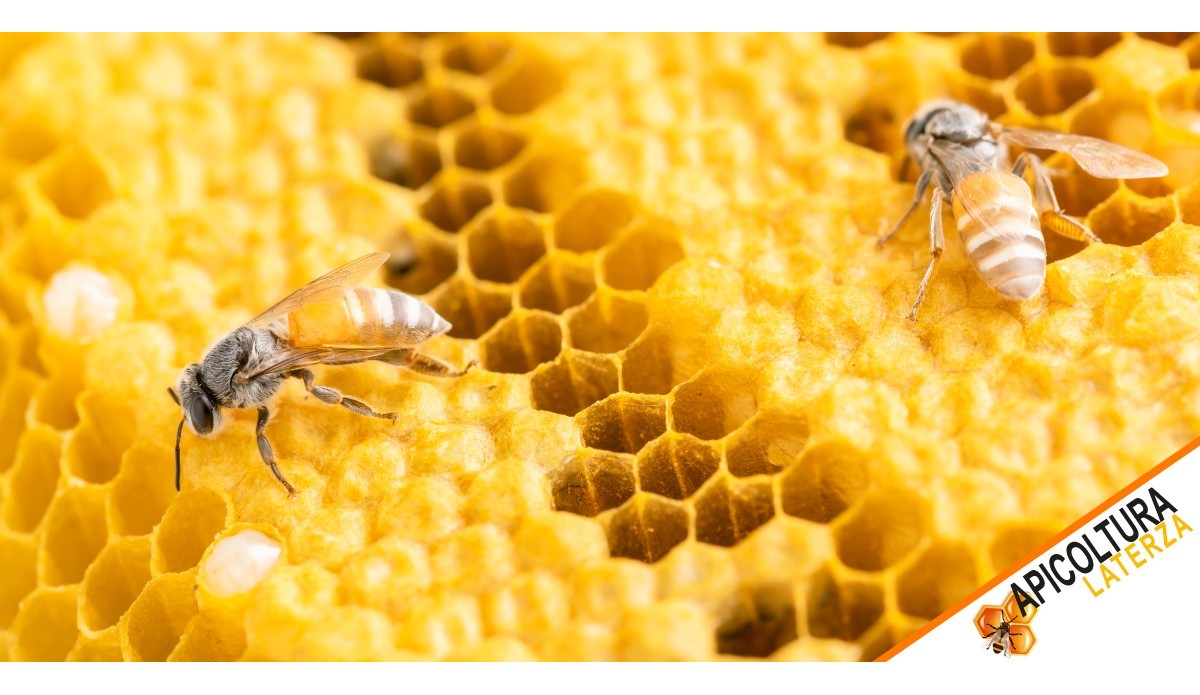
The eggs are laid inside the hexagonal cells of the honeycomb within the hive. After three days, the eggs hatch. This moment marks the transition to the larval stage.
From Egg to Larva
When the egg hatches, a small larva is born. At this stage, the larvae are fed by worker bees with highly nutritious substances. During the first days, all larvae receive royal jelly, a substance rich in proteins and vitamins.
Royal jelly is essential for development. If a larva continues to be fed exclusively with royal jelly, it will become a new queen bee. Otherwise, it will develop into a worker bee or a drone. This demonstrates how crucial nutrition is in the bee life cycle.
The larvae are continuously fed while worker bees care for them tirelessly. Within just a few days, the larva grows rapidly.
The Pupal Stage
After about six days in the larval stage (for worker bees), the cell is sealed with a wax cap. Inside the cell, the larva transforms into a pupa. This is a delicate and silent phase. During this period, profound transformations occur: wings, legs, and mouthparts develop.
The mouthparts are a fundamental tool for the bee’s survival, as they allow it to collect nectar and pollen. This stage is an integral part of the life cycle and ends with the emergence of the adult bee.
The Birth of the Adult Bee
Once the transformation is complete, the adult bee breaks through the wax cap and exits the cell. At this point, a new phase of the bee life cycle begins.
Lifespan varies according to role:
-
Worker bees live about 40–60 days in summer.
-
In winter, they can live several months.
-
The queen bee can live up to 4–5 years.
-
Drones generally live only a few weeks.
This difference in lifespan is directly related to their function within the colony.
The Life Cycle of Worker Bees
Worker bees make up the majority of the hive population. Their lives are organized according to age and involve a true sequence of tasks.
In the first days, they clean the cells. After a few days, they become nurse bees and care for the larvae. Later, they produce wax and contribute to building the honeycombs.
As they grow and mature, they change roles. They become hive guards and eventually foragers. In this final stage, they leave the hive to collect nectar and pollen.
The worker bee life cycle is intense and often short, especially during the warm months when work is more demanding.
The Queen Bee’s Life Cycle
The queen bee develops slightly differently. She also hatches from an egg, but she is fed exclusively with royal jelly. This allows her to fully develop reproductive organs.
Once she becomes an adult, the queen performs the nuptial flight. After mating, she returns to the hive and dedicates herself to laying eggs for the rest of her life.
Her presence is essential for the colony’s balance. Without her, the life of the hive would be compromised.
Drones and Their Life Cycle
Drones hatch from unfertilized eggs. Their development stage is slightly longer than that of worker bees. However, their lifespan is short.
Their only purpose is reproduction. After mating, the drone dies. If he does not mate, he may be expelled from the hive before winter.
New Queens and Colony Renewal
When a colony becomes too large or the queen grows old, new queens may be raised. This process can occur naturally and is often linked to swarming.
New queens are raised in special cells and fed only royal jelly. At birth, they may fight each other until only one remains. This ensures the continuity of the bee life cycle.
The Role of Mouthparts and Nutrition
The bee’s mouthparts are perfectly designed to collect nectar and pollen. They are made up of structures that allow the bee to suck nectar and shape wax.
While working in the fields, bees collect nectar, which is later transformed into honey. This food is essential for the colony’s survival during winter.
The Life Cycle and the Seasons
The bee life cycle is influenced by the seasons. In spring and summer, activity is intense. Egg laying increases and the colony grows rapidly.
In autumn, egg laying decreases. In winter, activity is reduced to a minimum, but bees remain active inside the hive to maintain warmth.
Most bees born in summer live only a few weeks. Those born in autumn can live until the following spring.
Why Understanding the Bee Life Cycle Is Important
Understanding the bee life cycle is essential for anyone who wants to approach beekeeping. Only by knowing each stage thoroughly can one properly manage a hive.
At Apicoltura Laterza, we believe that knowledge is the foundation of everything. Understanding how a bee is born, how it grows, and what role it plays allows us to respect these extraordinary insects.
The bee life cycle is not just a biological process. It is an example of perfect organization, collaboration, and balance. Every bee has a specific task and performs it for the good of the colony.
A Delicate Balance
The life of bees is fragile. Climate change, pesticides, and diseases can affect their lifespan and the survival of colonies.
For this reason, it is important to protect bees. Without them, the pollination of many plants would be compromised. Bees play a fundamental role in the environment and agriculture.
Conclusion
The bee life cycle is an extraordinary journey that begins with a tiny egg and transforms into an adult insect with precise tasks. From egg laying to the emergence of the adult bee, every stage is governed by perfect timing and mechanisms.
Lifespan varies according to role, but every bee contributes to the well-being of the colony. The queen ensures continuity, worker bees work tirelessly, and drones ensure reproduction.
At Apicoltura Laterza, we observe this wonderful life cycle every day. It is a lesson in nature, collaboration, and harmony. Understanding the bee life cycle means learning to respect and value them.
Only by truly understanding the life of bees can we protect them and ensure a better future for them and for us.
In Same Category
- Beekeeping Site Agreements: Terms and Fees with the Landowner
- The Italian Beekeeping Register: Registration, Apiary Sign and Census
- Migratory Beekeeping: When Moving Hives Really Pays
- Selling Honey: Labelling and Direct Sale Without Mistakes
- Hive Materials Compared: Wood, Polystyrene and Sizes, What Really Changes