Collecting and Transporting Nuclei and Packages of Bees: What to Know
Collecting a nucleus or a package of bees looks like the easiest part, but the journey is a delicate moment: tens of thousands of living animals, sensitive to heat. Here is how to organise pickup and transport without risk, from the rules in the car to the documents and arrival at the apiary.
You have booked a nucleus colony or a package of bees, and pickup day has finally arrived. It looks like the easiest part of the whole thing: load the car and drive home. In reality the journey is one of the most delicate moments, because you are moving tens of thousands of living animals, closed in a small space and as sensitive to heat as few other creatures.
A transport done well goes completely unnoticed: the bees arrive calm and get straight back to work. One done badly is paid for dearly, sometimes with the loss of the whole colony. It is worth spending five minutes to understand how it works.
Why transport matters more than it seems
Bees do not suffer from movement itself. What throws them into crisis is the heat they generate while packed together. Thousands of bees closed in a box produce heat and humidity, and if the air does not circulate the internal temperature rises quickly. The real risk during a journey is not the sting: it is suffocation from overheating.
That is why the two watchwords of every transport are always the same: air and cool. If you guarantee ventilation and low temperatures, you have already solved the biggest part of the problem.
Nucleus or package: two different loads
Before setting off it helps to know what you actually have in the car, because a nucleus and a package of bees travel in different ways.
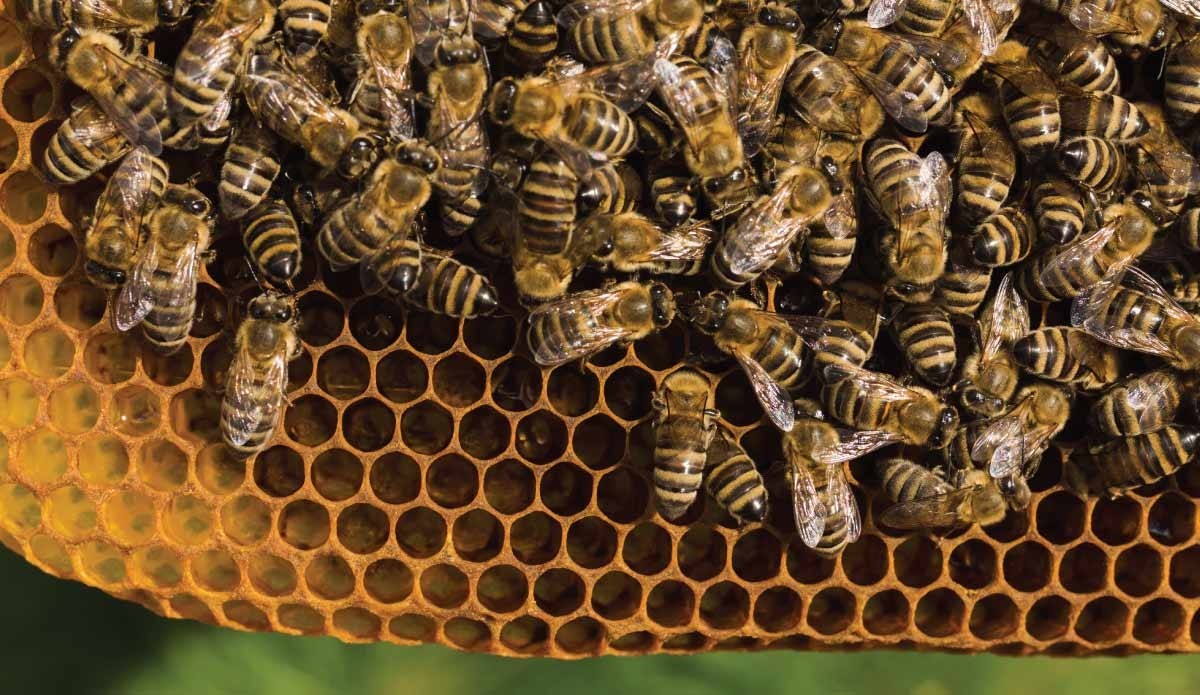
The nucleus is a small, already formed family: frames with brood, bees, stores and the laying queen, arranged in a transport box, fitted with a ventilation mesh. Here the important thing is the frames, which must stay still. If they shift during bends or braking they crush the bees and, in the worst cases, the queen.
The package of bees, on the other hand, has no comb: it is an artificial swarm, about a kilo and a half of loose bees plus a queen closed in her cage and a feeder with syrup, all inside a mesh cage. It weighs little and takes up little room, but it must be kept away from knocks and always upright, with the feeder not dripping onto the bees.
Before you move: documents and rules
There is one aspect beginners often ignore, but which is mandatory. In Italy anyone who owns even a single hive must be registered in the national beekeeping register and hold a holding code. The sale and movement of nuclei, packages and colonies must be accompanied by the required movement document, which certifies the origin of the animals and guarantees their health traceability.
This is not red tape for its own sake: it serves to keep bee diseases under control and to always know where what enters your apiary comes from. A serious supplier always hands over the correct paperwork. If you buy from us, we handle the documents together, so you set off with peace of mind.
The right moment to leave
The factor that makes the biggest difference is timing. Bees should be moved when it is cool: very early morning or the evening after sunset are the ideal windows, especially in late spring and summer.
Another advantage of the evening is that by then almost all the foragers are back inside, so you bring home the complete family and leave no orphaned bees at the pickup point. Avoid the central hours of hot days: half an hour of direct sun on a closed box inside a car can be enough to ruin everything.
How to arrange the bees in the car
A few practical rules, but all to be respected.
The first concerns air. Vents and ventilation mesh must never be covered: no cloths on top, no stacked boxes plugging the air intakes. The bees must breathe for the whole journey.
The second is position. The box must be kept level, with the frames oriented in the direction of travel so braking does not shift them sideways. The passenger compartment is better than a closed boot, which becomes an oven in summer. If you can, keep a window slightly open and the air conditioning at a mild temperature.
The third is the closure. The entrance of the nucleus is plugged with the proper foam or mesh only for the time of the journey, never with solid tape that also blocks the air. And whatever happens, do not open the box during stops: you open it only at the destination.
Pickup on site or delivery: how we work
The safest way to bring the bees home is still direct pickup: you take the family the same day, load it calmly and within a few hours it is already in place. Those who come to collect from us receive precise instructions on how to arrange the load and leave with the paperwork in order.
When the distance is significant we also arrange shipping with a specialised courier, using packaging designed to guarantee ventilation and stability. In both cases we prepare nuclei and packages so that the journey is as short and calm as possible for the bees.
On arrival: the first hours
Once at the destination, do not rush. Place the box directly in its final position, in a spot sheltered from the strongest sun, and leave it closed and still for about ten minutes, the time it takes for the bees to calm down after the journey.
Then open the entrance, ideally towards evening, and let the bees come out on their own to reorient. Transferring the nucleus into the definitive hive, or introducing the package with its queen, is done once the family has recovered, usually already the next day. In the first days avoid unnecessary inspections and, if needed, give a little feeding to help them restart.
If you have taken a package of bees, remember that the queen must be freed calmly from her slow-release cage: it is a step of its own that deserves attention, just like choosing the right selected queen.
The most common mistakes
Almost all transport problems come from three mistakes. The first is leaving during the hot hours: it is the number one cause of losses. The second is over-sealing, covering the mesh or closing the entrance with materials that let no air through. The third is rushing on arrival, with the box opened at once and the bees released while still agitated.
Avoid these three and the rest takes care of itself. A nucleus transported sensibly restarts as if nothing had happened and within a few days is already at work in its new position.
Not sure where to start?
If you are weighing up whether a nucleus or a package of bees is the right choice for you, or how to organise pickup and transport according to distance, talk to us before ordering. We prepare nuclei and bee families and packages of bees with a selected queen, and we guide you from pickup to placement in the apiary.
In short
Transporting bees comes down to two things only: air and cool. Move in the early morning or the evening, never cover the ventilation mesh, keep the frames still and level, do not open the box during the journey, and set everything up without haste on arrival. Add the correct movement documents and you have covered all that is needed.
Done this way, the journey becomes a detail: your bees arrive calm and the new season starts off the right way.
Nuclei and packages of bees ready for the new season
We prepare nuclei with a laying queen and packages of bees with a selected queen, and we guide you on pickup, transport and documents. Tell us where you are and what you need: we make sure they arrive the right way.
In Same Category
- Beekeeping Site Agreements: Terms and Fees with the Landowner
- The Italian Beekeeping Register: Registration, Apiary Sign and Census
- Migratory Beekeeping: When Moving Hives Really Pays
- Selling Honey: Labelling and Direct Sale Without Mistakes
- Hive Materials Compared: Wood, Polystyrene and Sizes, What Really Changes
Related by Tags
- The Italian Beekeeping Register: Registration, Apiary Sign and Census
- Migratory Beekeeping: When Moving Hives Really Pays
- Collecting and Transporting Nuclei and Packages of Bees: What to Know
- Package of Bees or Nucleus: How to Start Beekeeping from Zero
- Beekeeper's Calendar: The Right Time to Buy Your Bees