The Buckfast Bee: Temperament, Productivity and Who It Suits
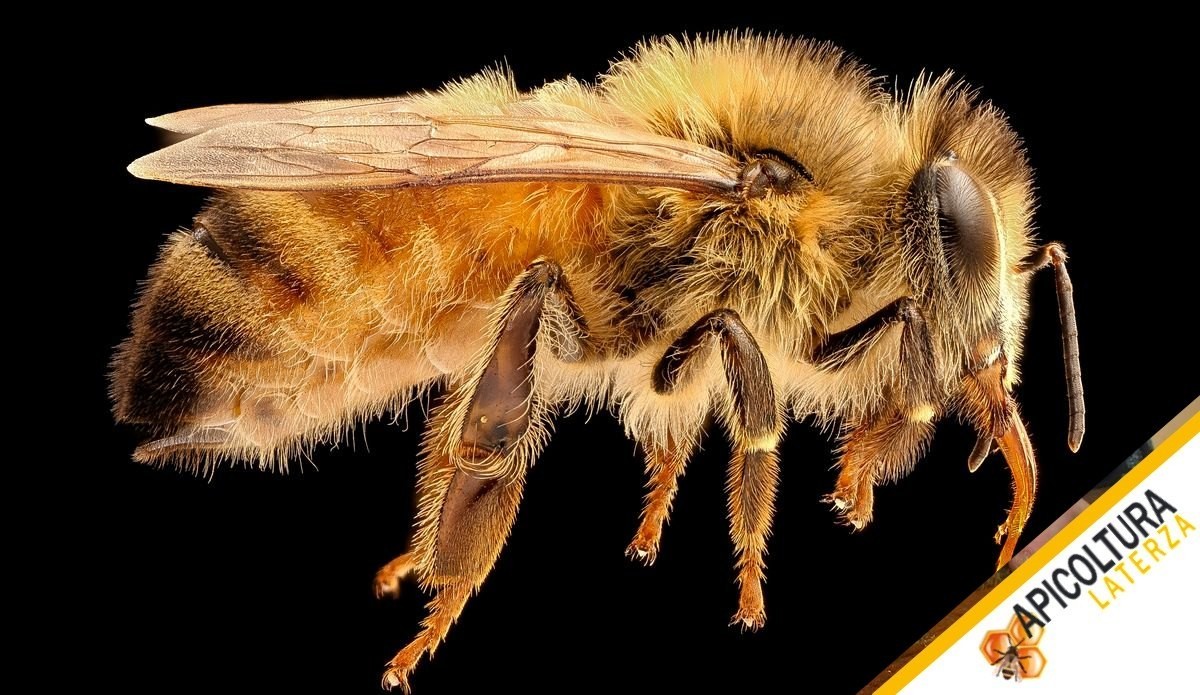
The Buckfast bee is not a race but a line selected by Brother Adam. Here are its temperament, productivity, the one real limit and who it is the right choice for.
The Buckfast is not a race: it is a project
Anyone hearing about the Buckfast bee for the first time assumes it is a subspecies, like the Ligustica or the Carnica. It is not.
The Buckfast was created in the early twentieth century by Brother Adam, a Benedictine monk at Buckfast Abbey in England. After acarine disease had wiped out the local bees, Brother Adam travelled across Europe and the Middle East to gather the best strains and cross them patiently, generation after generation, keeping only what worked: gentleness, yield, disease resistance. The result is not a bee born in nature, but a line built by human hands with a precise goal.
Understanding this origin explains everything else: its strengths, its temperament and also the one real practical limit we will come to later.
Temperament: bees that are easy to work with
The first thing that strikes anyone opening a Buckfast hive is the calm.
These are gentle bees, reluctant to sting, that stay quiet on the comb even during inspections. For the beekeeper it means working with less smoke, less protective gear and less stress, both for the operator and for the colony. It is an advantage you feel every time you open the nest, and it becomes decisive when hives sit close to houses, gardens or busy roads.
Gentleness is not just comfort. A calm colony is inspected quickly, gets stressed less and allows fast handling even for those with little experience.
Productivity and vigour: why professionals love it
Brother Adam did not select for pretty bees. He selected for honey.
The Buckfast is known for its vigorous spring build-up and its ability to raise large colonies, ready to exploit the main nectar flows. On important blooms such as acacia, citrus or sunflower, a strong colony at the right moment is the difference between one super and three. It is no coincidence that it is one of the queens most used by professional and migratory beekeepers, who move their hives chasing the harvests.
There is another practical aspect: the Buckfast tends to keep good yields under varied conditions, adapting well to climates and seasons that are far from ideal. It is part of the reason it spread so widely beyond England.
Low swarming, less chasing during the season
Swarming is every beekeeper's obsession in spring: a colony that swarms loses half its bees and much of the crop.
Among the traits selected in the Buckfast is precisely a reduced tendency to swarm. It does not mean it never swarms, no genetics can guarantee that, but that with proper space management the urge is more contained than in unselected lines. In practice this means fewer emergency inspections, fewer queen cells to check and a more manageable season.
Hygienic behaviour and colony health
Another trait the selection worked hard on is hygienic behaviour: the workers' ability to detect and remove diseased or infested brood.
It is a factor that helps the colony cope better with disease and contain varroa pressure, but be careful: no bee, Buckfast included, defends itself from the mite on its own. Varroa treatment remains essential every year. Good hygienic genetics is an extra help, not a replacement for sound health management.
The limit to know: the Buckfast does not reproduce itself
Here comes the point too many discover too late.
Being a hybrid line, the Buckfast gives its best only in the first generation, the one born from a selected queen mated under control. If you let a Buckfast queen mate freely with the drones in your area, the daughters lose the balance of traits: they can turn nervous, uneven, less productive. Beekeepers say the second generation "breaks up".
The practical consequence is simple. Anyone who wants to keep the Buckfast qualities must buy queens from a serious breeder when it is time to replace them, rather than raising them at home without a controlled mating station. It is not a flaw: it is the price of such intensive selection.
Who it suits (and who less)
There is no perfect queen in absolute terms. There is the right one for you.
The Buckfast is an excellent choice if:
- You are after productivity and strong colonies, especially if you make an income from honey or practise migratory beekeeping.
- You keep hives near people and gentleness is a safety priority.
- You are starting out and want calm bees, easy to manage while you learn.
- You want fewer swarming headaches during the peak season.
It is a less suitable choice if your project is to raise queens on your own and self-propagate the genetics: in that case a well-adapted local subspecies, such as a good Ligustica, gives you a more stable offspring without having to buy queens every time.
How to start with the Buckfast
The safest way to introduce this genetics into your apiary is to start from selected stock.
A mated Buckfast queen is already fertilised and ready to lay: the most practical solution to replace a tired queen or reinforce a colony with quick results. Those who want to start or expand an apiary can instead begin from a ready-made nucleus, which brings queen, brood and bees of all ages straight away.
We breed and select Buckfast and Ligustica queen bees in Puglia, with mated and virgin queens, nuclei on 3 and 5 frames and packages of bees. If you have not yet decided which genetics is right for you, you can compare them in our guide on how to choose between the Buckfast, Ligustica and Carnica queen.
In Same Category
- Beekeeping Site Agreements: Terms and Fees with the Landowner
- The Italian Beekeeping Register: Registration, Apiary Sign and Census
- Migratory Beekeeping: When Moving Hives Really Pays
- Selling Honey: Labelling and Direct Sale Without Mistakes
- Hive Materials Compared: Wood, Polystyrene and Sizes, What Really Changes
Related by Tags
- Weak Colonies in Late Summer: Assess, Strengthen or Unite Them Before Winter
- How to Introduce a New Queen Bee Without Mistakes
- Booking Nucs and Queen Bees for Spring 2027: Why Do It Now
- Ligustica or Carnica: How to Choose the Queen for Your Climate
- The Buckfast Bee: Temperament, Productivity and Who It Suits