Contract Pollination: How the Service Works for Growers
Parking hives on the headland is not a pollination service. How many colonies per hectare and why kiwifruit needs three times as many, when to bring them in relative to bloom, how to spread them, the pesticide clause worth more than the price, what the law says and what it pays in Italy today.
An orchard in full bloom, a grower worried about the harvest, and thirty hives arriving on a trailer at first light. Everyone knows that picture.
What hardly anyone explains is that, when the job is done properly, there is a contract between those two parties. Not a favour between neighbours: a service, with measurable parameters and written responsibilities.
Contract pollination has existed in Italy for decades, it is recognised by law, and for a number of beekeeping businesses it has become a steady line in the accounts. Yet it remains a poorly explained world, where the grower often does not know what he is buying and the beekeeper starting out does not know what he is selling.
This guide tries to put both points of view on the same table.
What a grower is actually buying
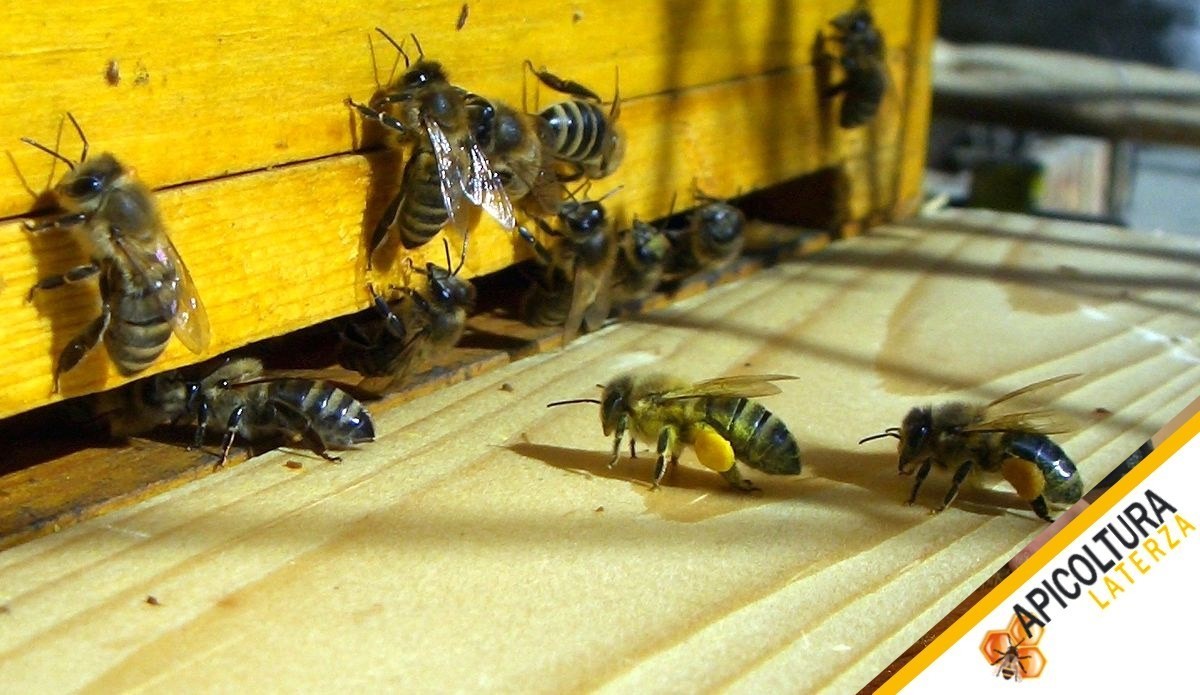
Not hives. He is buying forager visits on his flowers, during the days when those flowers are receptive.
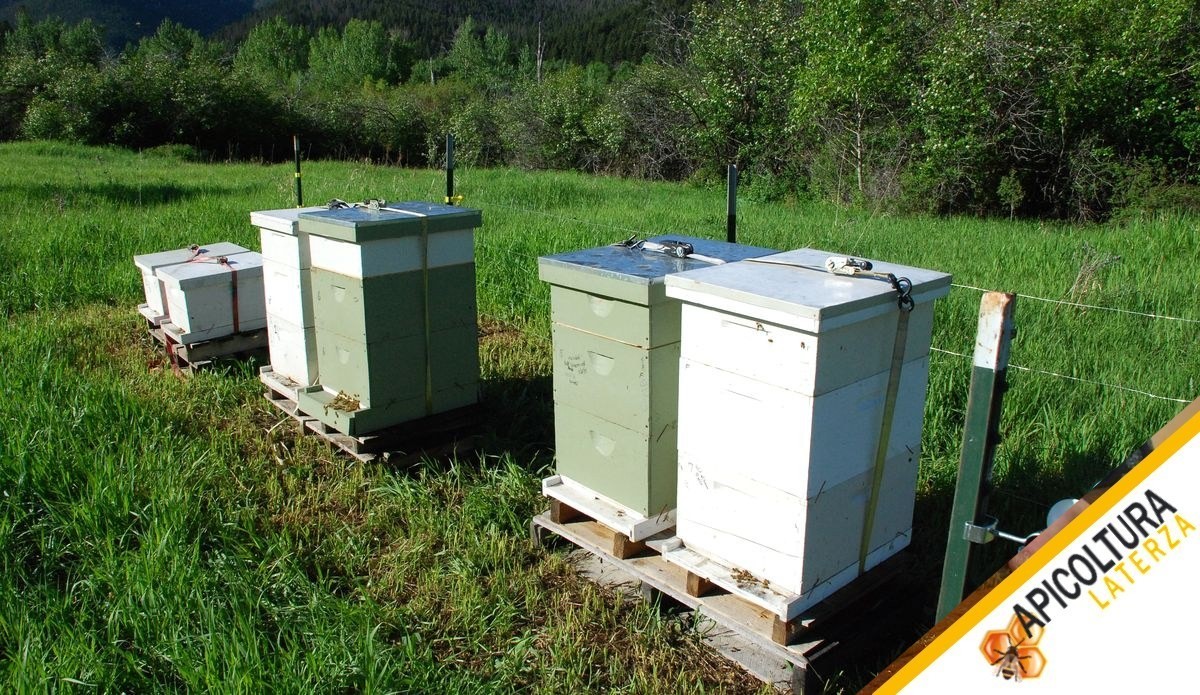
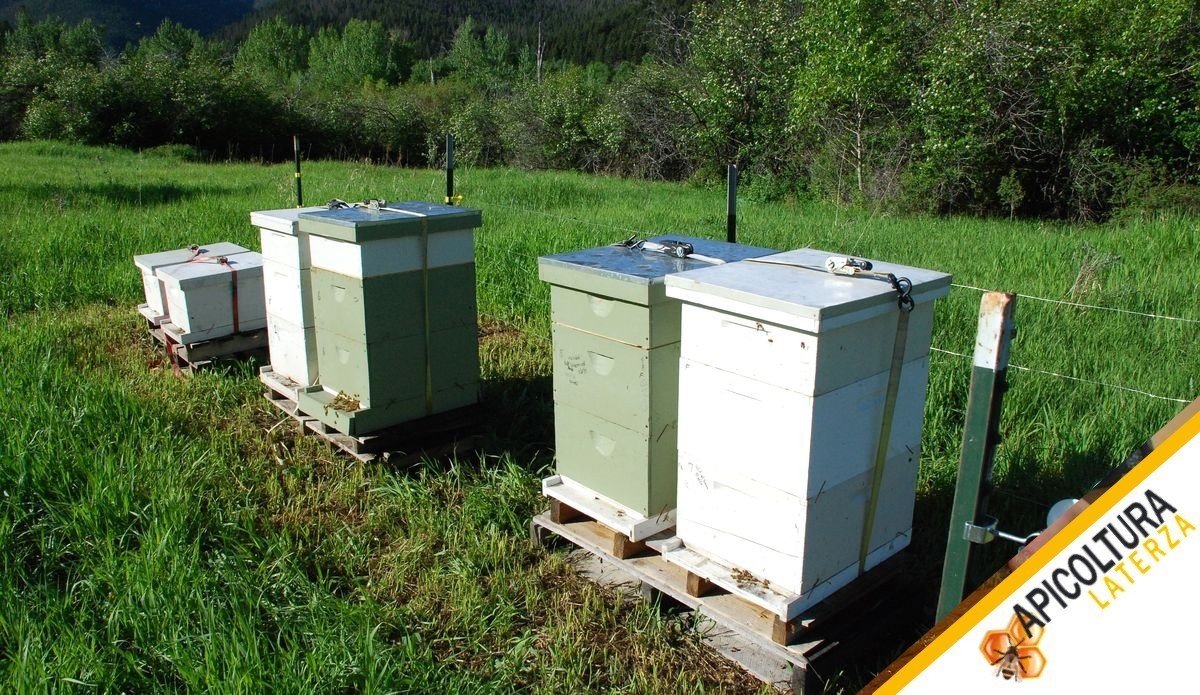
The distinction sounds subtle and it is in fact the whole story. A row of hives parked on the headland is not a pollination service: it is a row of hives. The service begins when somebody works out how many colonies are needed, how strong they are, when they arrive, where they are placed, and what else was flowering within flight range that week.
Many crops need it for structural reasons. All apple and pear varieties are self-sterile: for a flower to set fruit it needs pollen from another compatible variety, and somebody has to carry it. Wind is not enough on those flowers.
The benefit is not only quantity. It is also consistent fruit set and fruit size, which in many species depends on the number of fertilised seeds. A poorly pollinated fruit can grow small or misshapen and end up in a lower commercial grade even though the tree did produce.
The figure that explains everything: bees do not know they are under contract
This is the point that changes how you read the whole service, and it is also the least intuitive.
The Regional Beekeeping Laboratory of Friuli Venezia Giulia, together with the University of Udine, spent two years following honey bee activity on kiwifruit plantings, fitting pollen traps to hives placed next to the orchard and then analysing what the bees had actually collected. The result: on average only 4.7 per cent of the pollen foraged each day was kiwifruit pollen.
The rest came from other blooms. With the hives a few metres from the planting.
The authors themselves point out that conditions in that trial were unfavourable: the hail nets were open and seriously hampered flight, and the hives had been placed outside the orchard rather than inside it. That caveat is honest and belongs in the story, because the claim is not that bees always ignore kiwifruit. The claim is something else, and more useful.
Bees choose. They go where foraging pays best, not where the hive happens to be parked. If there is something more attractive around the crop, that is where they go.
Half of what a serious contract has to govern follows from this: mowing the competing flora in bloom between the rows and around the field, keeping hail nets furled until the bloom is over, and placing the hives inside the block to be pollinated.
How many hives per hectare
There is no single number, and anyone who gives you one without asking which crop is guessing.
Density depends on how attractive the flower is to the bee and how much pollen a marketable fruit requires. On many fruit crops you work in the order of a few units per hectare: in apple orchards, for instance, current practice in highly specialised areas such as Trentino runs at around four hives per hectare.
Kiwifruit is the opposite extreme. In Actinidia deliciosa orchards, given how little the flowers attract bees, 10 to 12 hives per hectare are placed: three times as many, because the kiwifruit flower offers no nectar and the bee has little reason to stay.
In practical terms: density is not a beekeeper's preference, it is a consequence of the crop's botany. And it is the first thing to put in writing, because it is also the first thing the price depends on.
When the hives go into the field
Too early is worse than late.
If colonies arrive before the field is in bloom, the foragers spend those days memorising other sources nearby. By the time the crop opens they are already committed elsewhere, and winning them back is hard.
The working reference varies with the crop. On kiwifruit, colonies should be introduced when 5 to 10 per cent of the female flowers are open, and left until petal fall. On other crops, including several seed crops, the window sits slightly later, around 15 to 20 per cent of open flowers.
The logic is always the same: go in when there is already enough to collect on the crop, so the bee commits to it straight away, but not so late that you waste the first days of bloom, which are often the best.
Weather counts too. Below 10 to 12 degrees bees do not fly, and in a short bloom two cold days can cost more than two fewer hives per hectare. That is a risk the contract should assign to somebody rather than ignore.
Where they go: groups, headlands, south-east
Piling all the hives into one corner of the field is the most common mistake, and the most expensive.
In unfavourable conditions bees do not travel more than 100 to 200 metres from the hive. With every hive in one spot, the far end of the block is poorly served, and by the end of the season the grower sees it in the fruit.
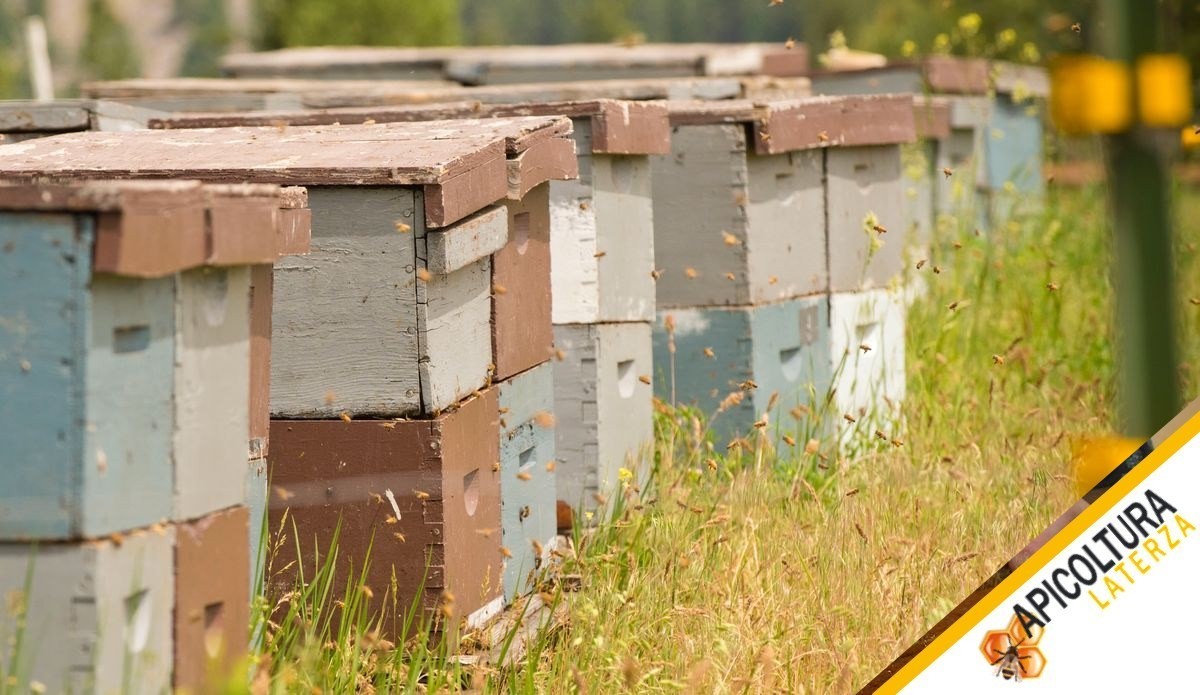
The practical rule in fruit growing is to spread the load in small groups. Where orchard rows are no longer than 150 metres, hives go in groups of two to four on the headlands, entrances facing south or south-east. Where rows are longer, pairs are added inside the planting as well, not only at the edges.
South-east is not an affectation: morning sun on the landing board brings the foragers out earlier and lengthens the working day. Across an eight-day bloom, an extra hour each morning is a real difference.
The right colony cannot be improvised
This is where those who provide the service part company with those who merely endure it.
A forager is not born a forager. It takes about three weeks from egg to adult bee, and then another 15 to 20 days of house duties before that bee flies out to collect. Count backwards: the bees that will work the orchard in April are eggs laid in late February.
That is why colonies destined for pollination are prepared with stimulative feeding, typically with candy, started 40 to 50 days before the expected bloom. Anyone who wakes up two weeks beforehand brings colonies without the right forager population, and knows it perfectly well even if he does not say so.
Upstream of that sits the ordinary spring work: strength, stores, brood health, space, equalising between hives. These are exactly the spring checks at the hive every beekeeper does anyway, except that here they have a contractual deadline.
Greenhouses and seed crops: not hives, nuclei
Not all of this work is done with full production colonies, and this is a slice of the market many beekeepers overlook.
A greenhouse is an enclosed space with a limited volume of flowers, and a large colony would burn through its stores without collecting enough. So smaller units are used, often nuclei, built specifically for the length of the bloom.
The Italian National Honey Observatory describes it precisely in its monthly surveys. In Sicily, for greenhouse pollination of strawberry, watermelon and cantaloupe melon, the units are queenless nuclei made up of two or three brood frames and two frames of stores. In the Marche region, on seed crops such as cabbage and onion, growers use small hives with three brood combs covered in bees and an emerging queen cell.
That is rearing work, not haulage. Whoever raises nuclei for a living is already equipped for it, and anyone wondering how much population is needed to start will find the reasoning in our piece on a nucleus on 3 or 5 frames.
The clause worth more than the price: plant protection products
If you can only nail down one thing in the contract, make it this one.
A wrong treatment during bloom does not cost a day's work: it can kill the foragers and, in some cases, compromise the colony for the rest of the season. That is the risk that makes pollination a service and not a rental.
The Italian framework law on beekeeping gives the Regions the job of setting the limits and prohibitions on treatments with plant protection products and herbicides toxic to bees during flowering, and of establishing the penalties. Every Region has done so in its own way, so the operational rule always has to be checked locally.
To give a sense of how strict this can be: in Piedmont the regional rule bans treatments with products toxic to bees for the period running from the opening of the petals to their fall, extends the obligation to herbicides and fungicides, and applies it also where there is honeydew or spontaneous flowering in adjoining areas. Before treating in those conditions the vegetation must be mown, left to wilt and removed, or the flowers must be left to dry out completely so that they no longer attract bees.
In the contract this comes down to three lines: which active substances are excluded for as long as the hives are on site, how much notice the grower must give of any intervention, and at what time of day work is done if a permitted treatment is unavoidable.
What Italian law says
Pollination is not a legal improvisation, and it is worth knowing that before sitting down to negotiate.
Law no. 313 of 24 December 2004, at article 9, establishes that pollination is recognised, to all intents and purposes, as an agricultural activity by connection under article 2135, second paragraph, of the Italian Civil Code. The same article also introduces a specific tax treatment for certain parties carrying it out, whose application depends on the conditions the law itself sets: that is a matter for your accountant, not for a blog post.
Within the same framework, the national programme document for the beekeeping sector lists among its subject areas precisely the promotion of pollination by means of bees. In other words: this is not a tolerated grey area, it is an activity the legal system recognises and declares it wants to encourage.
The obligations that stay with the beekeeper
Taking hives onto somebody else's land cancels none of the ordinary obligations.
The duty to declare apiaries and hives to the veterinary services of the local health authority remains, stating location and number of hives, as does the duty to update that position when location or size change significantly. The procedures and deadlines for the census are handled by the national beekeeping register and must be checked with the competent office.
The minimum distances set by the Civil Code for apiaries remain as well: not less than ten metres from public roads and not less than five metres from public or private property boundaries, with the exemption that applies where there are differences in level of at least two metres or continuous barriers at least two metres high. On an open field that sounds like a detail; on an orchard squeezed between a main road and a house, it is not.
And then there is the whole moving side: paperwork, timing, loading. We covered it in detail in collecting and transporting nuclei and packages of bees, and it applies identically when hives move for a service. The same common-sense rules on siting, flight paths and relations with the neighbours were set out in our piece on urban beekeeping.
What it pays in Italy today
Public figures do exist, and they are more concrete than people assume.
The National Honey Observatory tracks this segment in its monthly surveys. The 2026 surveys report 27 to 30 euro per unit, VAT excluded, for nuclei used in greenhouse pollination in southern Italy, and around 40 euro per unit for the small hives used on seed crops in the Marche.
On fruit crops, specialised areas such as Trentino have long settled into a practice of hiring hives at rates in the order of a few tens of euro per hive, plus VAT.
Two warnings, because numbers without context mislead. First: a three-frame queenless nucleus and a full production colony are not the same unit, and comparing their prices is meaningless. Second: the market price is not a national tariff, it forms locally and shifts with the crop, the length of stay and the number of units required.
Why the price is not a rental
When the fee is built properly, it starts from the beekeeper's real costs.
There is transport, and the hours worked at night or at dawn loading and unloading. There is the stimulative feeding of the previous 40 to 50 days, which is sugar, time and mileage. There is the health risk of taking your own colonies to a site shared with other people's hives. There is the pesticide risk described above.
And above all there is a cost the grower almost never imagines: many crops that need pollinating produce no honey. Kiwifruit yields no nectar. Some seed crops give negligible harvests. For those days, then, the beekeeper is not merely lending bees: he is giving up the production those colonies would have made elsewhere, and often has to feed them on return.
Anyone reaching this level of service usually has an apiary already structured and equipped to move quickly; on what is genuinely needed and in what order to buy it we wrote a dedicated guide on equipment for a growing apiary.
What to put in the contract: the minimum list
A pollination agreement fits on two pages. When pieces are missing, the trouble always comes from the same place: whatever was not written down.
The minimum list, for both parties:
- Crop, area and exact location of the block, with the agreed number of units and the density per hectare.
- Type of unit: production hive, nucleus or small hive, with a verifiable description of minimum strength (frames of bees, combs of brood).
- Entry window tied to the percentage of bloom, not to a fixed date, plus an indicative removal date.
- Placement: agreed points, groups, orientation, vehicle access for the beekeeper.
- The grower's agronomic commitments: mowing competing flora in bloom, management of hail nets, availability of water.
- Plant protection clause: excluded products, compulsory notice, timing of any intervention, what happens in case of damage.
- Fee, payment terms and timing, and any deposit on delivery.
- Contingencies: what happens if the bloom comes early, slips, or bad weather wipes out half the useful days.
None of these lines is red tape. Each one corresponds to a conversation that, without a contract, would happen after the bloom, with the fruit already on the tree.
Three mistakes that end a service badly
Treating the number of hives as a price variable. If the crop calls for ten per hectare and six turn up to save money, the service does not cost less: it simply does not work, and nobody repeats it next spring.
Sending weak colonies into the field. A weak hive takes up the same space, needs the same transport and delivers a fraction of the visits. It is also the quickest way to burn a reputation in a world where growers talk to each other.
Agreeing verbally. It works as long as everything goes well. One treatment sprayed in the afternoon in full bloom, or a bloom that arrives ten days early, and there is no text to go back to. A contract is not about distrusting the other side: it is about protecting the relationship when the season turns awkward.
In short
Contract pollination is one of the few points where beekeeping and farming meet on measurable ground. The grower buys fruit set and fruit size; the beekeeper sells ready colonies and a presence in the field on the right days.
It works when both accept the same underlying idea: that bees do not work because they were brought there, but because somebody made that crop the most convenient choice available to them, in the week that mattered.
And all of it, as always, starts with the raw material. Without populous, healthy colonies delivered on time, no contract can hold it together.
A pollination service is worth exactly as much as the colonies you put into it
We rear nuclei, mated queens and colonies in our own apiaries, with traceable origin and scheduled deliveries. If you are building an apiary able to take on contract work as well, tell us where you are today: we will tell you frankly what it takes to get there.
In Same Category
- Pollen and Propolis: What You Need to Harvest Them and When It Pays
- Urban Beekeeping: Rules, Siting and Good Neighbours for Keeping Bees in the City
- Wildflower, Monofloral or Honeydew: How to Tell Honeys Apart and Choose the Right One
- Swarming: Recognising the Signs and Managing It in Spring
- Planning Your Apiary for 2027: How Many Colonies and Which Bees