Beekeeping Equipment for a Growing Apiary: What You Really Need and in What Order
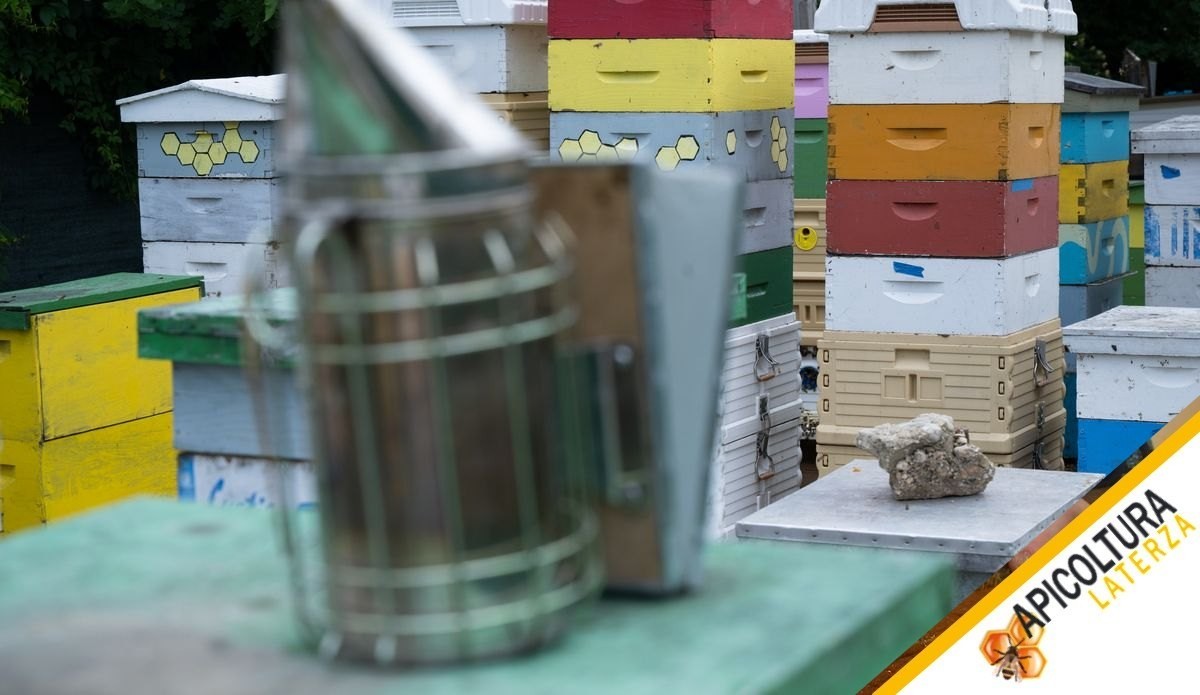
Once an apiary grows, the problem is no longer just keeping bees: it is carrying the workload. Which equipment genuinely gives time back, why there are never enough supers, when your own extractor makes sense, and in what order to spend over the next two seasons. Plus the three mistakes you see in every growing apiary.
You always recognise the moment in the same way. One year you have six hives and the boot of the car is enough. The following year you have fourteen, and every visit has turned into a small expedition.
Growing in beekeeping is not only a matter of bees. It is a matter of organisation, and equipment is the visible part of that organisation. The trouble is that almost nobody grows by buying things in the right order: people buy what is nice to own, not what is needed.
Let us try to sort it out. What you really need when an apiary stops being a hobby, what can wait another season, and what pays for itself in the very first year.
One clarification, because these are two different conversations. If you are still starting from scratch and want the basic list, it is in our guide to setting up a productive apiary. Here we are talking about the step after that: when the hives become ten, twenty, thirty and the kit that was enough before starts to fall short.
Growing does not mean buying everything at once
The temptation, once you decide to expand, is to write one list and order the lot. It looks efficient. Usually it is the best way to end up with a brand new extractor in the garage and not enough supers in July.
Equipment has a natural order, and the work dictates it: first what lets you manage the colonies, then what lets you harvest, finally what lets you process the crop. Skipping a step always costs you, and it costs you in the worst week of the season.
The first limit is not equipment, it is time
Before buying anything, do an honest sum: how many minutes you spend on average on one colony during a visit, multiplied by the number of colonies, divided by the hours you genuinely have.
With ten hives a thorough visit is an afternoon. With thirty it is a whole weekend, and in the middle of the season visits do not wait for the weekend. That sum tells you two things: how much you can grow without the management getting worse, and which equipment actually gives you time back.
Because that is the criterion that matters once you scale. Not "how much does it cost", but "how many minutes does it save me per hive, every single time". A feeder that fills in ten seconds instead of a minute, across twenty colonies and five rounds, is almost two hours recovered.
If the sum tells you that you are already running, no purchase will fix it: planning will. We covered that in the article on how to plan your apiary.
Hives and frames: pick one system and stay with it
This is the most important decision of all, and you make it once.
In Italy the reference is the ten frame Dadant-Blatt: brood frame 435 by 300 millimetres, super frame 435 by 145. It is not the only possible choice, but it is the one you find everywhere, and when you grow that matters more than any theoretical argument.
The reason is simple: interchangeability. If all your hives are the same, every brood frame can move from one colony to another, every super fits any brood box, every crown board and every queen excluder works across the whole apiary. If instead you have three different systems because over the years you bought second hand from three different people, you spend the season hunting for the piece that fits.
People who grow well buy new hives identical to their own, and put mismatched second hand kit at the bottom of the list, not at the top.
Supers: the line that always ruins the budget
Almost everyone gets this wrong, and they get it wrong by having too few.
The rule of thumb is to keep at least two fully framed supers for every productive colony, and to go to three if you work several flows or if you cannot extract straight away. It sounds like a lot until the good year arrives: at that point either you have a super ready to put on, or the bees run out of room and you end up managing swarming instead of a harvest.
Spare supers also mean you can extract when the honey is ready, not when you are desperate for space. That is exactly the difference you taste in the jar, and we wrote about it when discussing when to take the supers off.
Super frames, by the way, should be assembled in winter. Putting them together in March with the bees already flying is one of the most frustrating jobs there is.
The right smoker changes the whole day
With five hives any smoker will do. With twenty, the small smoker that goes out every three hives becomes torture.
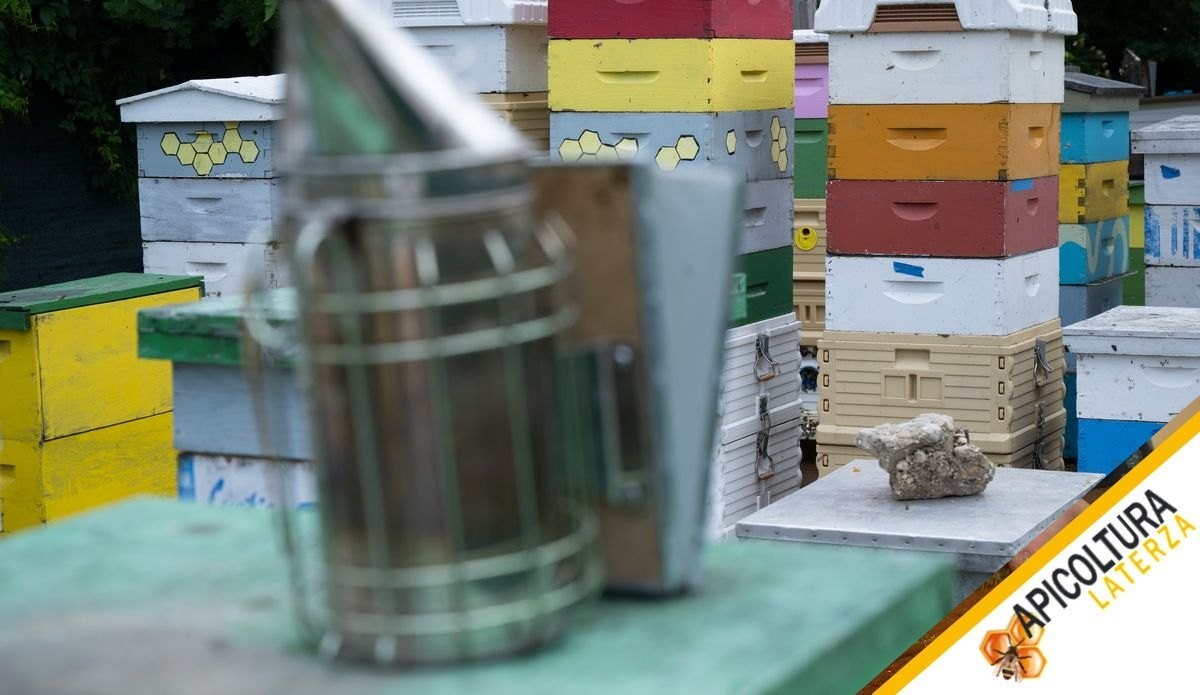
Once the apiary grows it is worth moving to a large stainless steel model with a protective cage: it holds more fuel, keeps smoke going for the whole visit and does not force you to relight with hands covered in propolis. A real leather bellows, if you can choose, lasts far longer than imitation leather.
On fuel there is no need to spend: untreated hessian, shavings of unvarnished wood, dry pine needles, dry leaves, wood pellets. What counts is something else, and it is the quality of the smoke. It must be white, plentiful and cool. If flame or scorching smoke comes out of the nozzle you are irritating the bees instead of calming them, and the visit gets worse hive after hive.
Protective gear: the one you actually wear
A full suit is safer, a jacket with a fencing veil is quicker to put on. In practice you use the one you can get into in thirty seconds when you step out of the car.
Anyone scaling up does well to own two. One in use and a clean spare, because jackets need washing often: the venom left on the fabric after a sting is an alarm signal to the bees, and a dirty jacket makes the next visit harder.
On gloves, opinion splits. Leather gauntlets protect better but take away feel and are impossible to sanitise, so they become a way of carrying dirt from one hive to the next. Many experienced beekeepers work in thin nitrile gloves, changed often and costing next to nothing. It is a personal choice and it also depends on the temper of your colonies: with gentle bees the feel you gain is worth a great deal.
Hive tool, brush, queen excluder
These are the three tools nobody puts on a list and everybody uses every single time.
Of the hive tool it is worth owning more than one, simply because you put it down somewhere and it disappears. The chisel type with a curved end is the handiest for prising frames without crushing bees.
The brush needs soft, long bristles. A stiff brush irritates the bees and puts them in the air, and the stroke should go one way only, calmly.
The queen excluder is worth spending on. The metal type in a wooden frame, with slots around 4.2 millimetres, lasts for years, does not warp in the heat and lets foragers through without damaging their wings. Thin plastic ones cost less but distort, and a distorted excluder excludes nothing at all.
Feeders: where time turns into money
While colonies are few, the type of feeder hardly matters. When they become twenty or thirty, it is one of the heaviest lines in the working day.
Frame feeders, the ones that take the place of a frame, force you to open the brood nest every time. Tray feeders that sit above the crown board, holding several litres, let you pour the syrup and close up in seconds, without disturbing the colony and without triggering robbing.
For fondant a bag laid over the crown board hole, slit downwards, is all you need. No equipment, no cost.
On when and what to feed, the whole discussion is in the article on autumn feeding.
Extracting yourself or using a shared honey house
This is the question that divides every growing beekeeper, and the answer comes down to numbers.
A four frame tangential extractor is cheap, but it has to be opened halfway through to turn the combs: across twenty supers that is a lost day. A radial extractor, which spins frames without turning them, changes the timings completely, and a motorised one is a bigger jump still. It costs a good deal, though, and it sits idle eleven months a year.
The practical rule is this. Below ten colonies the purchase is rarely justified: many associations run a shared honey house, and the sums work out better. Between ten and twenty it depends on how much honey you make and how much moving supers costs you. Above twenty colonies, having your own extractor and your own room stops being a luxury and becomes a working condition.
One note that matters more than the equipment itself: a dry, lockable room that meets hygiene requirements counts for more than the model of extractor. Honey absorbs moisture from the air, and extracting in a damp room ruins a ripe crop in a few hours.
Refractometer and settling tanks: two things that pay for themselves
The refractometer has the best cost to usefulness ratio in the whole of beekeeping. It measures the water in the honey, calibrates in a minute with the reference oil, and tells you with certainty what the eye cannot.
The legal ceiling for honey is 20 per cent water, but the working target for anyone doing the job properly is below 18. Above that threshold the risk of fermentation rises fast, and a fermented crop cannot be recovered.
Settling tanks are the other line that pays off early. They should be food grade stainless steel, with a gate valve and a filter: a gate valve does not clog the way ball valves do once honey starts to crystallise. Owning two rather than one means you do not have to stop work while the first one settles.
Moving hives and supers without wrecking your back
A full super weighs twenty kilos and more. A populous hive with stores can go past forty. Across a full working day, handling is the thing that either keeps a growing beekeeper going or breaks them.
Ratchet straps are the first thing to buy, and they get used constantly: they hold hive, supers and crown board together during any move. A hive trolley with wide wheels transforms life on rough ground. Hive lifting tongs let you load on your own, but try them before buying, because not every model gets on with every hive.
If you move nuclei or colonies by road, the rules and the precautions are collected in the article on collecting and transporting nuclei and packages.
Storage: where the combs end up at the end of the season
This is the part of the kit nobody talks about and the one that loses the most money.
Extracted super combs are an asset: building them costs the bees an enormous amount of honey, and a drawn comb buys you precious days in spring. Store them badly, though, and wax moth destroys them in a few weeks.
The storage room should be cool, dry, bright and ventilated, because wax moth hates light and moving air. Supers are stacked crosswise, letting air pass between the levels, not sealed up in a dark corner.
If you have freezer space, forty eight hours at minus eighteen degrees kills every stage of wax moth, eggs included. It is the safest method and leaves no residue on the combs.
What order to buy in, if you have to choose
If I had to line up the purchases of two growing seasons, the order would be this.
First. Hives and frames in one single system, enough supers, a large smoker, a second jacket, ratchet straps.
Then. Fast feeders, metal queen excluders, a refractometer, spare hive tools and brushes.
After that. Stainless settling tanks, an uncapping tray, an extractor, a hive trolley.
When the rest works. The equipped honey room, which is the biggest outlay and also the one spread over the most years.
Three mistakes you see in every growing apiary
Buying the complete kit. All inclusive kits always contain something useless and almost never the extra supers, which are the thing you will genuinely need.
Mixing systems. Every different size that enters the apiary is a complication you carry for years. Better a few identical hives than many mismatched ones.
Buying the extractor before the colonies. An extractor works one day a year. Colonies work from March to September. If there is only one budget, it should not even be a question.
In short
Equipment does not make an apiary grow. It makes growth sustainable, which is a different and far more important thing.
The people who scale well are the ones who standardise their hives, keep plenty of supers, buy the tools that give time back and postpone everything else. And they remember that the real multiplier is not in the store room: it is the colonies, their strength and the quality of the queens leading them. If you want to think through how many colonies to start from, the practical differences are in the article on nucleus colonies on 3 or 5 frames.
An apiary grows with colonies, not with a store room
Supers and tools can be bought when you need them. Colonies have to be planned ahead. We raise nucleus colonies and selected queens in our own apiaries and deliver them ready to work. Tell us how many colonies you need and for which season: we will tell you what we have and when.
In Same Category
- Honey Harvest: When to Remove the Supers and How to Get Properly Ripe Honey
- Weak Colonies in Late Summer: Assess, Strengthen or Unite Them Before Winter
- Wasps and Hornets at the Hive: Protecting Bees in Late Summer
- Starting the Season: Spring Checks at the Hive
- Collecting and Transporting Nuclei and Packages of Bees: What to Know