Wasps and Hornets at the Hive: Protecting Bees in Late Summer
In late summer wasps and hornets target the hive, right when the bees need to bank their energy for winter. Who the European hornet and the Asian hornet are, how to tell if your colonies are under pressure and what really works: narrow the entrance, keep colonies strong, avoid robbing and, with Vespa velutina, monitor and report.
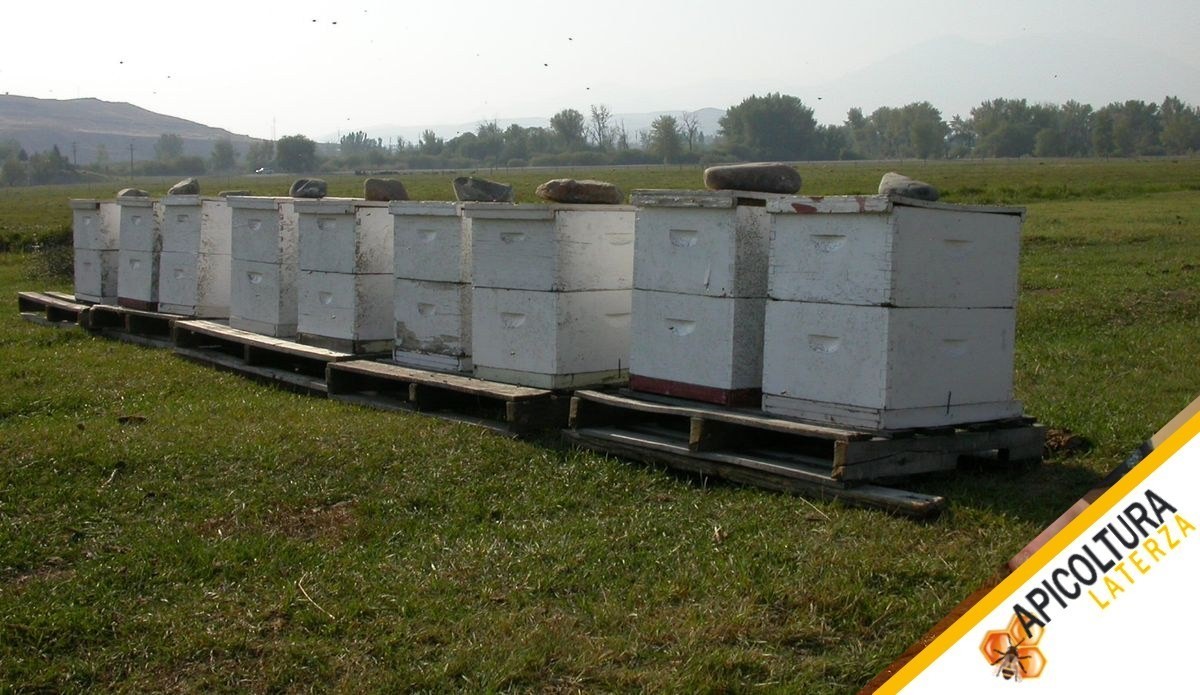
In August and September, when the bulk of the harvest is behind you and the days grow shorter, an unwelcome guest turns up at the hive entrance. A bigger, slower buzz. A dark shape hovering over the landing board, locking onto a returning forager and snatching it in mid-air.
This is the time of year when wasps and hornets become a serious problem for bees. It is no small matter: predator pressure in late summer arrives exactly when the colony needs to bank its energy for winter. Knowing who these predators are, how they behave and what actually works changes the way your colonies reach the cold season.
Why they become a problem in late summer
It is no coincidence that the pressure peaks right now. In high summer, wasp and hornet colonies reach their largest size and have masses of larvae to feed. They need protein, and protein means insects: bees, crowded and predictable in front of the hive, are easy prey.
At the same time the bloom thins out. Nectar grows scarce, predators struggle to find food elsewhere and concentrate their efforts where a meal is guaranteed. Add to this the lure of honey: a weak colony, with few guard bees, also becomes a robbing target.
The result is a double threat stacked on top of the usual end-of-season stress, the varroa load and the need to build up stores. That is exactly why it is worth dealing with.
Who they really are: European hornet and Asian hornet
The generic label "hornets" hides different insects with different behaviour. Telling them apart helps you judge how worried to be.
The European hornet (Vespa crabro) is the familiar one: large, robust, with a yellow abdomen striped with brown and a reddish head. It hunts bees one at a time, usually landing near the entrance or intercepting them nearby. A strong colony tolerates it without serious harm: a few lost bees will not cripple the hive. It is a native species and, as a predator, it plays its own part in nature.
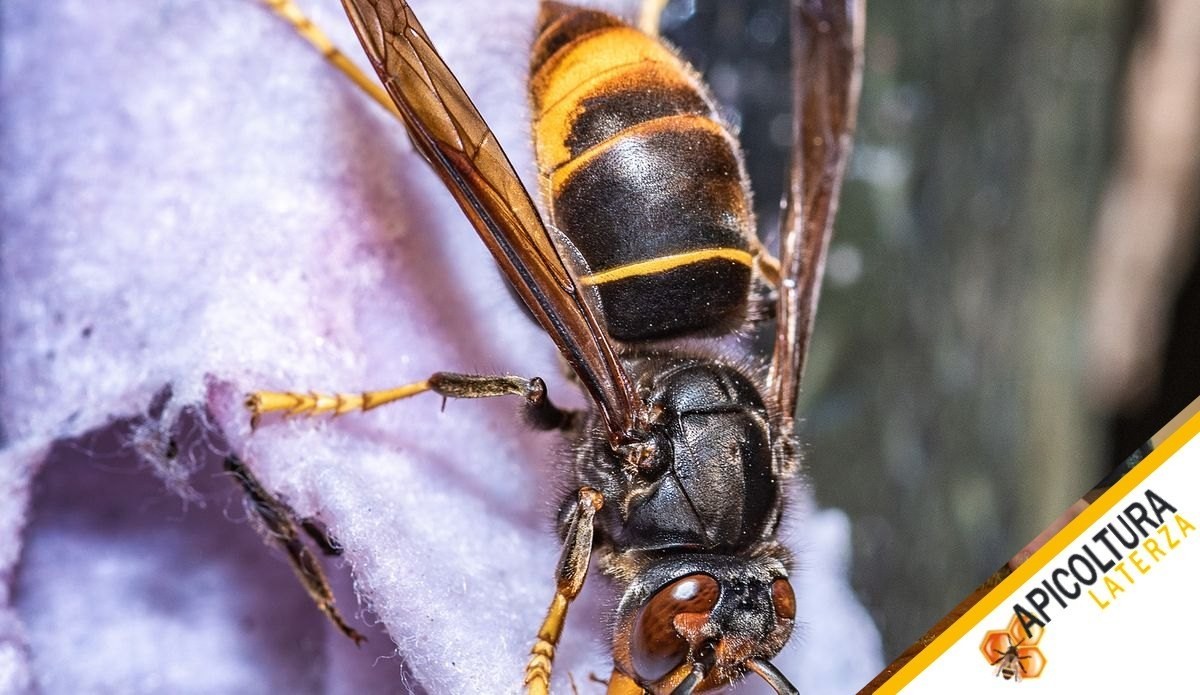
The Asian hornet (Vespa velutina, the yellow-legged hornet) is another story entirely. It is an invasive species, arrived from Asia and now established in several areas, spreading further year after year. You recognise it by its dark, almost black body, a single wide orange band on the abdomen and the yellow leg tips. It is smaller than the European hornet, but far more damaging.
The reason is the way it hunts. The Asian hornet does not wait perched: it hovers in flight in front of the landing board, still like a helicopter, and catches incoming foragers. When many hornets are hunting, the bees stop leaving the hive. This flight paralysis, combined with the losses, weakens the colony at the very moment it should be preparing for winter.
The signs your hive is under pressure
Even before you spot a predator, the bees' behaviour tells you a lot. Stop for a few minutes in front of the hives during the warm hours and watch.
Flight that suddenly dies down, with foragers clinging to the landing board instead of leaving, is a typical sign of the Asian hornet's hovering hunt. The bees turn wary, come out in fits and starts, some gather in a defensive cluster in front of the entrance. If you notice dark shapes hanging in flight in front of several hives, you have your confirmation.
Other clues: bees caught and carried off before your eyes, bee remains on the ground, and in weak colonies the classic disorderly traffic of robbing, with fights at the entrance and gnawed wax. The sooner you catch these signs, the more room you have to act.
Reducing the entrance: the simplest, most effective defence
If there is one thing to do straight away, it is this: narrow the entrance. A wide opening is hard to guard; an opening reduced to a small passage is defended by a handful of guard bees and becomes a funnel that puts the predators at a disadvantage.
The entrance reducer, a simple slotted strip or block of wood, is the cheapest and most useful tool of this season. The bees keep coming and going without trouble, but hornets and wasps can no longer slip through to rob, and hunting at the door becomes less rewarding.
It is worth fitting one on every colony in late summer, not just the ones already struggling. It costs little, does not stress the bees and works for you around the clock.
Strong colonies and no robbing
The best defence remains a large, healthy colony. A strong one has enough guard bees to repel intruders; a weak one, down to a few frames, is an open invitation. That is why, at the end of summer, it is worth deciding whether to unite colonies that are too small with sturdier ones, rather than leaving them exposed on their own.
Be careful, too, not to trigger robbing yourself. Feeding in broad daylight, spilling syrup, leaving honey frames uncovered in the apiary: these all set wasps and robber bees off. Always feed towards evening, without drips, and keep the hives closed as much as possible. For how and when to feed, you will find practical guidance in the autumn feeding guide.
Traps and catching: what to really expect
Bait traps are the first tool that comes to mind, but they need to be used with judgement. A trap with sugary or protein bait set in the apiary catches a few predators, but on its own it does not solve the problem: the pressure depends on the population of nearby nests, not on the handful of wasps that end up in the jar.
There is also a downside. Non-selective traps catch beneficial insects and sometimes draw more predators into the apiary than they remove. If you use them, choose the most selective models you can, check them often and treat them as a marginal aid, not the solution.
Against the Asian hornet, under heavy pressure, there are dedicated tools such as electric harps in front of the hives, but these are solutions for serious situations and must be judged case by case. The bulk of the work is always done by the reduced entrance and strong colonies.
Asian hornet: monitor and report
With the Asian hornet there is a rule that goes beyond the single apiary: report it. As an invasive species under surveillance, every confirmed sighting, adult or nest, should be reported to the relevant local authorities and to beekeeping associations, which coordinate monitoring and nest removal.
Never tackle the nest on your own. Asian hornet nests are often high up in trees, house very many individuals, and destroying them without equipment and skills is dangerous. Removal is a job for trained operators: your role is to spot, document and report.
Every prompt report helps limit the spread and protects not only your bees but also those of neighbouring beekeepers. It is a small act with collective value.
The mistakes to avoid
The first, understandable but wrong, is to react on instinct with insecticides sprayed in front of the entrance: they hit the bees far more than the predators and poison the hive. It is never the right road.
The second is to tar everything with the same brush. The European hornet, native and generally well tolerated by a strong colony, does not deserve the same alarm as the Asian hornet: indiscriminate extermination serves no purpose and removes a predator useful to the environment. The response should be calibrated to the real threat.
The third is to let it slide. Underestimating the pressure in late summer means reaching winter with worn-out colonies that start at a disadvantage. A few simple moves, made in good time, are worth more than any late intervention.
In short
In late summer wasps and hornets target the hive because they are hungry and bees are convenient prey. The defence takes no miracles: narrow the entrance, keep the colonies strong and avoid any trigger for robbing, use traps only as a marginal aid and, in the case of the Asian hornet, monitor and report without tackling the nests yourself.
Do these things and your bees face autumn with fewer losses and more energy to store. And they reach winter in the right condition to get through it, as we explain in the wintering guide.
Do you want strong colonies that can defend themselves?
We raise robust bee nucs and colonies, with a queen in full lay and a population ready to guard the hive. If a colony is too weak to face autumn, or you want to start next year on solid foundations, tell us what you need and we will help you choose.