Winter Stores and Hive Weight: How to Check If Your Bees Have Enough Honey
A hive that feels heavy is not always a safe one. This article looks at how much honey a colony really needs to get through winter, how to check it by counting frames or hefting, and what to do when stores run low or the first signs of starvation appear.
How many kilos of honey does your hive actually have right now? Most beekeepers couldn't say for sure, and end up spending winter hoping for the best. In our article on wintering bees we already said that stores are one of four fronts to work on before the cold arrives. Here we go deeper on that single point: how much honey a colony really needs, how to check it without opening the hive every time, and what to do when the numbers don't add up.
The reference figure: 18 to 22 kilos
Guidance from the UK's National Bee Unit, the reference body for honey bee health in Britain, puts the requirement for a good-sized colony at roughly 18 to 22 kilos of honey to get through winter, with higher amounts needed for larger colonies. That figure is built for an Atlantic climate, colder and longer than our winters here in Puglia. With milder temperatures and an earlier return of forage, the real requirement locally is often lower. But "often lower" is not a guarantee: insufficient stores remain, everywhere, the single most common cause of winter losses. Treat the northern European number as a cautious ceiling to start from, not a figure to apply literally.
Turning kilos into frames: what a full comb actually holds
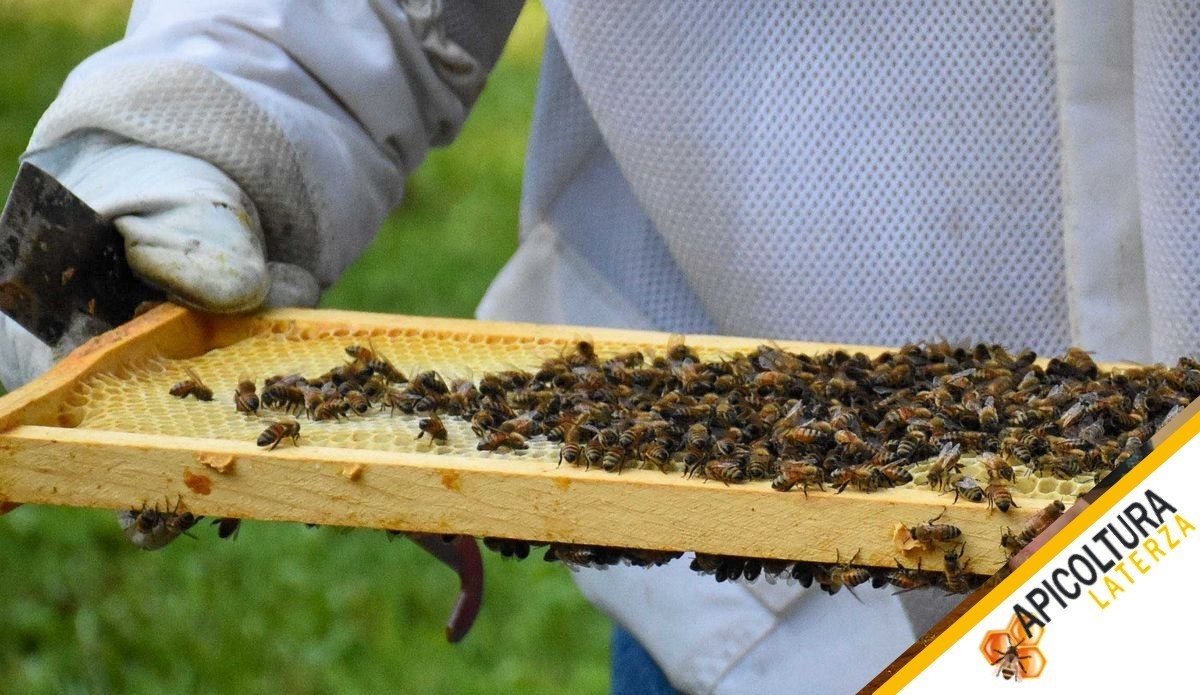
Counting combs is simpler than weighing, and it's still the method recommended to beginners. A standard brood frame full of capped honey holds around 2.3 kilos; a full standard super frame holds roughly 1.2 kilos, and a full super should contain at least 12 kilos. Do the maths: one full super plus three capped brood frames already covers the minimum requirement on its own. Before you trust your judgement by feel, it's worth spending a season or two counting capped frames one by one: that practice is exactly what makes hefting reliable later on.
Hefting: how it's actually done
Hefting is the gesture every beekeeper ends up doing by instinct: tilting the hive slightly from the back edge of the floor to feel its weight. Done properly, though, it isn't a random motion. You lift one side first, then the other, because stores are rarely spread evenly across the nest. A hive with adequate reserves is genuinely hard to lift: the weight surprises people used to moving empty equipment around the shed. Mind your back, too — a full hive weighs more than it looks, so lift with your legs rather than your spine, or ask for a hand when in doubt.
Set the reference weight at the end of autumn
The best moment to set a reference weight is right after the last round of autumn feeding, when stores are at their peak and the colony is settling into cluster. Lift each hive and memorise that feeling, perhaps logging it with a simple scale: light, medium, heavy. That's the weight to maintain throughout winter. If, come February, a hive that was hard to lift in November suddenly comes up easily, that's the sign stores are running out faster than expected.
How often to check
Through the depths of winter, hefting every other week is a sensible rhythm: frequent enough to catch a drop, infrequent enough not to disturb the cluster needlessly. The critical window isn't December, it's late winter into early spring: once the queen resumes laying and the colony starts expanding, consumption speeds up far faster than most people expect, right while the earliest forage still isn't rich enough to cover it. During that window, check weekly if you can.
Isolation starvation: when a heavy hive isn't enough
There's one case hefting alone can't catch, and it's worth knowing: isolation starvation. As the cluster slowly moves through the nest consuming the stores closest to it, it can become cut off from honey elsewhere in the hive, particularly if a spell of winter warmth breaks the cluster apart and, when the cold returns, it reforms somewhere else entirely. In that case the hive still feels heavy, because the honey is genuinely there, but the bees can't reach it and starve within centimetres of food. If a hive feels heavy yet something about the colony's behaviour doesn't add up, a brief, targeted visual check is worth more than any amount of hefting.
What a colony actually burns through: data from a Swedish study
How much weight a hive loses over winter has been measured precisely in a study published in PLOS ONE, which tracked 32 colonies on real hive scales in Sweden for roughly twenty weeks, from the 26th of October to the 15th of March. The average loss came to 0.039 kilos per day per colony, which over the full period put nearly every hive under 9 kilos of total consumption, with a typical range between 3.7 and 8.6 kilos depending on subspecies. The study compared four subspecies, including Ligustica, Carnica and Buckfast — the same ones we breed here. Ligustica showed the highest daily consumption of the four (0.045 kg/day), followed closely by Buckfast and Carnica, with Mellifera the most frugal of the group. One queenless Ligustica colony, by contrast, burned through almost double its subspecies' average: without a queen, the cluster forms less efficiently and has to spend more energy just to stay warm.
A number worth reading in context
One detail worth keeping in mind: the study's own authors described that Swedish winter as unusually mild, with an average temperature of 3.5 degrees. The consumption figures observed, then, aren't a universal ceiling but a snapshot of one favourable season: in a harsher winter, with more days below freezing, the cluster works harder to stay warm and burns through more honey. It's the same reason our generally mild Puglia climate helps colonies consume less than they would further north in Europe — but that's no reason to relax: even here, colder-than-average years happen, and that's exactly when thin stores start to show.
The signs that time has run out
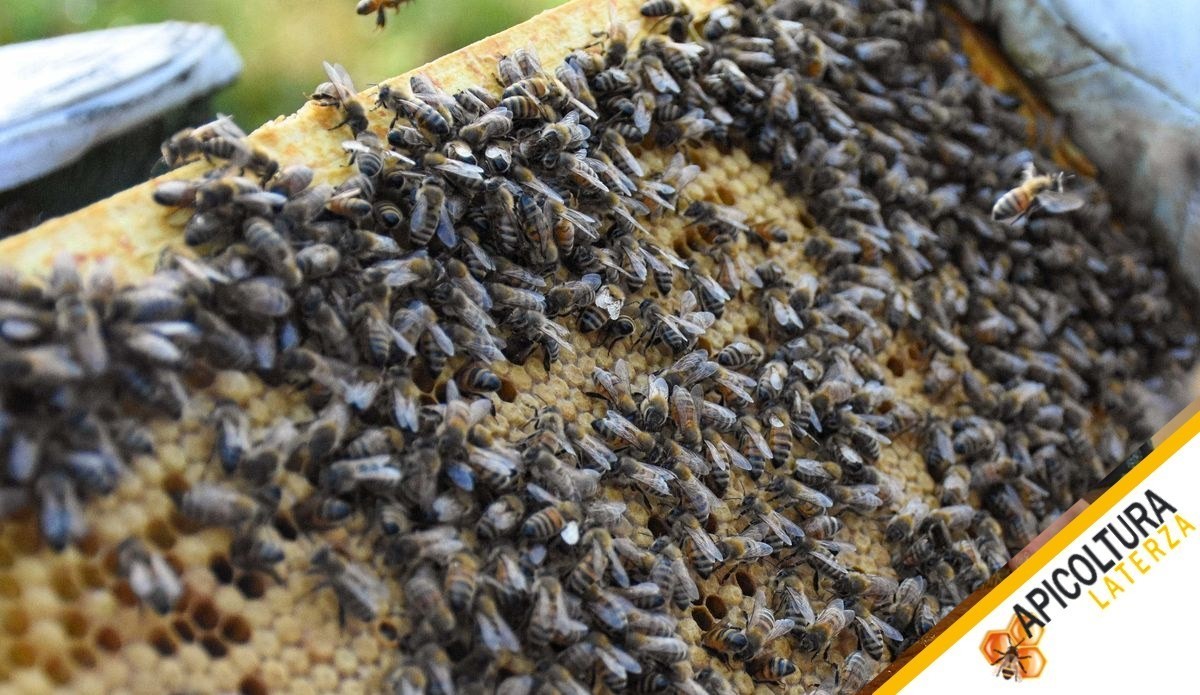
Certain signs mean a colony is already close to starving and can't wait for the next routine check. Cells around the cluster, normally holding nectar or honey, are dry. Brood cappings look chewed, with healthy-looking pupae visible underneath, as bees facing a food shortage start cannibalising developing brood. In some cases pupae are dragged out entirely and turn up on the floor or pushed out of the entrance. The bees themselves grow lethargic, out of energy, crawling head-first into empty cells in search of food — at that stage the whole colony can collapse within days. If you find a pile of dead bees on the floor near the entrance, it's often already too late for that colony, but it's the signal to check every other one straight away.
Low stores, not yet an emergency: what to do
If frame counts or hefting tell you a hive is under the 18-20 kilo reference but the colony is still active and responsive, the simplest fix is winter-strength sugar syrup, for as long as temperatures still allow it: past mid-October, in most areas, bees struggle to process and properly store liquid syrup. Beyond that seasonal cutoff, or once the cold has truly set in, liquid syrup stops being the right answer — it sits in the nest too long, risking fermentation or mould, and it's time to switch to fondant, placed directly above the cluster.
A genuine emergency: how to act on a colony already in crisis
If starvation signs are already visible and the bees look lethargic, fondant on its own can be too slow — a weakened colony may not even have the strength to reach it and work it. In those cases, to get bees moving again, you can gently trickle a small amount of thin, slightly warm syrup directly onto the bees, between the seams, or fill the cells of one side of an empty comb with the same thin syrup and slide it in next to the cluster. If you have capped honeycomb saved from another healthy colony, scratch the cappings lightly and place it beside the brood: it's the fastest fix, because the food is already there and needs no processing by the bees. Once the colony is active again, switch to a standard feeder to continue supplementing without repeating this every day.
Opening the hive in winter: when it's worth it, and how
A visual stores check should be reserved for cases where hefting leaves real doubt, not for routine — every opening costs the cluster heat. When it's genuinely needed, pick a mild, sunny day, ideally with a few bees already flying, a sign the cluster isn't tightly packed and will re-form more easily after the disturbance. Lift the crown board, take a quick look at the cluster's position and the cells around it, and close up again: the whole thing should take seconds, not minutes. A fast check on a cold day still beats putting it off and finding, come spring, a colony that starved a few weeks short of the first blossom.
Why a populous colony manages better, not just consumes more
A large cluster isn't just a bigger colony: it's also a more efficient one at managing its own reserves. A compact group loses less heat relative to its mass, while a small cluster has proportionally more exposed surface and burns more energy per individual bee. It's one of the reasons why, as we covered when discussing weak colonies in late summer, uniting two fragile colonies before winter is almost always the better call compared to leaving them separate: together they form a more efficient cluster, with stores that hold up better over time.
A simple log, kept through the whole winter
You don't need anything complicated: a notebook or a sheet with one column per hive is enough. At the end of autumn, right after the last feeding round, note the reference weight using the light-medium-heavy scale. Every other week, log the result of each hefting check. Record the date of any visual inspection and what you found. Finally, log every supplementary feeding, with date and amount. By the end of winter, that log is worth more than any gut feeling: it tells you which colonies came through well and which ones need closer attention next season.
Three mistakes to avoid
First: trusting a single hefting check done in November and not repeating it until March, assuming the starting stores alone will see the colony through the whole winter. Second: mistaking a heavy hive for a safe one, without considering isolation starvation when something else about the colony's behaviour doesn't add up. Third: still feeding liquid syrup once the cold has set in, instead of switching to fondant, risking a liquid sitting in the nest that the bees can no longer process properly.
Hive weight isn't a technical detail for a handful of specialists: it's the simplest, most useful question a beekeeper can ask between November and March. A colony weighed methodically, checked at the right pace, and fed at the right moment reaches spring in the best shape to build back up. And it's from colonies that made it through winter well that a healthy apiary grows or rebuilds.
Strong colonies reach spring with more margin
A large, well-managed colony handles its own stores far better than a weak one. If you're thinking about strengthening your apiary or starting next winter from solid colonies, tell us where you stand: we'll help you choose nucs and colonies ready for the cold season.
In Same Category
- Varroa Monitoring: How to Count Mites and Know When to Treat
- Organic Beekeeping: What Actually Changes in Apiary Management
- Drifting and Robbing: How Apiary Layout Causes Them
- Beekeeping Site Agreements: Terms and Fees with the Landowner
- The Italian Beekeeping Register: Registration, Apiary Sign and Census