Oxalic Acid in the Broodless Period: How to Use the Winter Treatment Window
Oxalic acid works far better with no brood present, but the autumn-winter window has narrowed. This article looks at the required conditions, the two application methods, and what Italy's 2025 Ministry of Health guidelines actually say.
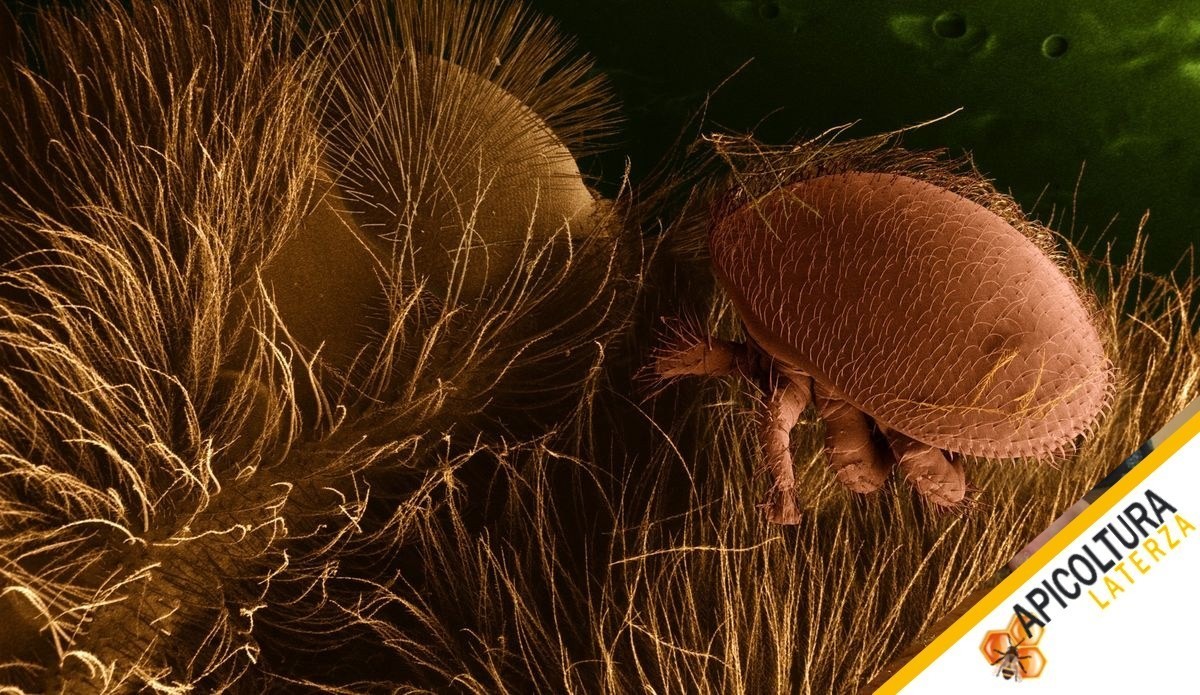
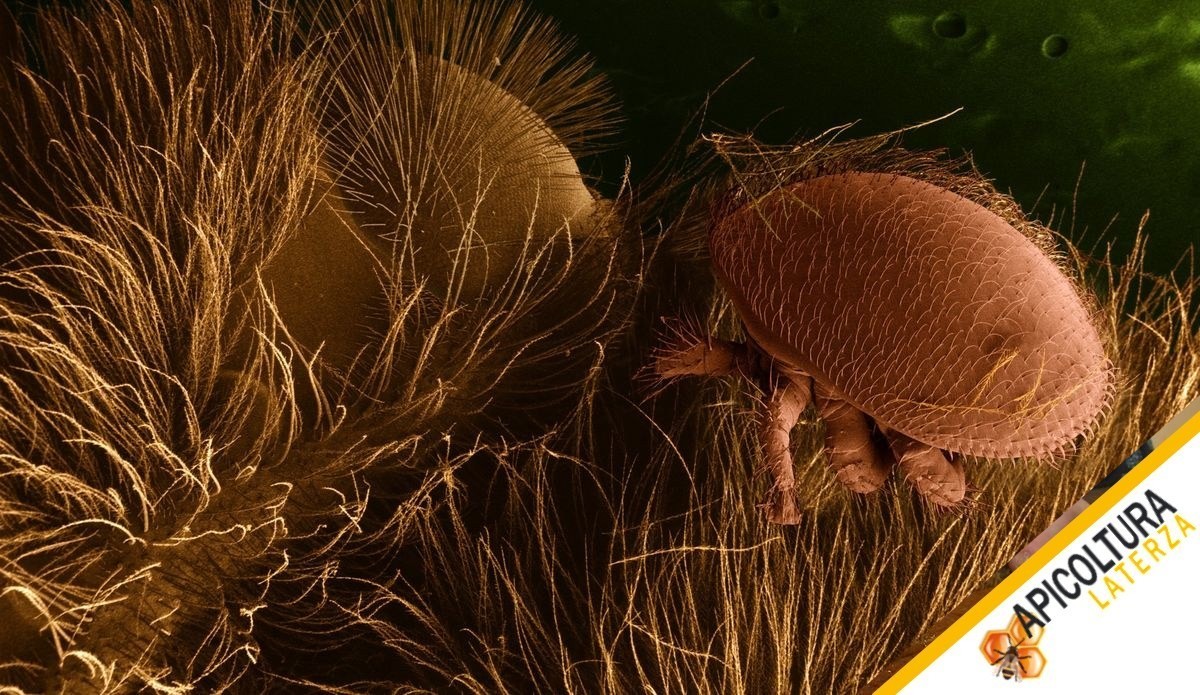
By November, in much of Italy, colonies have almost stopped rearing brood. For varroa, that's bad news: the mite has no more capped cells to hide in, and ends up exposed on the bodies of adult bees. In our article on late summer varroa treatment we already compared the methods available, and in the one on counting mites we explained how to decide when to treat. Here we stay on a single point, the one that comes after the decision: how oxalic acid treatment actually works in the autumn-winter broodless window, and why that window is narrower than it looks.
Why no brood changes everything
Oxalic acid works by contact on the mobile stages of the mite, the ones moving freely on the bees' bodies. It doesn't reach mites already sealed inside capped brood cells, where they reproduce protected. When brood is absent, every mite in the colony is necessarily out of a cell, exposed, reachable. According to the Honey Bee Health Coalition's technical guide, registrant-reported effectiveness for oxalic acid treatments in this phase runs 82 to 99 percent, against much weaker results when brood is still present. That's why this simple, inexpensive treatment stays one of the most effective of the year, not because the active ingredient is stronger in winter, but because the mite has nowhere left to hide.
The window has narrowed, not widened
You'd expect a longer, milder autumn to give more time to treat. It's the opposite. The Italian Ministry of Health's 2025 guidelines, developed with the Istituto Zooprofilattico Sperimentale delle Venezie, note that in recent years mild autumn weather prolongs brood presence and delays the formation of the winter cluster, keeping infestation levels significant for longer periods. In other words: the moment a colony is truly broodless arrives later, but the treatment still has to happen before bees tighten into cluster, because at that point it becomes harder to reliably reach the whole population. The useful window, then, doesn't widen with a mild autumn, it shifts later and narrows. That's even more true in central and southern Italy, where the guidelines note a more extended, prolonged brood presence than the rest of the country.
What the national guideline says
Varroa is a listed disease under Regulation (EU) 2016/429 on animal health, in force since April 2021. Italy's 2025 Ministry of Health guidelines recommend a minimum of two treatments a year under our climate conditions: one right after the main honey harvest, one before wintering. The autumn-winter oxalic acid treatment, carried out when brood is absent or nearly so, is designed exactly for that second appointment, with the stated goal of ensuring the best possible conditions for overwintering and spring recovery.
The authorised medicine, not the raw ingredient
Italy has several registered veterinary medicines based on oxalic acid for this purpose, each with its own formulation. The guidelines are explicit on this: the active ingredient alone, even if apparently similar to the one in the authorised product, cannot be considered equivalent or used as a substitute, because efficacy and safety depend on the entire formulation, developed and tested for that purpose. In practice that means one simple rule: buy an authorised product, with its package leaflet, and follow that, not a homemade recipe with oxalic acid bought elsewhere.
The two ways to apply it
Authorised products generally allow two application methods. The first is trickling: an oxalic acid solution in sugar syrup, delivered with a syringe directly onto the bees, frame by frame. The second is sublimation, or vaporisation: an electrically heated device turns the powder into vapour, which spreads through the hive via the entrance and settles on the bees as tiny crystals. Each registered product specifies which method applies and in what quantities: the package leaflet, in this case, isn't a detail to skip but the most important part of the purchase.
The conditions the label requires
Whatever product is chosen, the environmental conditions required by the authorisations are consistent: autumn-winter period, temperature above roughly 10°C, no brood present, bees actively flying. These read like a checklist, but they need to be verified together: a warm enough day with the colony still rearing brood isn't the right moment, and neither is a cold day even if brood has already stopped. That's why, before treating, it's worth a quick look at a couple of central frames: if there's no open or capped brood left, and both the thermometer and the flight calendar agree, the window is open.
When the season doesn't help: brood blocking
The 2025 guidelines also describe a technique designed for years when natural broodlessness arrives late or stays insufficient: brood blocking, achieved by temporarily caging the queen. The technique artificially reproduces typical winter conditions, and when applied before treatment it further boosts its effectiveness. Originally a summer technique, it's increasingly used in autumn-winter too, precisely to compensate for a natural phenomenon that milder weather makes slower and less reliable. It's not something to decide on the spot: it requires dedicated equipment and needs to be planned a few weeks ahead of the treatment.
Safety before the syringe
Oxalic acid is corrosive and irritating to skin, eyes and mucous membranes, as the guidelines explicitly flag among the precautions. Gloves, protective goggles and care to avoid direct contact are the minimum for trickling. For sublimation the risk is higher, since you're working with vapours: the device has to be inserted deep through the hive entrance, the hive sealed for the time indicated by the manufacturer, and the entrance reopened only after the required waiting time, never before. Anyone treating several hives in a row should always work upwind of the fumes and follow, without shortcuts, the safety instructions printed on the package.
After treatment: the diagnostic tray
An effective treatment shows up, literally, on the bottom of the hive. As we explained in our article on counting mites, the diagnostic tray records natural mite drop before and after treatment: a heavy drop in the following days confirms the treatment hit a substantial mite population. A near-zero drop, on the other hand, can mean two opposite things: either infestation was already low, or something in the application didn't work as intended. Only comparing the starting count with the drop count gives a reliable answer.
A treatment, not a habit
Oxalic acid in this formulation is meant as a single, decisive intervention for the autumn-winter window, not a treatment to repeat every few weeks all winter long. Going beyond the leaflet's instructions doesn't boost efficacy proportionally, but it does raise the risk of stress to the colony and, on a wider scale, the risk of favouring mite resistance to the active ingredients available, a problem the guidelines themselves note is already known in the sector.
An obligation not to forget
Every veterinary medicine administered to bees must be logged within 48 hours, with the purchase receipt kept on file, under the operating procedures of Regulation (EU) 2019/6, implemented in Italy by legislative decree no. 218 of 7 December 2023. Commercial beekeepers also need their treatment register stamped by the competent Veterinary Service. We covered this in more detail in our article on counting mites: worth rereading before opening the season's first package.
The link with winter stores
The moment you treat with oxalic acid is often the same moment it's worth checking winter honey stores, a topic we covered in depth in our article on winter stores and hive weight. A colony that reaches treatment already well fed, with adequate stores and no stress from a feed shortage, handles the intervention better and goes into winter in better shape. Both checks, varroa and stores, fit well into the same autumn visit: no need to open the hive twice.
Three mistakes to avoid
First: treating by calendar alone, without actually checking a couple of central frames, only to find out brood hadn't stopped yet. Second: using oxalic acid bought as a generic reagent instead of an authorised veterinary medicine, assuming "it's the same active ingredient anyway": it isn't, for the reasons the guidelines themselves spell out. Third: reopening the hive entrance right after sublimation, before the required waiting time, undoing part of the treatment's effectiveness and raising the risk for whoever applies it.
The autumn-winter window remains one of the most effective times of year to knock down varroa, but it has to be sought carefully, not taken for granted. No brood, the right temperature, an authorised medicine, application by the label: four simple conditions to list, and the difference between a treatment that actually works and one that looks done but missed the mite population that mattered most.
Healthy colonies handle every treatment better
A strong, well-managed colony responds better to treatments and reaches spring in better shape. If you're thinking about strengthening your apiary with ready-to-go nucs or colonies, tell us about your situation: we'll help you choose the right one for next season.
In Same Category
- Winter Stores and Hive Weight: How to Check If Your Bees Have Enough Honey
- Varroa Monitoring: How to Count Mites and Know When to Treat
- Organic Beekeeping: What Actually Changes in Apiary Management
- Drifting and Robbing: How Apiary Layout Causes Them
- Beekeeping Site Agreements: Terms and Fees with the Landowner