Brood Diseases: Reading the Signs and What the Law Requires
Spotty brood is not always the queen's fault. How to tell American foulbrood, European foulbrood, chalkbrood and sacbrood apart by looking inside the cells, the ropiness test, what to do in the first five minutes after a suspicion and which notification duties Italian law sets out.
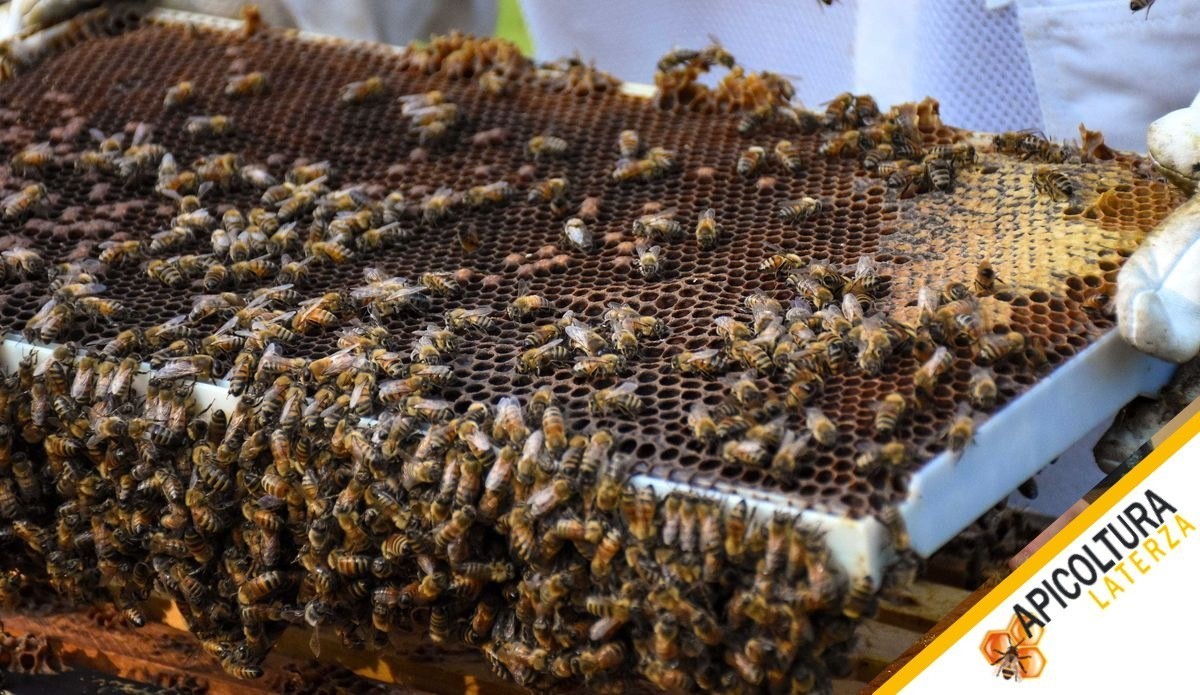
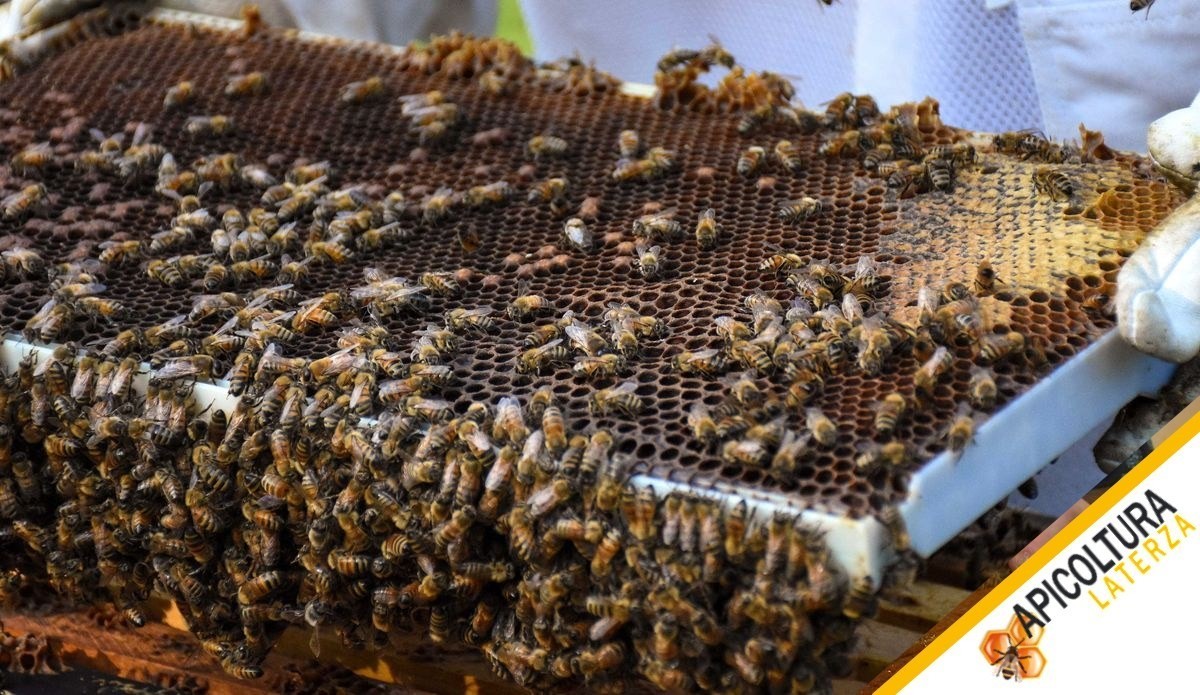
You open the hive, lift a brood frame and something is off. The capped cells no longer form the compact slab you know: they are scattered, patchy, with gaps in the middle.
The first thought, almost always, is the queen.
Sometimes it really is her. Sometimes it is not, and what you are looking at is the start of a brood disease: a problem that does not concern that hive alone, but the whole apiary and, in two cases out of four, your official veterinary service as well.
This guide is about reading the frame with a bit more method. Which four brood diseases you will actually meet, how to tell them apart by eye, what to do in the first five minutes after a suspicion, and what Italian law requires. It does not replace the vet: it helps you reach the vet in time and with a clear picture.
Brood is the hive's medical record
Adult bees hide a lot. A colony can look lively at the entrance and have a brood nest that is already slipping.
Brood does not lie. Brood is a register: every cell records a cycle that closed properly or never closed at all. That is why the first thing to look at during an inspection is not how many bees there are, but what the central frame looks like.
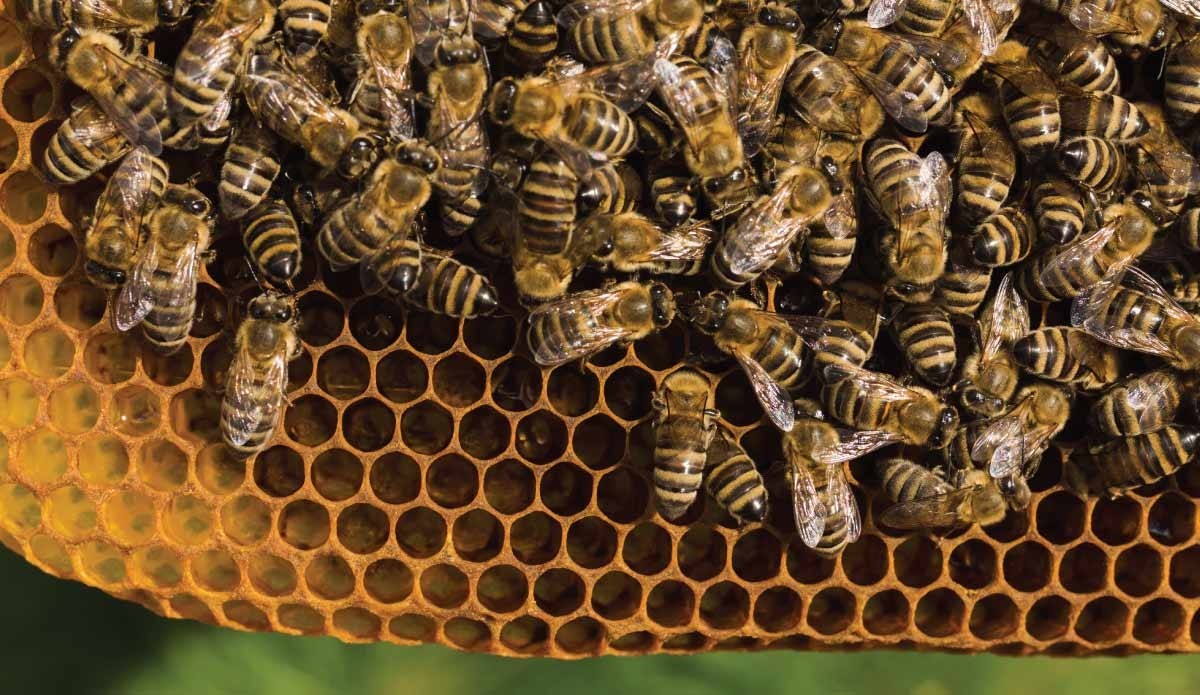
Healthy brood is recognisable without being an expert. Capped cells form a continuous surface, the cappings are dry, slightly convex, all the same colour. Young larvae, in the cells still open, are pearly white, glossy, coiled in a C at the bottom, lying on a film of jelly.
Hold the frame with the light behind you and look at it before you smoke heavily and before you shake it. Anomalies show in the first few seconds; after that the bees reposition and cover everything.
Spotty brood: four causes, not one
Spotty or pepperpot brood is the generic signal par excellence. It means something went wrong; it does not say what.
There are four practical causes. A failing queen, old or badly mated, laying and skipping cells. Chilled brood, typical of long inspections on cool days or of colonies too small for the nest they occupy. Varroa, with the set of viruses that travels with it. Or an infectious brood disease.
The criterion that separates them is simpler than it seems: in the first two cases the cells that are there look normal, there are just few of them and scattered. When a disease is involved, it is the content of the cells that changes.
So do not stop at the brood pattern. Open the suspect cappings and look at what is inside. That is where the diagnosis is decided.
If the suspicion points at the parasite rather than the bacterium, the starting point is monitoring: we covered it in the article on late summer varroa treatment.
American foulbrood: the signal you cannot ignore
It is the most serious one, and it is worth being precise about. The agent is Paenibacillus larvae, a spore-forming bacterium.
Larvae become infected when they are young, swallowing spores with their food, but they die late: after capping, at the mature larva or pupa stage. That explains why the first signal is in the cappings and not in the open cells.
The cappings of affected cells turn sunken, dark, greasy looking, and often perforated: the bees are trying to uncap and remove the dead larva, and failing.
Under the capping you do not find a larva. You find a brown, coffee-coloured mass, soft and sticky, smeared downwards.
The smell is acrid, unpleasant, reminiscent of glue. Anyone who has smelled it once recognises it, but do not rely on your nose as the only criterion: in the early stages it may not be there yet.
When that mass dries it leaves a dark scale stuck to the lower wall of the cell. Trying to lift it is pointless: the cell breaks first. That adhesion is one of the features that best separate American foulbrood from everything else.
And there is one more fact that reframes the whole discussion: the spores survive for decades, beyond thirty years, and resist heat, common disinfectants and ultraviolet light. This is not a disease that is treated and goes away. It is a contamination that stays in the combs, in the boxes and on the tools.
The ropiness test, in three seconds
It is the classic field test, and you do it with a toothpick.
Push the toothpick into a suspect cell, stir gently in the mass and pull up slowly. With American foulbrood the material follows in a brown, viscous thread, elastic, stretching a few centimetres before it breaks.
Two warnings, both important.
First: it is an orientation test, not a diagnosis. A thread that does not form does not rule the disease out, especially early on or when the mass has already dried.
Second: if the thread is there, the matter is no longer technical but regulatory, and you skip straight to the section on the law. Use a disposable toothpick and burn it.
European foulbrood: larvae die before capping
Similar name, different clinical picture. The agent is Melissococcus plutonius, and this time the larvae die young, around the fourth or fifth day, before the cell is capped.
The result is that you find the dead larvae in open cells, and that is the single most useful difference to remember in the field.
Affected larvae lose their position: instead of lying neatly coiled at the bottom they appear displaced, twisted, wrapped along the wall. The colour shifts from dull white to yellowish and then brownish. Against the light you may see the tracheal network through the skin.
The smell, when present, is sour or putrid, and varies a lot depending on the secondary bacteria involved.
The material is usually not ropy, and the scales that remain come away easily. Together with the timing of death, these are the two criteria that point to European rather than American foulbrood.
European foulbrood is often tied to stress: poor flows, unbalanced colonies, difficult springs. It can regress when a good nectar flow arrives. That does not make it a mere management issue, though: it too is among the notifiable diseases, and confirming the case is the official vet's job.
Chalkbrood: white mummies on the landing board
Different category here. Chalkbrood is a mycosis, caused by the fungus Ascosphaera apis, and it is not notifiable.
The larvae die shortly after capping and dry out, turning into hard, dry mummies that look like pieces of chalk. They start white; when the fungus fruits they turn grey, then almost black.
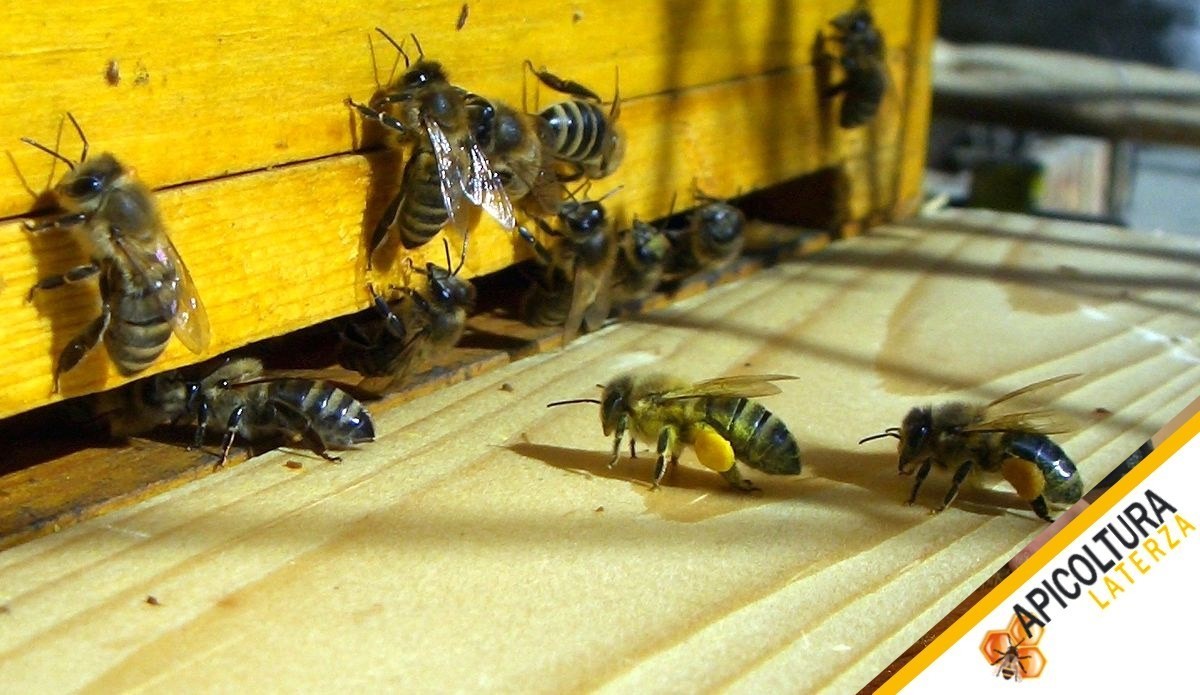
The good news, so to speak, is that this disease announces itself: the bees carry the mummies out and drop them. You find them on the floor and on the landing board, often before you have even opened up.
There is no authorised medicine, and none is needed. Chalkbrood is nearly always a symptom of something else: too much humidity, poor ventilation, a cold shady site, a colony too weak for the nest it occupies, old combs, poorly hygienic genetics.
What actually works is removing the causes. A drier, sunnier site, the nest reduced to the colony's real strength, regular comb renewal and, in stubborn cases, requeening with a cleaner line.
Sacbrood: the larva turns into a sac
This one is viral, and its sign is so characteristic that once seen it is never confused.
The larva dies after capping, unable to complete its last moult. Fluid builds up under the skin and the larva becomes a small sac with a darkened head lifted upwards, gondola shaped.
If you lift it with tweezers it comes out whole, without breaking and without leaving adherent scales. No thread, no distinctive smell.
In most cases it regresses on its own once the season improves and the colony is strong again. What helps is the usual unspectacular list: new combs, a young queen, a balanced colony.
The first five minutes after a suspicion
This is where the worst damage is done, almost always in good faith.
The general rule is a single one: stop. This is not the moment to understand, it is the moment to contain.
What not to do, in order of severity: do not move the hive, do not swap frames with other colonies, do not unite that colony with any other, do not sell or give away anything from that hive, do not leave frames or supers exposed to robbing.
What to do right away: close up, reduce the entrance to limit robbing, mark the hive unmistakably and stop opening the rest of the apiary for today.
Then deal with the tools. Flame the hive tool, change your gloves, and keep the brush you used on that colony away from the others. The beekeeper's hands are the fastest route of infection there is: faster than robbing, faster than drifting.
Finally photograph the frame, close up and in good light, and write down the hive number. You will need it.
What Italian law requires
American and European foulbrood are among the bee diseases subject to mandatory notification under the veterinary police regulation (Presidential Decree 320 of 8 February 1954) and later provisions. The same list also includes nosemosis and acarine disease.
Notifying means informing the veterinary service of the competent local health authority. Verifying and defining the case is the official vet's job, not the beekeeper's and not an experienced colleague's.
The measures the regulation sets out, once a case is confirmed, all point the same way: no moving, selling or removing bees, hives, tools or materials from an infected or suspect apiary; nothing that could carry the disease left accessible to bees, including honey and combs; empty hives closed; no restocking before disinfection. Apiaries within a radius of at least three kilometres of the infected one are treated as suspect.
For American foulbrood the operational route in Italian practice is destruction by fire of the affected colonies and the contaminated material. It is not overkill: it follows directly from the resistance of the spores, which cannot be removed from combs and woodware.
The way the rules are applied is defined at regional level and can differ from area to area. The sensible move is to check once, in advance and calmly, with your local veterinary office, rather than looking it up on the day you need it.
One practical note: registering in the national beekeeping register and declaring your hives every year exist precisely for this, so the veterinary service knows who is where and can move quickly. We wrote about it when covering the rules and paperwork of urban beekeeping, but they apply to anyone keeping even a single hive.
Notifying is not a punishment. It is the only thing that stops the disease from crossing first your whole apiary and then your neighbours'.
Why antibiotics are not an answer
Every so often someone still suggests them, often citing what is done in other countries. In Italy and in the European Union antibiotics are not permitted in beekeeping, neither curatively nor preventively, and no product is authorised for this use.
There are three reasons, and they are technical before they are regulatory.
First: they do not kill spores. At best they hold back the vegetative form of the bacterium. The hive stays a reservoir.
Second: they mask the symptoms. The colony seems to recover, the brood looks decent again, and meanwhile it keeps spreading spores across the apiary through drifting and robbing. It is the best way to turn a contained outbreak into a regional problem.
Third: they leave residues in honey, which is a food. No residue limits are set for antibiotics in honey, which means that a residue found makes the product non-compliant. You lose the colony, and you lose the crop as well.
Diagnosis: what you see and what the lab says
In the apiary you make observations and orientation tests: the brood picture, the ropiness test, possibly a field kit.
The real diagnosis comes from the laboratory. In Italy the reference bodies are the Istituti Zooprofilattici Sperimentali, which run culture tests and, where needed, molecular investigations.
The sample is usually a piece of comb including the suspect cells. Agree it with the official vet: sampling done properly saves everyone time, improvised sampling often has to be repeated.
And avoid the widespread habit of circulating photos and bits of comb among colleagues for an opinion. The doubt circulates, and sometimes the spores circulate too.
Prevention: what actually decides the outcome
None of this is spectacular. Put together, it is the difference between an apiary that holds and one that loses something every year.
Renew your combs. One third a year is the reference rhythm. Old combs accumulate cocoons, debris and pathogens, and they are where spores settle most willingly.
Keep your tools clean. Hive tool to the flame, disposable gloves when working a doubtful colony, no shared brush on days when you have a suspicion.
Think before you move a frame. Strengthening a weak colony with brood taken from another is normal and useful practice, but it has to be done knowing where that frame comes from.
Never feed honey of unknown origin. Feeding bought honey or leftovers from other apiaries is one of the classic ways American foulbrood gets in. If you feed, feed syrup or fondant.
Quarantine whatever arrives. New colonies, collected swarms, and above all second-hand hives and combs: used equipment with no history is by far the most underestimated risk. A cheap hive can cost you an apiary.
Keep your colonies strong. A populous, healthy colony uncaps and removes diseased brood on its own: hygienic behaviour does half the work. On assessing and rescuing the colonies that fall behind we wrote a dedicated guide.
Look at the brood at every visit, not only at spring build-up. Even if the spring checks remain the moment when most of it shows.
Three mistakes we see often
1. Blaming the queen and replacing her without looking inside the cells. A new queen does not solve foulbrood, and in the meantime you have lost three weeks and handled that nest several times.
2. Waiting to see how it goes. With American foulbrood time works for one side only, and it is not yours. Every extra day is drifting, robbing and tools going round.
3. Buying used equipment without asking anything. Second-hand hives, frames and combs should be treated as risk material until you know where they came from. When in doubt, melt the combs and disinfect the boxes before use.
In short
Brood diseases are recognised by looking inside the cells, not at the brood pattern. American foulbrood: death after capping, sunken and perforated cappings, brown ropy mass, adherent scale. European foulbrood: death before capping, twisted larvae in open cells, non-ropy material, scales that lift easily. Chalkbrood: white or black mummies on the landing board. Sacbrood: larvae that come out whole, like small sacs.
The first two are notifiable. The other two are managed.
The rest is ordinary prevention: combs renewed, tools clean, no honey of unknown origin, used equipment handled with care and colonies kept strong. It is not complicated management, it is regular management.
And if a colony does not recover, or if you are rebuilding after a health problem, what matters is restarting from live material whose origin you know.
Start again from healthy colonies with a known history
We raise nucs, queens and colonies in our own apiaries, and every delivery has a traceable origin. If you need to replace a colony you lost or to renew the apiary after a health problem, tell us where you stand: we will tell you frankly where it makes sense to start and on what timescale.
In Same Category
- Beeswax: How to Recover Cappings and Old Combs and Get Your Foundation Back
- Beekeeping Equipment for a Growing Apiary: What You Really Need and in What Order
- Honey Harvest: When to Remove the Supers and How to Get Properly Ripe Honey
- Weak Colonies in Late Summer: Assess, Strengthen or Unite Them Before Winter
- Wasps and Hornets at the Hive: Protecting Bees in Late Summer