Autumn Feeding of Bees: When and How to Feed
Feeding bees in autumn is not compulsory, but when it is needed it makes the difference. Here is when to step in, which syrup to use and how to avoid the common mistakes.
Autumn feeding: a rescue, not a routine
Feeding bees is not something you do every year out of habit. You do it when it is needed.
After the last harvest and the varroa treatment, the colony has to build the stores that will carry it through to spring. In a generous season, with a good autumn flow, many colonies get there on their own. In a poor year, or after a summer that left the combs half empty, it falls to us to make up the difference. Autumn feeding is exactly that: a targeted top-up, not an automatic calendar chore.
The tricky part is timing. Feeding too late, or with the wrong sugar, can do more harm than good. Here is how to get it right.
First of all: how much honey is really there
You do not feed on a hunch. You feed after checking.
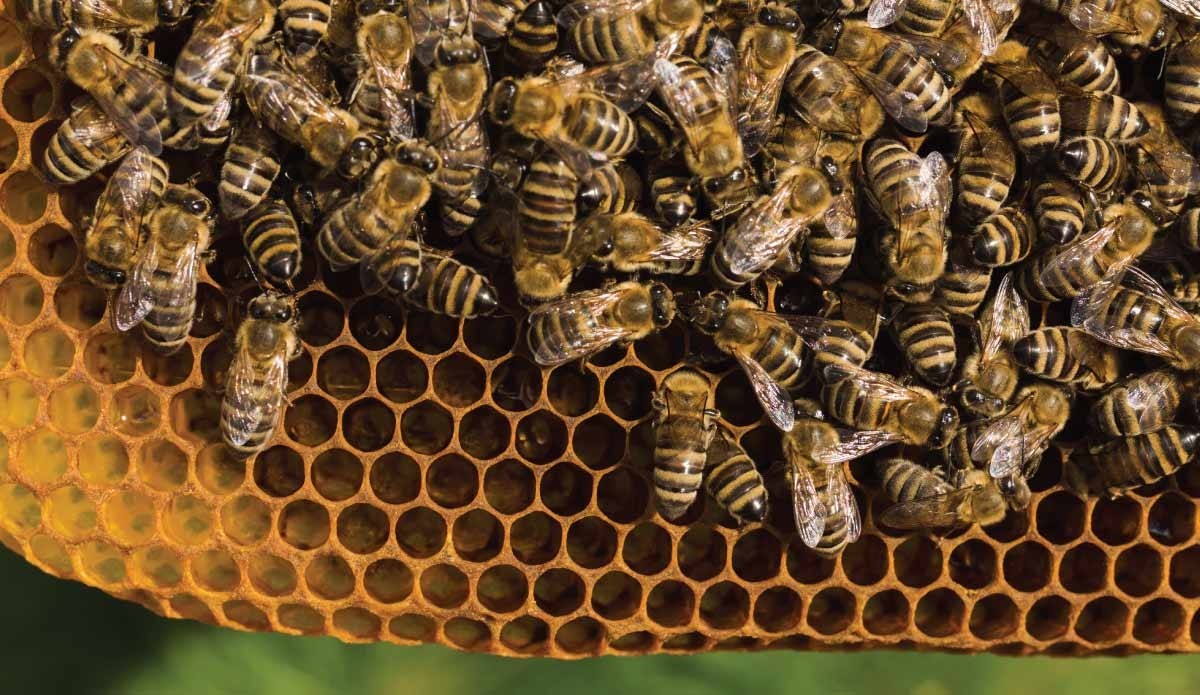
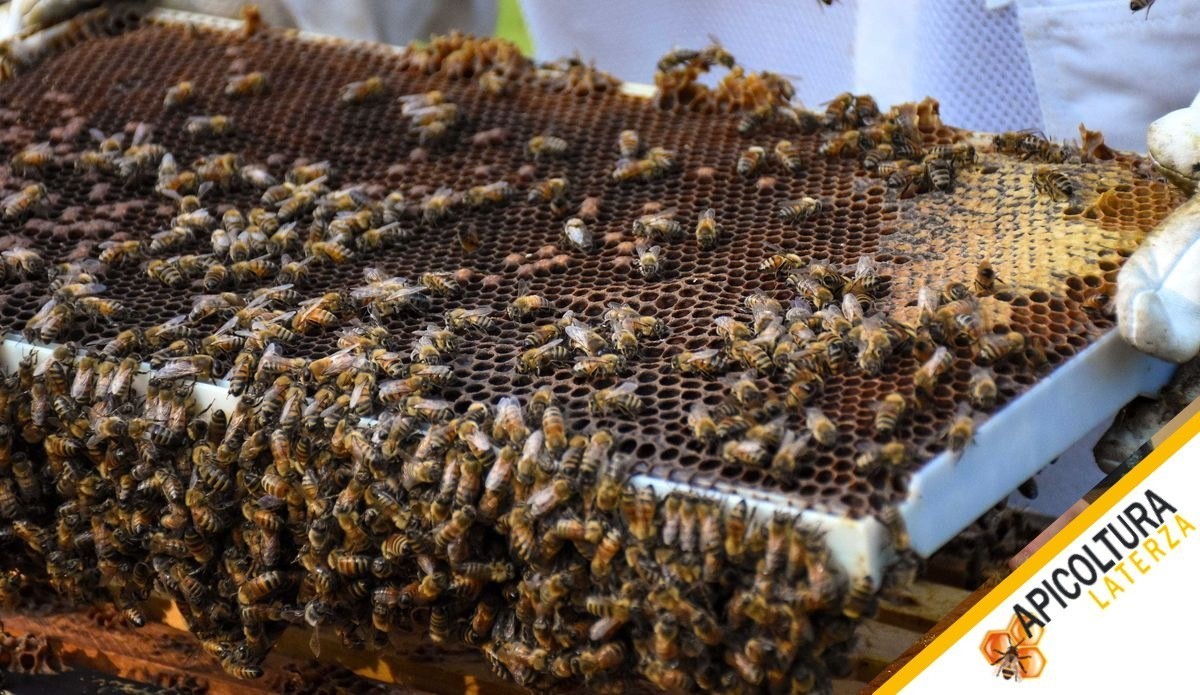
The simplest method is hefting the hive, lifting it slightly from behind: with a little practice the hand learns to tell whether the colony is light or heavy. The more precise method is to inspect the frames, counting the combs of sealed honey at the sides and above the nest.
How much is needed depends on the climate. In northern Italy, with long winters, a colony may require fifteen kilos of stores or more. Here in the south, in a Mediterranean climate with milder, shorter winters, the requirement is lower, but underestimating it is still a mistake: short stores are the leading cause of winter losses. If the check shows plenty, no feeding is required. If it is borderline, you top up.
In autumn the syrup goes thick
This is the single most important difference between feeding in spring and feeding in autumn.
In spring you use a thin syrup, with water and sugar in roughly equal parts: it stimulates the queen to lay, mimicking an incoming nectar flow. In autumn the aim is the opposite: we do not want to trigger brood, we want to fill the combs. So you make a thick syrup, with about two parts sugar to one part water.
The reasoning is practical. A syrup that is already concentrated holds little water to remove, so the bees find it easier to turn into stores and cap before the cold. A syrup that is too watery forces a long dehydration job on them, which they may fail to finish as temperatures drop: the result is a store that can ferment in the combs.
Use refined white sugar, dissolved in warm but not boiling water. Honey of unknown origin is never used for feeding: it can carry American foulbrood spores and infect the whole apiary.
Fondant and sugar paste: when solid sugar is the right call
There comes a point when syrup no longer makes sense: when it is too cold for the bees to process it.
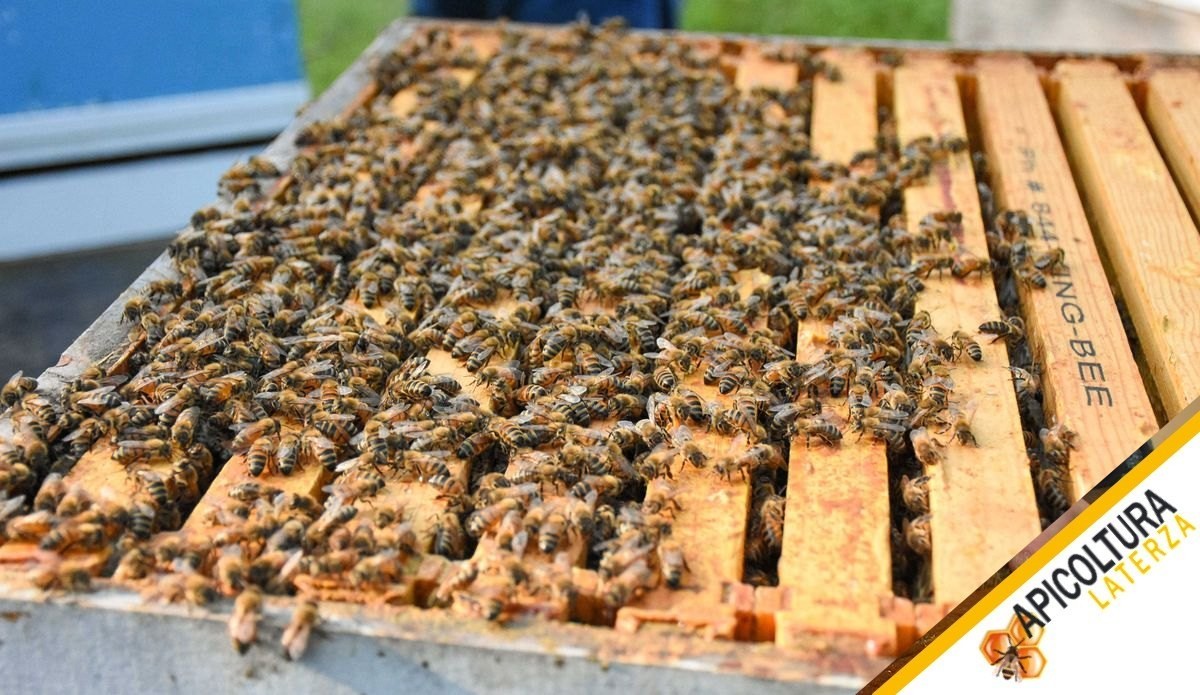
Late in the season, or as an emergency top-up in the depth of winter, you switch to solid sugar: fondant or sugar paste. The bees eat it as it is, without having to dehydrate it, drawing on the moisture already in the nest. It is placed directly over the frames, in contact with the cluster.
Fondant is a safety net, not a way to build stores from scratch. Solid reserves must be accumulated earlier, while there is still warmth. Solid sugar is there to provide that last push once syrup is no longer manageable.
Not only sugars: the role of pollen
Honey stores provide energy. But winter bees need something more.
To face the winter, the bees born at the end of the season must develop their fat body, the internal protein reserve that keeps them alive for months and that, in late winter, will feed the first brood. That fat is built from pollen, in autumn. If there is still bloom in the area, the bees usually see to it themselves.
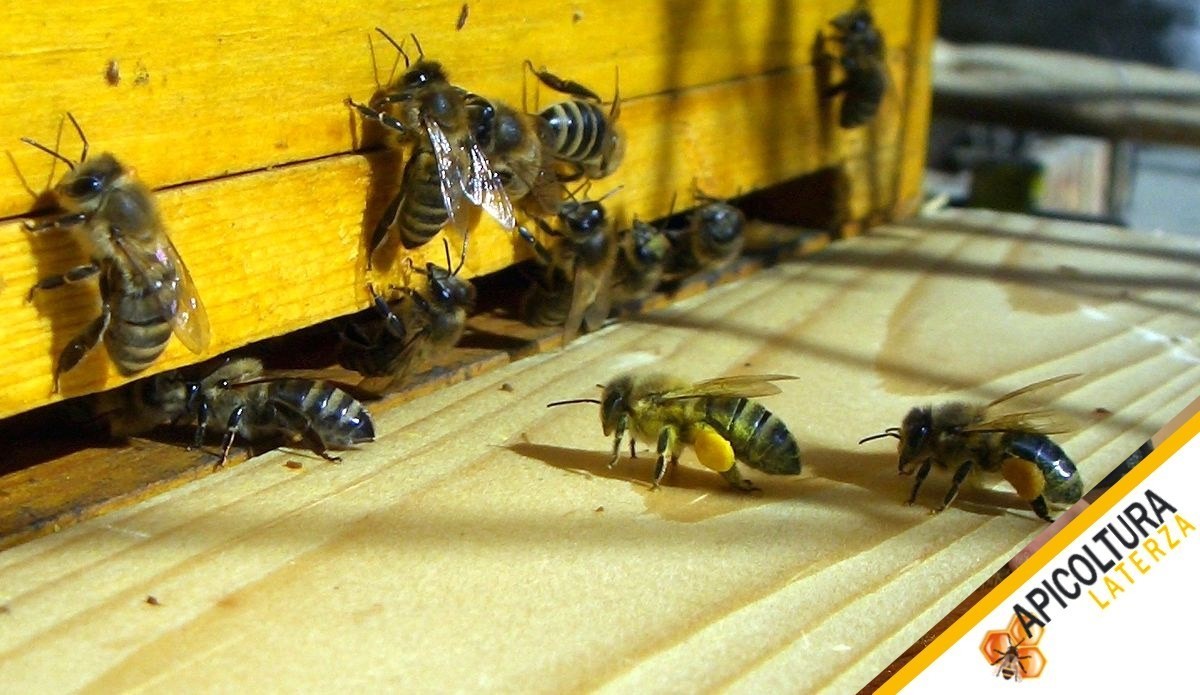
When autumn is poor in pollen, some beekeepers add a protein supplement. It is a case-by-case decision: it is not needed when natural pollen is abundant, and it never matches the quality of the real thing. When in doubt, watch what comes in over the landing board before intervening.
When to start and when to stop
The useful window is narrower than it seems.
You begin after removing the supers and completing the varroa treatment, generally between late summer and early autumn, while the days are still mild. You feed a little at a time, letting the bees store each dose before the next, so as not to clog the nest or force the queen to stop laying.
You stop when temperatures settle low: below ten or twelve degrees the bees struggle to take and process the syrup, and whatever is left in the feeder risks going mouldy. The message is simple: liquid feeding is a job for while it is still mild. Anyone arriving late still has fondant, but starts at a disadvantage.
Feeding without triggering robbing
In autumn nectar is scarce and bees turn edgy: the smell of sugar drifting about can spark robbing, with strong colonies raiding weak ones. It is a real risk, and a few precautions prevent it.
- Feed in the evening, towards dusk, once flight has calmed down.
- Do not spill syrup outside the hive and wipe up every drop: sugar in the open is an invitation.
- Use internal feeders, over the nest or frame-type, rather than open feeders that draw the whole apiary.
- Reduce the entrance of weak colonies so they defend themselves more easily.
The mistakes that waste the feeding
Even with the best intentions, a wrong move can make things worse.
- Feeding with the supers on. The sugar would end up in honey meant for sale: feed only after the harvest supers are off.
- Syrup too thin late in the season. The bees cannot dehydrate it and the store ferments.
- Starting too late. In the cold the syrup is not processed: better to be early than to chase the season.
- Feeding a sick colony hoping to save it. If the problem is varroa or a disease, sugar is not enough: treat first, then feed.
A well-fed colony reaches spring ready
Autumn feeding is not compulsory, but when it is needed it makes the difference between a colony that dies out in January and one that comes back strong in March.
Check the stores, use the right sugar at the right time and avoid the common mistakes: simple steps that tie in with the rest of the winter preparation. To go deeper, read our guide on how to prepare the hive for the cold season and the one on the late-summer varroa treatment, the step that always comes before feeding.
In Same Category
- Brood Diseases: Reading the Signs and What the Law Requires
- Beeswax: How to Recover Cappings and Old Combs and Get Your Foundation Back
- Beekeeping Equipment for a Growing Apiary: What You Really Need and in What Order
- Honey Harvest: When to Remove the Supers and How to Get Properly Ripe Honey
- Weak Colonies in Late Summer: Assess, Strengthen or Unite Them Before Winter
Related by Tags
- Beeswax: How to Recover Cappings and Old Combs and Get Your Foundation Back
- Weak Colonies in Late Summer: Assess, Strengthen or Unite Them Before Winter
- Starting the Season: Spring Checks at the Hive
- Collecting and Transporting Nuclei and Packages of Bees: What to Know
- Package of Bees or Nucleus: How to Start Beekeeping from Zero