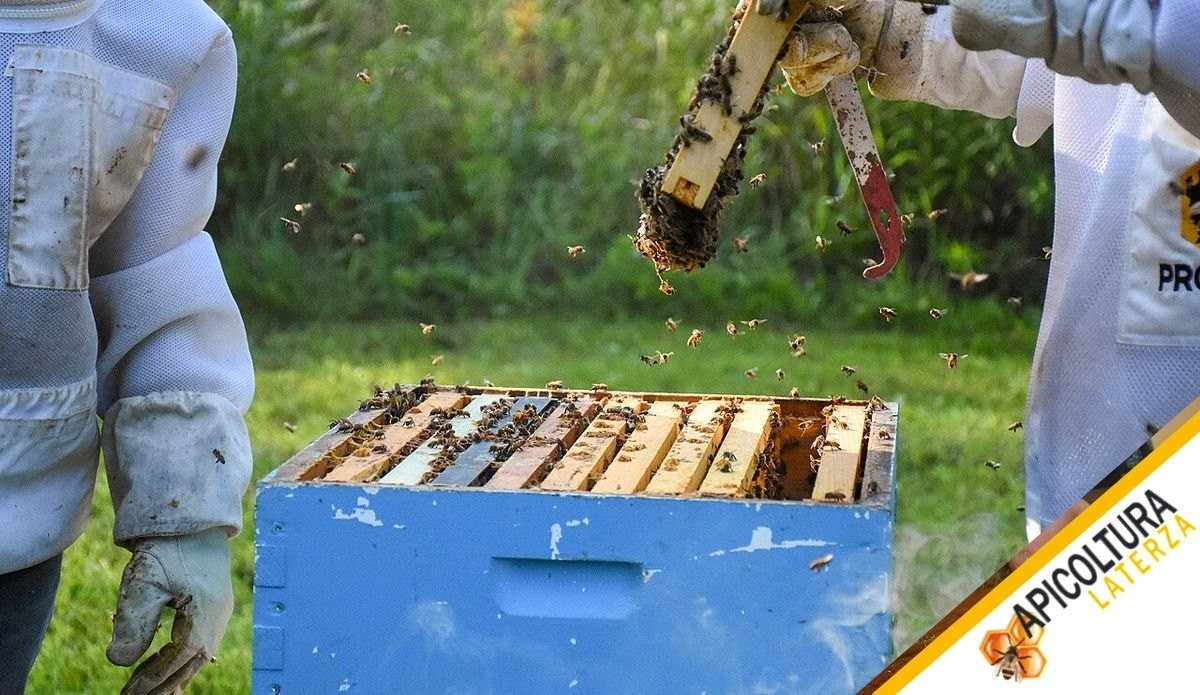
Honey Harvest: When to Remove the Supers and How to Get Properly Ripe Honey
The calendar does not decide when to harvest: the bees do. How to tell that honey is really ripe, how much moisture is too much, how to take the supers off without putting the colony in trouble, and what happens in the honey house between uncapping, extractor and settling tank. Plus the three mistakes you pay for in the jar.
There is a moment, every season, when the beekeeper looks down into a super and has to decide. Take it off, or give it another week?
It is the most underrated question of the year. The quality of the honey that ends up in the jar is not built in the honey house: it is built right there, on top of the hive, with a frame in your hand and the sun starting to bite. A crop taken too early cannot be fixed afterwards. One taken too late is paid for in another currency.
Here is how to read a super, what you actually need to know that the honey is ripe, and what happens next, from uncapping to the jar.
The calendar decides nothing
Every year we hear the same line: "this time last year I had already extracted". True, perhaps, and completely irrelevant.
Ripening depends on how the flow ran, on air humidity, on the strength of the colony and on how well the bees can ventilate inside the hive. Two apiaries ten kilometres apart can be ready a fortnight from each other.
The calendar is for planning your work. Whether the honey is ready is something only the combs can tell you.
First signal: the cappings
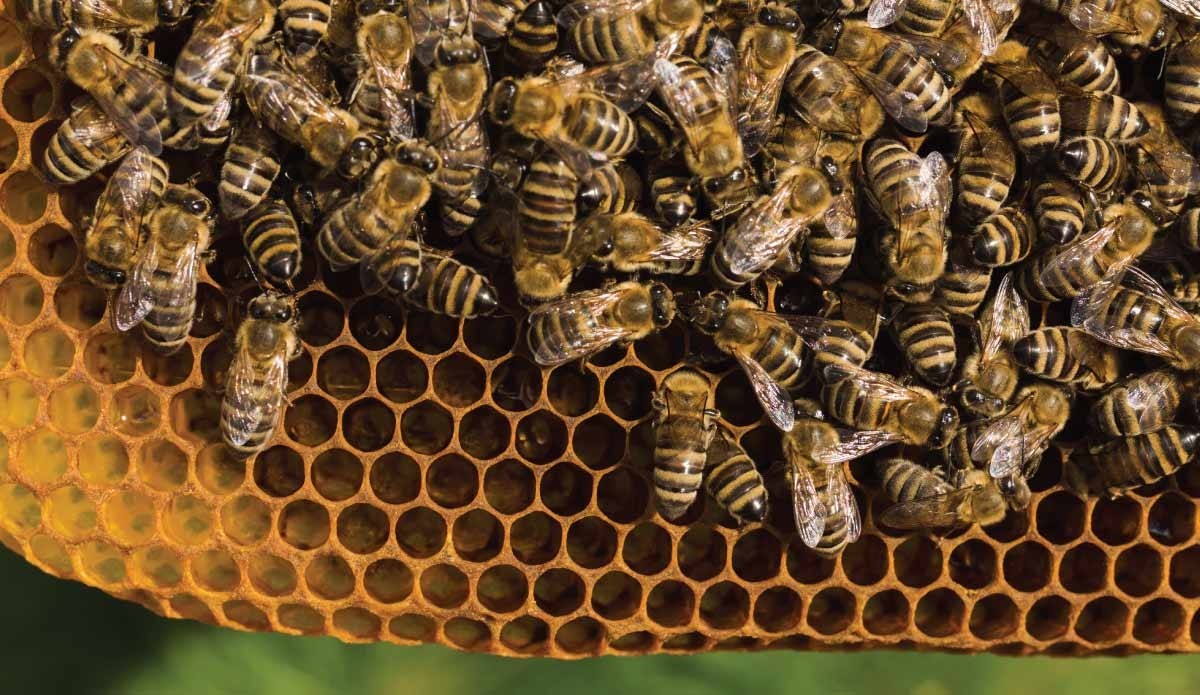
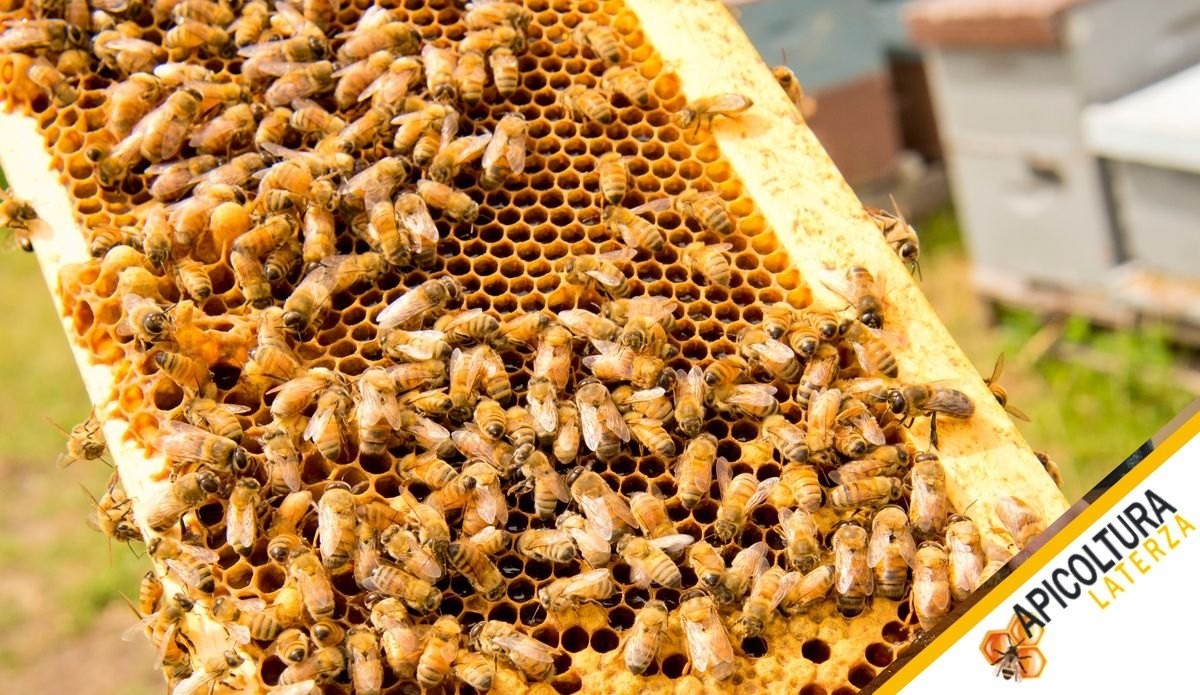
Once the nectar has lost enough water, the bees seal it under a thin layer of wax. That capping is their signature: as far as they are concerned, the job is done.
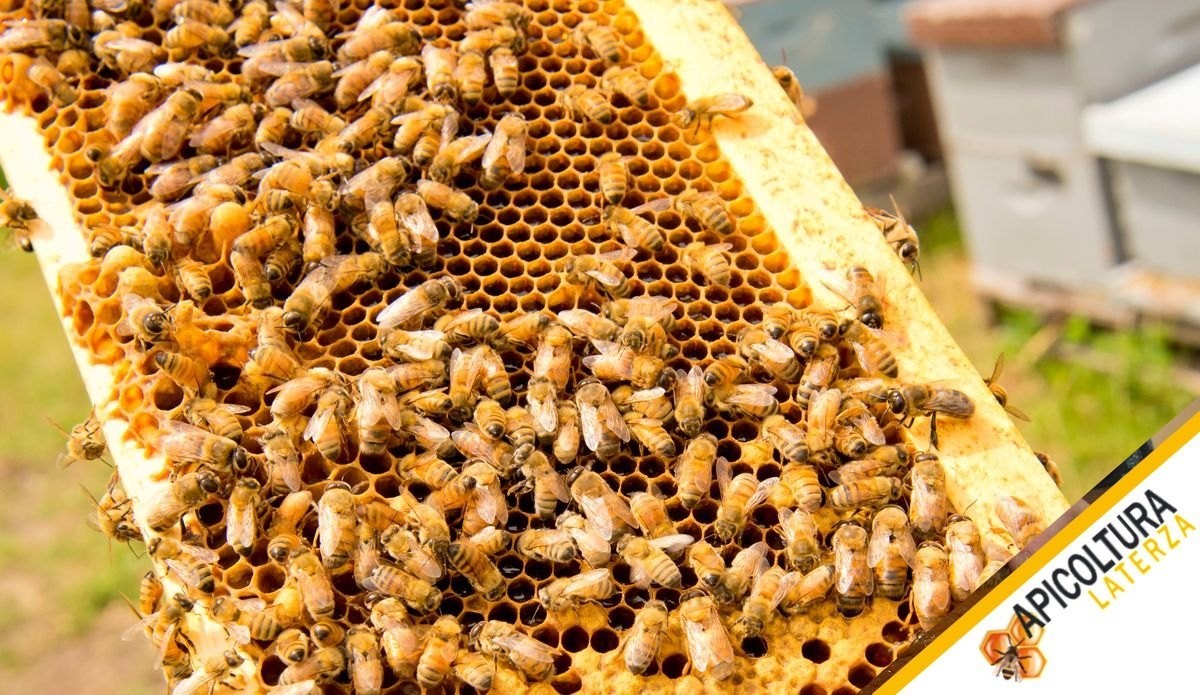
The working rule is simple. A frame is considered ready when at least three quarters of its surface is capped, and a super comes off when most of its frames have reached that point.
One detail catches out a lot of beekeepers in their first seasons: bees cap from the top and from the centre of the comb outwards. A frame that looks finished from a distance may still carry a band of open cells along the bottom, and those cells hold the wettest nectar in the whole super.
The shake test, the one that never lies
If some cells are still open, there is no need to guess. Pull the frame, hold it horizontally over the super with the open face down, and give it one sharp shake.
If nothing falls, the honey is thick and sitting tight in the cell: you can go ahead. If droplets of nectar fly out, that comb is not ripe and belongs to the bees for a while longer.
It takes three seconds and costs nothing. It is the most honest check there is.
How much water is too much
Honey is a concentrated sugar solution, and its stability depends on the water it holds. While the water stays low, the yeasts naturally present in honey cannot work. When it rises, those yeasts wake up and the honey ferments: foam on top, a sour smell, a taste that has turned. There is no way back from that.
European rules set a general ceiling of twenty per cent water content for honey placed on the market (with a few exceptions for particular honeys, heather among them). But twenty per cent is a legal limit, not a target.
Anyone working properly aims to stay below eighteen per cent. Under that threshold the risk of fermentation is effectively nil, even after months in storage.
There is exactly one tool for this, and it is cheap: a honey refractometer. A drop on the prism, a look towards the light, a reading. Anybody producing honey for sale should own one and use it before spinning the frames, not after.
Taking supers off without putting the colony in trouble
The honey in the supers is the beekeeper's crop. The honey in the brood box is the bees' larder, and it is not up for grabs.
It sounds obvious, yet every year someone reaches autumn with hollow colonies and is surprised to be feeding in a hurry. The rule is to leave the brood nest enough stores to cover the gap until the next flow, and to supplement only if it is genuinely needed. We went through this in detail in the article on autumn feeding.
One more seasonal habit: work in the cool hours, work calmly, and keep full supers covered. A super left open in the late summer sun is an invitation to robbing, and robbing costs you more than the honey taken. It can push weak colonies into a hole they never climb out of.
Bee escape, brush or blower
There are three ways to part the bees from the super, and each has its place.
The bee escape is a board with a one way valve: slide it between brood box and super and the bees walk down on their own. Fit it twenty four to forty eight hours before collection; it works best when nights are cool. Two warnings: if there is brood in the super the bees will not leave it, and if you leave it too long you risk a cold super and wax moth damage.
The brush is the slowest method and the most annoying one for the bees, but on a handful of hives it is perfectly fine. Brush frame by frame in front of the entrance, with downward strokes.
The blower is fast and effective at scale, but needs judgement: a strong jet of air on bees soaked in nectar means damaged bees.
Whichever method you pick, full supers get closed and moved immediately. They do not sit stacked in the yard.
The honey house matters more than you think
Honey is hygroscopic: if the surrounding air is damp, it takes the water back. Extracting in a humid room, or on a rainy day with the windows open, can lift the moisture of the product by a few tenths of a point. That sounds trivial. Around the eighteen per cent mark, it is not.
The ideal room is dry, clean, closed to bees and kept around twenty five degrees: at that temperature honey flows well with no need to heat it. Washable surfaces, food grade stainless steel equipment, no materials that pass on smells.
Anyone extracting to sell then has to meet the hygiene requirements that apply to their own premises, which vary with volume and with how the honey is marketed. It is worth speaking to the competent veterinary service before kitting out the room, not after.
Uncapping, spinning, straining
The stages themselves we have already walked through step by step in what honey extraction is and how it works. What matters here is what, inside those stages, changes the result.
Uncapping is done with a knife or an uncapping fork, lifting the wax layer in one clean movement without digging into the cells. Cappings go into a draining tray: they hold excellent honey and good wax, so they are not waste.
Then you spin. A tangential extractor works one face at a time and the frames have to be turned, but it is gentle on comb; a radial one works both faces together and is faster, but it wants well built, sturdy combs. Start slowly and build up: going straight to full speed with new comb means broken frames.
On the way out, honey passes a coarse strainer that catches wax, bees and debris. Coarse, note. Fine filtration also removes pollen grains, and with them the fingerprint that lets you trace the botanical origin of the honey: valuable information, as we saw when discussing wildflower, monofloral and honeydew honeys.
The settling tank: the days that make the difference
Straight out of the extractor, honey is not ready yet. It is full of air micro bubbles, wax fragments and light particles slowly rising to the top.
Let it rest in the settling tank for a few days, typically three to seven depending on temperature and density; with very dense honey or in a cool room a fortnight is perfectly normal. A pale foam forms on the surface and is skimmed off before bottling.
Plenty of people cut this short when they are in a rush. Then they find jars with a white line across the top and cannot work out why.
Heat is the silent enemy
Honey should not be warmed for convenience. Excess heat degrades enzymes and raises HMF, hydroxymethylfurfural, one of the indicators used to assess freshness and correct handling of the product (for ordinary honey the legal limit is forty milligrams per kilo).
If crystallised honey has to be liquefied, use a water bath and never go above forty degrees. Never on the hob, never in a microwave.
Badly heated honey does not look any different. It shows up in analysis, and on the palate of anyone who knows what to look for.
Empty supers and stored comb
Freshly extracted supers are still sticky with honey. You can give them back to the colonies to be cleaned out, but only towards evening and only briefly, or you will start a robbing frenzy.
Then they have to be stored, and this is where wax moth comes in. Galleria mellonella larvae will wreck stored comb within weeks, especially comb that has held brood. A cool, airy, well ventilated store, supers spaced apart and checked regularly, is the first line of defence; for treatments, use only products permitted in beekeeping and follow the label.
A comb lost in storage is work the bees will have to redo next year instead of producing.
Late harvests: watch the stores
End of season crops, honeydew included, have two features worth remembering.
The first is that some honeys crystallise fast inside the comb and become impossible to spin: they have to come off in good time, not when you happen to have a free afternoon.
The second is that the last removal falls exactly while the colony is raising the bees that will have to get through winter. Taking too much at that point means spending October playing catch up. The whole subject is in the article on winter preparation.
Three mistakes you pay for in the jar
Extracting to a schedule rather than to ripeness. A free weekend is not a technical criterion. If the combs are not ready, wait.
Not measuring moisture. A refractometer costs about as much as a few dozen jars and saves you from losing a whole crop to fermentation.
Taking the brood box too. Brood nest honey is not a bonus: it is what keeps the colony alive until spring.
In short
Harvesting is not a day's work, it is a technical decision followed by a day's work. Read the cappings, do the shake test, measure the moisture, work in a dry room and heat nothing.
And remember that all of it starts much earlier. A super full of ripe honey is the result of a strong colony, with a good queen and a season managed properly. The rest is equipment.
The crop starts with the colony
Full supers and ripe honey come from strong, well started colonies. We raise nucs and selected queens in our own apiaries and deliver them ready to work. Tell us how many colonies you need and for which season: we will tell you what we have and when.
In Same Category
- Weak Colonies in Late Summer: Assess, Strengthen or Unite Them Before Winter
- Wasps and Hornets at the Hive: Protecting Bees in Late Summer
- Starting the Season: Spring Checks at the Hive
- Collecting and Transporting Nuclei and Packages of Bees: What to Know
- How to Introduce a New Queen Bee Without Mistakes